
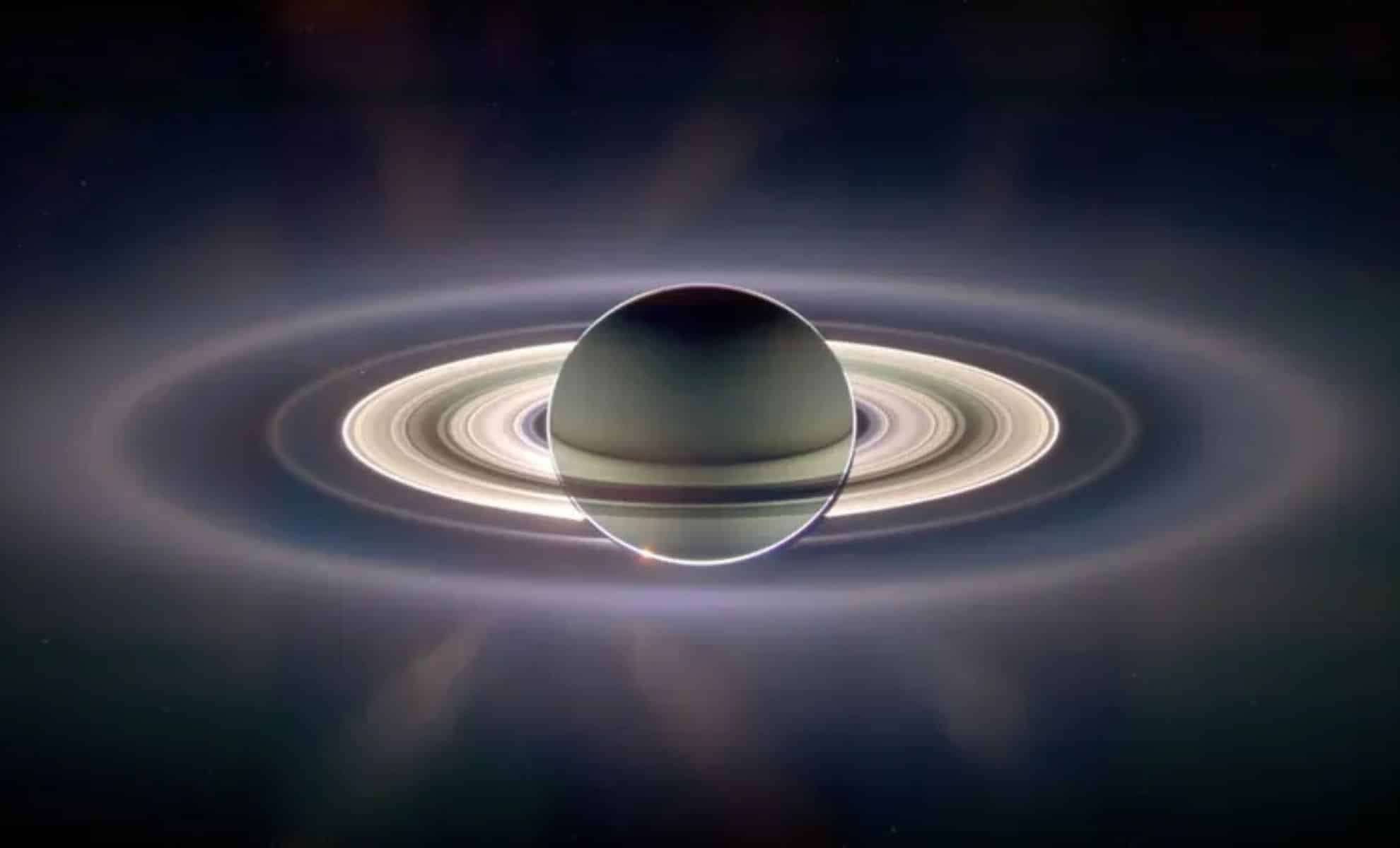
Observers on Earth have a spectacular astronomical event to look forward to this summer: the shadow of Titan, Saturn’s biggest moon, will sweep across the planet's surface. This extraordinary occurrence, visible only every 15 years, reveals what looks like a massive dark patch moving across Saturn. Live Science notes that this unique transit won't be seen again until 2040, offering enthusiasts a rare viewing opportunity.
Understanding Titan’s Shadow on Saturn
When Titan passes between the Sun and Saturn, it projects an enormous shadow onto the planet’s cloud tops. This shadow appears like a giant dark spot, analogous to how a lunar eclipse darkens areas of Earth. The event is best observed when Earth, Saturn, and Titan align just right, allowing us to see Titan’s shadow clearly. While Saturn’s other moons like Mimas and Rhea also produce shadows, Titan’s is the most prominent due to its impressive size.
Earth’s position relative to Saturn shifts every 15 years, causing the planet’s rings to appear face-on and granting an unobstructed view of the shadow on Saturn. This year’s alignment is special because the rings momentarily become almost invisible, highlighting Titan’s shadow even more. Although the next similar alignment will happen in 2032, this summer provides an exceptional viewing window.

Viewing Schedule for Titan’s Shadow Transits
Skywatchers eager to catch a glimpse of Titan’s shadow will find several opportunities during late summer and early fall. The schedule below provides the estimated transit times in Eastern Standard Time (EST):
- July 2: Begins at 3:40 AM, midpoint at 6:35 AM, concludes at 9:03 AM (Duration: 23 minutes)
- July 18: Begins at 3:00 AM, midpoint at 5:44 AM, concludes at 8:05 AM (Duration: 305 minutes)
- August 3: Begins at 2:25 AM, midpoint at 4:52 AM, concludes at 7:04 AM (Duration: 279 minutes)
- August 19: Begins at 1:52 AM, midpoint at 4:01 AM, concludes at 6:00 AM (Duration: 248 minutes)
- September 4: Begins at 1:25 AM, midpoint at 3:09 AM, concludes at 4:50 AM (Duration: 205 minutes)
- September 20: Begins at 1:09 AM, midpoint at 2:20 AM, concludes at 3:34 AM (Duration: 145 minutes)
- October 6: Start time not visible; midpoint at 1:32 AM (Duration: very brief)
Clear skies are essential for observing these events, so keeping an eye on local weather forecasts is recommended for optimal viewing.
The Significance of Titan in This Celestial Event
Titan stands out not only for its impressive size but also as one of the most fascinating moons in the solar system. With a diameter exceeding 3,200 miles, it ranks second in size after Jupiter’s Ganymede. Titan is also unique for having been directly explored by a spacecraft; the European Space Agency’s Huygens probe landed on its surface in 2005, unveiling detailed images of its hazy atmosphere and terrain.
The sheer scale of Titan results in its shadow being large enough to see from Earth-based telescopes. These shadow transits provide a way to observe Titan’s vast presence and the mechanics of its orbit around Saturn. As Titan circles Saturn roughly every 16 days, multiple shadow transits will occur this year, with the last transit before the next long break expected in January 2026. The phenomenon will reoccur in 2040, marking this season as a special time for sky enthusiasts.
- Categories:
- News









0 comments
Sign in to Comment