

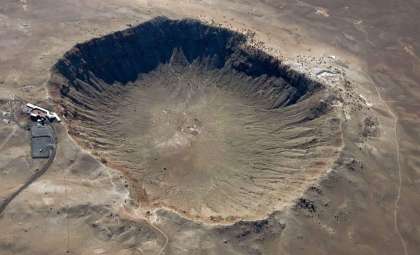
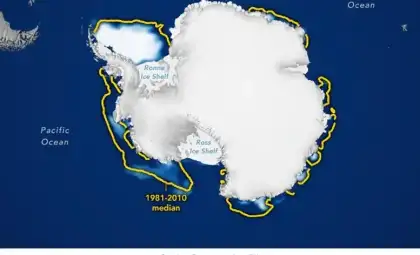
Beneath the thick ice sheets of East Antarctica’s Wilkes Land, researchers have detected a significant gravitational irregularity that may signal the presence of a gigantic impact structure. Initially noticed as a subtle variation in Earth's gravitational field, this anomaly now appears to be evidence of a huge buried crater—possibly left by an ancient meteorite collision. Findings from a 2018 publication in Earth, Planets and Space propose that this hidden feature could be the largest known impact crater on our planet, obscured for millions of years beneath thick Antarctic ice.
Insights into Early Solar System Collisions
Analyses of this anomaly’s scale and configuration have drawn parallels to impacts from the Late Heavy Bombardment, a tumultuous era about 4.1 to 3.8 billion years ago when fragments frequently pummeled the inner planets. The magnitude of energy from such an impact aligns with the size of the Wilkes Land feature. Due to the ice cover, precise dating isn’t feasible, so scientists use comparative models with known impact sites to estimate the event’s energy and origin.
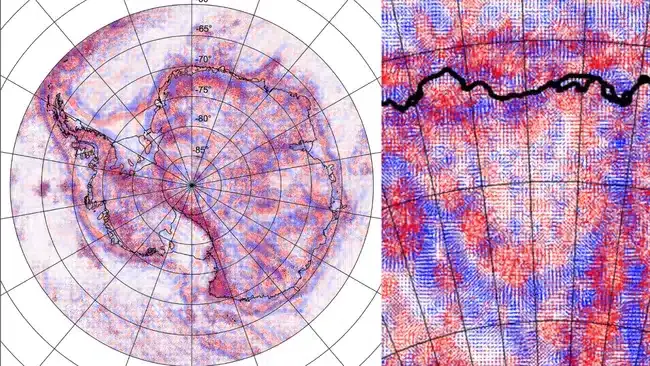
A study from 2015 employed gravitational mapping to demonstrate that the anomaly’s form, notably the central mass concentration (mascon), resembles that of confirmed meteorite impact craters in the solar system. While this supports an extraterrestrial origin, the researchers acknowledge alternative causes like historic volcanic or tectonic activity cannot be excluded without drilling and direct sampling.

Alternative Theories Remain Viable
Some scientists remain cautious about attributing the Wilkes Land anomaly solely to an impact event. Other origins considered include a volcanic caldera, a sedimentary depression, or an extensively eroded rift valley formed by Earth’s internal processes. Though such features can also create gravity anomalies, proponents of the impact hypothesis argue that the presence of the mascon makes these explanations less convincing.
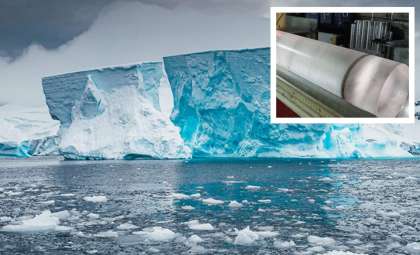
The greatest challenge to reaching a final conclusion is the overlying Antarctic ice sheet, which measures over 1.6 kilometers in thickness here. This ice barrier hinders physical investigation of the underlying rock. Until future advancements enable deep drilling or sampling beneath the ice, evidence remains dependent on remote sensing and analog modeling.
Significance for Our Planet’s Past
Confirming this crater as an impact site would have significant consequences for understanding Earth’s history. An event of this magnitude could have released vast energy, possibly inducing global environmental changes such as mass extinctions or climate shifts. It would also enrich knowledge about the frequency and impact of extraterrestrial collisions during Earth’s formative years.
More generally, uncovering the Wilkes Land structure underscores how much geological information remains concealed under ice sheets and ancient terrains. As satellite and gravitational survey technologies improve, future research may reveal additional hidden craters, offering fresh insight into Earth's dynamic past.
- Categories:
- News







0 comments
Sign in to Comment