
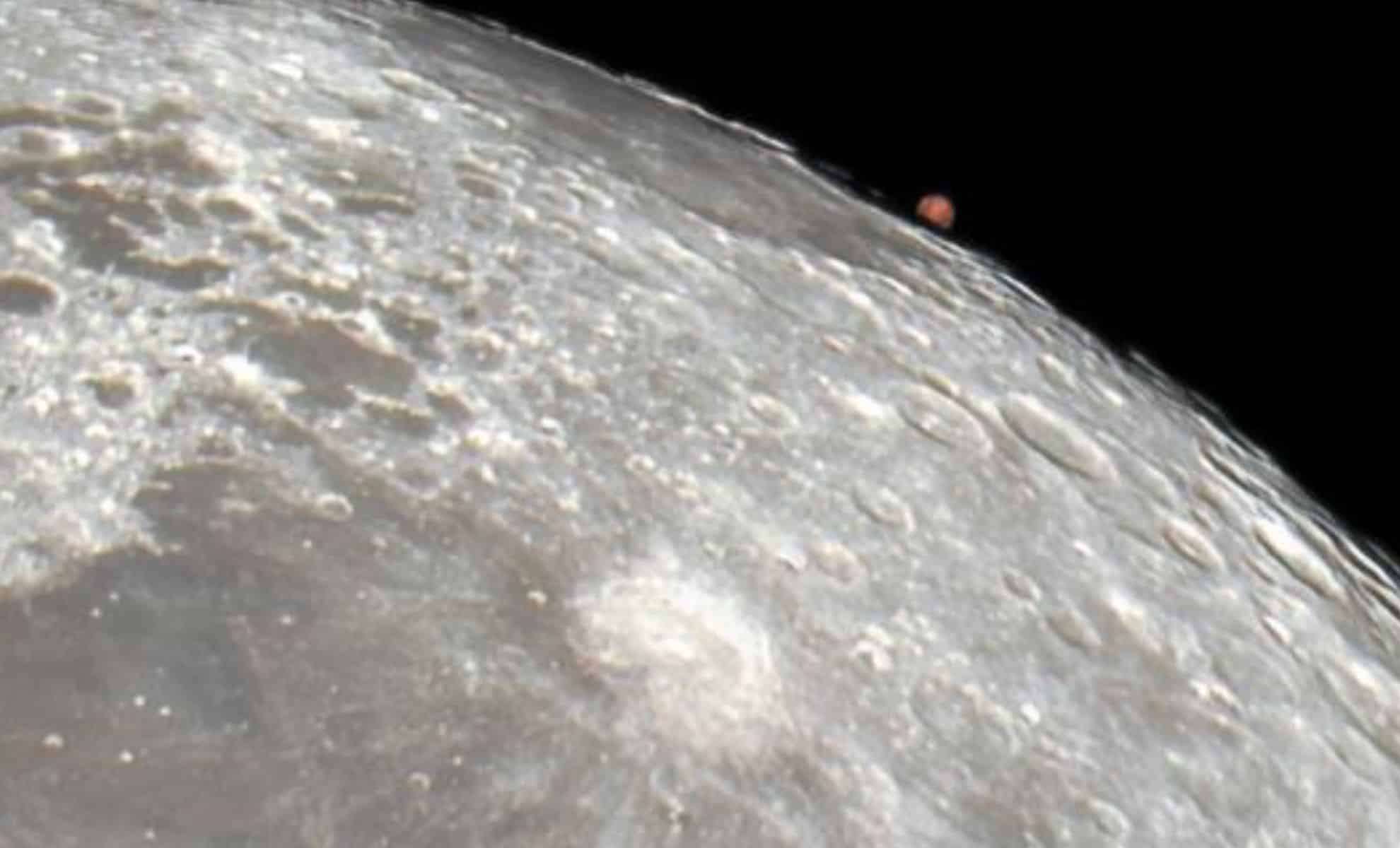
A stunning astronomical event is set to captivate sky enthusiasts worldwide this weekend, showcasing a beautiful alignment between the Moon and the planet Mars. Taking place from Saturday, June 28 through Sunday, June 29, this remarkable display promises to be one of the year's most striking nighttime phenomena. Detailed predictions from In-The-Sky reveal that the Moon, Mars, and the luminous star Regulus will line up, offering a captivating view for observers. Knowing the prime viewing moments and optimal vantage points will enhance the experience.
An Elegant Celestial Trio: Moon, Mars, and Regulus in Formation
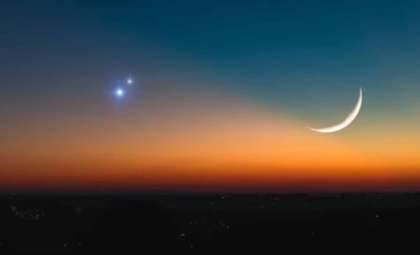
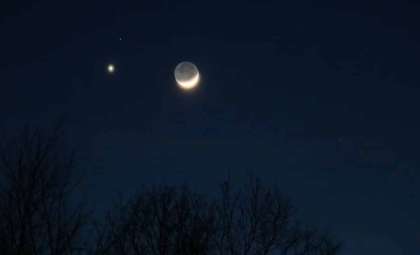
As evening falls on Saturday, June 28, look westward roughly 45 minutes after sunset to catch a gracefully curved alignment of three celestial bodies: a thin 16%-illuminated crescent Moon, the subtle red glow of Mars, and Regulus, the most radiant star in the constellation Leo. The Moon will shine as the brightest point in this ensemble, with Mars appearing as a dim reddish spot, making the scene both unique and memorable.
This event stands out because all three objects will be visible together within a single field of view, a rare occurrence that will thrill both amateur stargazers and experienced astronomers. Despite its lower brightness, Mars’ distinct rusty hue will help differentiate it from the brighter Moon and Regulus, which will emit a steady glow.

Sunday’s Intimate Encounter: The Moon and Mars Draw Near
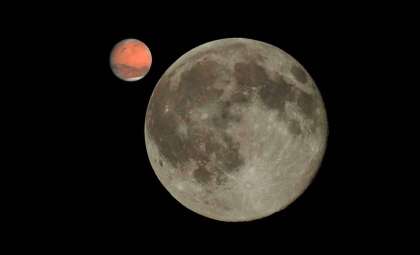
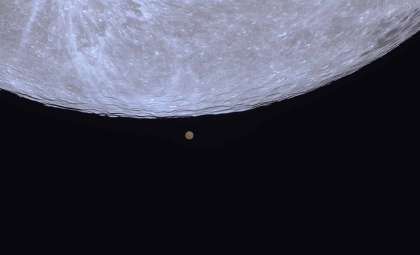
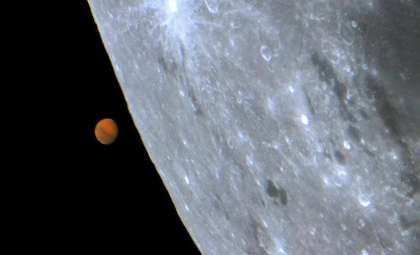
Then, on Sunday, June 29, the Moon and Mars will approach each other closely, displaying a conjunction only 0.2 degrees apart, narrower than the width of a fingertip held at arm’s length. Observers located in regions of the Pacific and northern South America may witness the Moon momentarily obscuring Mars for about an hour, creating a rare occultation event. This fleeting phenomenon adds an extra layer of excitement for those perfectly positioned to watch.
The shrinking distance between these two celestial bodies will create a dramatic visual effect, making this event spectacularly noticeable. While the close approach can be appreciated with the naked eye, binoculars will enhance the view, providing clearer details of their proximity.
Tips for Observing This Celestial Performance
To fully enjoy this weekend’s astral display, timing and viewing conditions are key. Aim to observe the alignment around 45 minutes after sunset when the objects appear in the western sky. The view will be temporary, as twilight fades quickly and the sky darkens. An unobstructed horizon and clear skies are essential to catch every detail of the event.
Because the phenomenon lasts only about 45 minutes per evening, preparation is vital. Although Mars shines less brightly than the Moon, its distinctive reddish tint will stand out to anyone familiar with the night sky. Those in heavily light-polluted urban areas might want to travel to darker spots for an optimal experience.
Discovering Earthshine: The Moon’s Gentle Glow
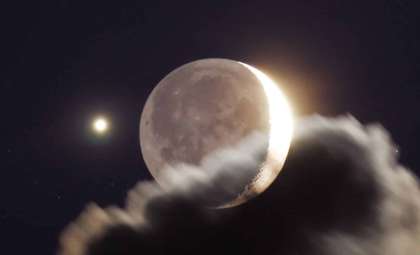
Another fascinating aspect of this weekend's observation is the presence of Earthshine—a soft light illuminating the darkened portion of the Moon. This subdued glow results from sunlight reflecting off the Earth’s oceans, cloud cover, and polar ice, gently lighting up the Moon’s night side. Earthshine adds an ethereal contrast to the bright crescent and highlights the intimate link between Earth and its satellite.
Earthshine is most visible during the early lunar phases when the darkened area still catches this reflected light. On Saturday and Sunday, this effect will enhance the celestial lineup, enriching the observation experience.
Looking Ahead: What Monday’s Sky Holds
After the weekend’s close pairing, the alignment will loosen by Monday, June 30. The Moon, now about 33% illuminated, will shift position, creating a wider arrangement with Mars and Regulus. Though no longer forming a distinct arc, the celestial bodies will remain visible and offer interesting sights as they continue their travels across the night sky.
For those interested in following these movements, astronomy software like Stellarium can provide updated positions and timing for each heavenly object in the subsequent days.
- Categories:
- News


0 comments
Sign in to Comment