
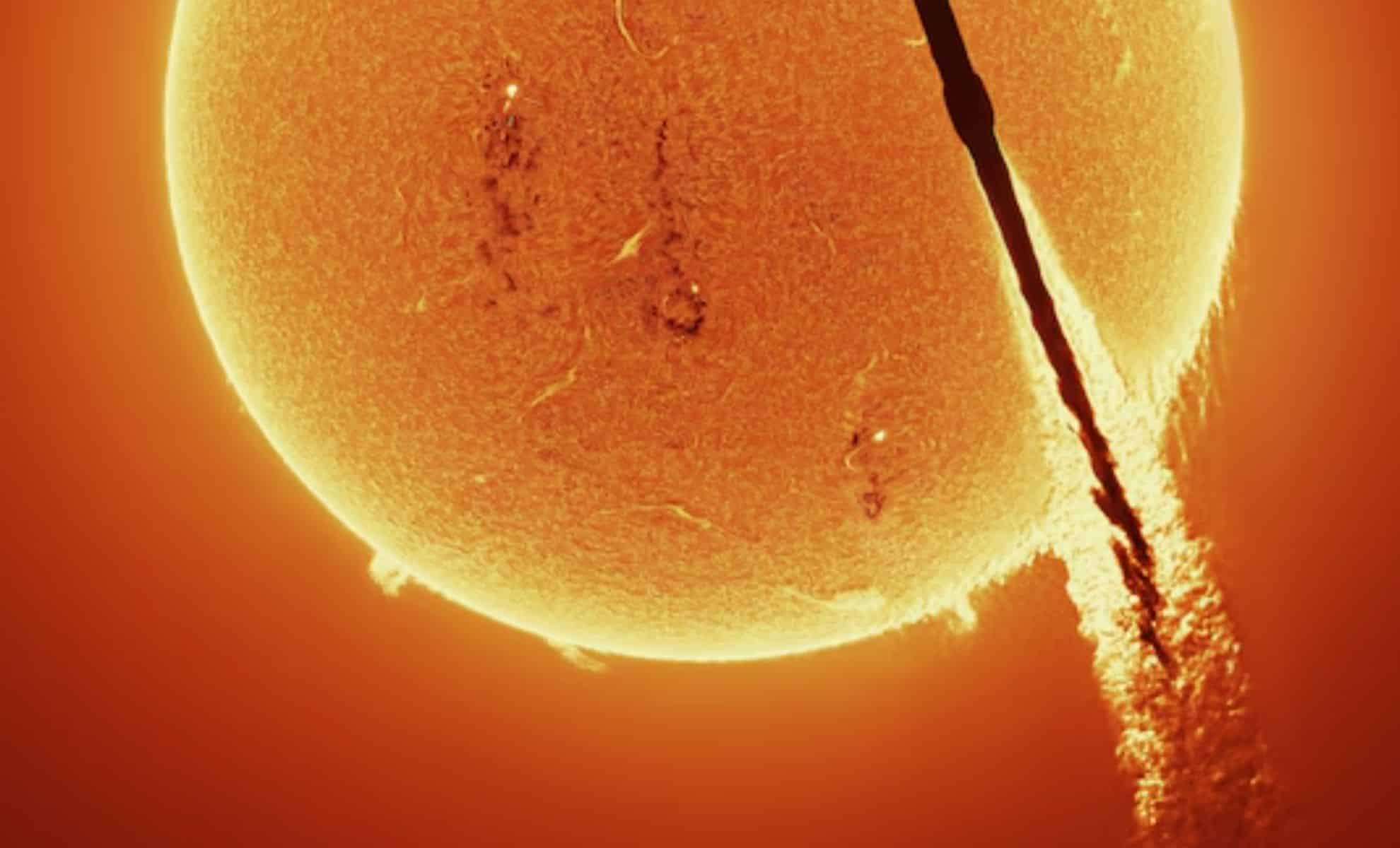
A SpaceX Falcon 9 rocket has set a new landmark—not only because of its mission but also due to the extraordinary image showing it crossing the Sun's chromosphere, a volatile and superheated layer just above the solar surface. Astrophotographer Andrew McCarthy captured this stunning moment, marking the first-ever photograph of its kind, impressing both the scientific community and photography enthusiasts alike.
A Once-in-a-Lifetime Capture
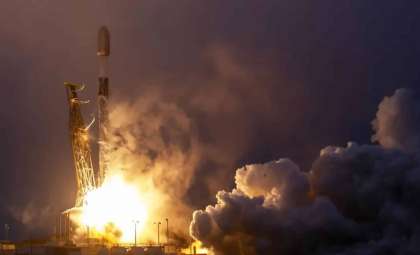
On September 6, 2025, while the focus was on the routine launch of Starlink 10-57 from Cape Canaveral, deploying 28 satellites into low Earth orbit, McCarthy was uniquely prepared. From a vantage point inside a Florida wildlife refuge just eight miles west of the launch site, he utilized two setups: a Canon R5 equipped with a solar filter and a specialized telescope designed to capture hydrogen-alpha emissions.
Hydrogen-alpha (H-alpha) light is a narrow band in the red spectrum that reveals the intricate details of the Sun's chromosphere. This layer, invisible to the naked eye and typical amateur telescopes, showcases a dramatic and turbulent solar environment. This image captured the Falcon 9 as it streaked across this intensely active region, highlighting an extraordinary interplay rarely seen.

McCarthy emphasized the complexities involved in achieving this shot. “Positioning myself accurately was incredibly challenging,” he shared with PetaPixel. He relied on insights from fellow rocket photographers to determine the exact location and timing. The process requires precise knowledge of timing, angles, solar positioning, and rocket trajectory—not to mention the hope for clear skies on launch day.
The Chromosphere’s Dramatic Canvas
The photograph's captivating effect stems from how the rocket’s plume appears to disturb the Sun’s plasma surface. While no real disturbance occurs given the 150 million kilometer distance, the image conveys a visual impression of shockwaves rippling through the solar plasma. The scattering of H-alpha light across this turbulent region paints an intense and almost surreal picture. The Sun emerges as a restless and molten entity, while the sharply contrasting jet-black Falcon 9 dominates the scene like a dynamic interloper.
McCarthy also released a white-light photo taken with the Canon R5 at the same instant, featuring the same launch. Though technically sound, this image lacks the vivid depth of the hydrogen-alpha shot. The solar disk appears subdued and flat, missing the chromospheric disturbances that bring the H-alpha image to life.
A Blend of Art and Science
Andrew McCarthy's portrayal of a Falcon 9 cutting across the Sun’s chromosphere merges scientific insight with artistic vision. In his words, the photograph provides “a fresh viewpoint on space,” igniting curiosity through its combination of aesthetic beauty and meticulous technique. His use of hydrogen-alpha light unveiled previously unseen solar atmospheric details, making this arguably a unique accomplishment.
The endeavor wasn't without risks: McCarthy had earlier lost equipment near the launch site but this time positioned himself safely farther away. Achieving such a rare shot demands an almost perfect convergence of timing, rocket path, angle, weather, and fortune.
Describing the difficulty, McCarthy likened the challenge to “aiming a dart through a tiny keyhole from across the street while blindfolded and riding a bike.” This unique blend of careful preparation and determination made this remarkable capture possible.
- Categories:
- News






0 comments
Sign in to Comment