
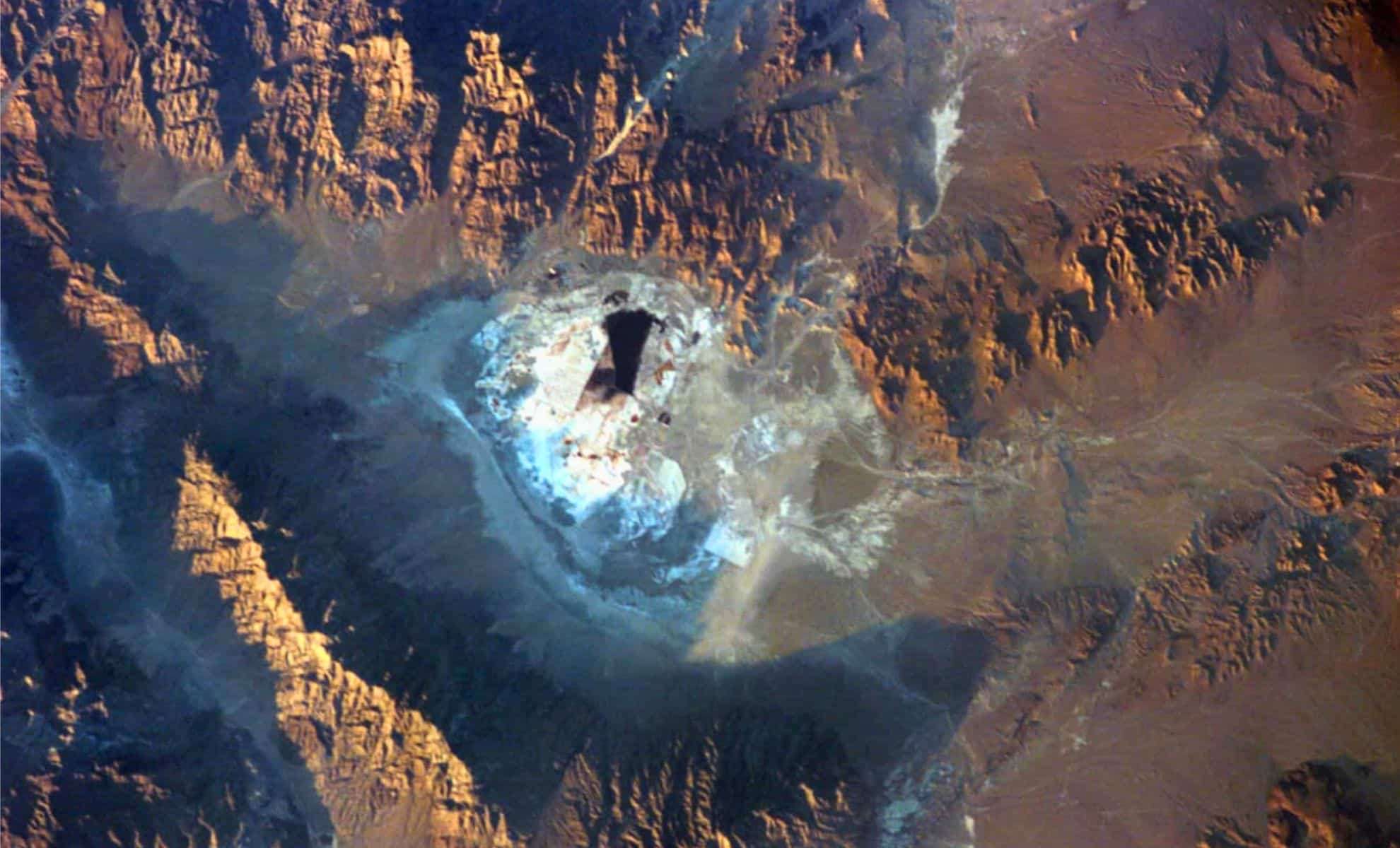
In 1978, a delegation of Chinese engineers visited California to explore operations at Lockheed Martin and McDonnell Douglas. At the time, their visit attracted little attention, seen merely as a routine fact-finding mission by a developing nation. The US aerospace and tech industries, leaders in their fields, did not perceive the visit as a harbinger of transformative change.
Nearly five decades later, that inconspicuous trip is recognized as a critical juncture in China’s emergence as a dominant force in rare earth elements (REEs). These 17 minerals are essential components in devices ranging from smart technology and renewable energy systems to military aircraft and missile guidance. Newly revealed accounts suggest that the insights gathered during this tour laid the foundation for one of the most significant industrial revolutions of recent history.
By the 1990s, China had ascended to the position of the leading global producer of rare earth minerals and had firmly established control over almost all refining processes, which are complex and yield higher economic value than mere extraction. Currently, more than 85% of rare earth refining worldwide is handled in China, the International Energy Agency reports.

Cost-Cutting Innovations Disrupted Western Markets
The distinctive edge China gained did not stem purely from reverse engineering Western technology, but from developing innovative alternative methods. In Baotou, Inner Mongolia, engineers pioneered significantly cheaper refining techniques, replacing costly stainless steel reactors and rare acids with plastic-lined vessels and hydrochloric acid. This revolutionized production costs, and coupled with more lenient environmental oversight, enabled Chinese companies to undercut foreign competitors substantially.
The impact was rapid and profound. By the early 21st century, many rare earth processing plants across the US, Australia, and Europe had closed or reduced operations. Dr. Jeffrey Wilson, research director at the Perth USAsia Centre, stated in a 2022 analysis, “The West simply couldn’t compete on price. China didn’t just enter the market—they redefined it.”
China’s pricing dominance became a key element of strategic influence. Most rare earth ores mined outside China—from Australia, the US, or Africa—are still exported to China for final refining, due to a worldwide shortage of independent processing facilities.
Manufacturing Powerhouse Turns to Strategic Diplomacy
China’s expertise in rare earths soon evolved beyond manufacturing capabilities into leverage on the global political stage. Beginning in 2010, Beijing implemented export restrictions as geopolitical tools. Japan bore the brunt first after a maritime confrontation near the Senkaku Islands; subsequent measures targeted South Korea, India, and indirectly the US.
A 2023 briefing by the Center for Strategic and International Studies (CSIS) calls this approach “precision economic statecraft” — carefully calibrated disruptions that impact industries without triggering full-scale trade conflicts.
For example, US defense contractors, including those manufacturing F-35 stealth fighters, now confront new Pentagon mandates demanding that components avoid rare earths sourced from China. This complicates procurement processes and raises production expenses.
An Enduring Strategy Still Challenging to Counter
China’s dominant position was no accident but the product of a carefully orchestrated, long-term plan, initiated under Fang Yi, leader of the State Science and Technology Commission in the late 1970s. Identifying rare earth minerals as vital to future technologies, the government invested heavily in mining technologies, education, and refining research. While other countries focused on short-term gains, China pursued a multi-decade vision.
Now, efforts to lessen dependency on China are gathering momentum. In 2022, the US Department of Energy allocated more than $140 million for domestic rare earth refining initiatives. Australia’s Lynas Rare Earths is expanding, and the European Union has begun stockpiling these critical materials.
Yet significant obstacles remain. A 2024 OECD study highlights that developing competitive refining industries requires 10–15 years, especially under stringent environmental regulations. Isabelle Robieux, an energy expert at France’s Geological Survey (BRGM), comments, “The cost of neglecting the supply chain has caught up with us. This market is as much political as technical, and China recognized that from the start.”
- Categories:
- News










0 comments
Sign in to Comment