
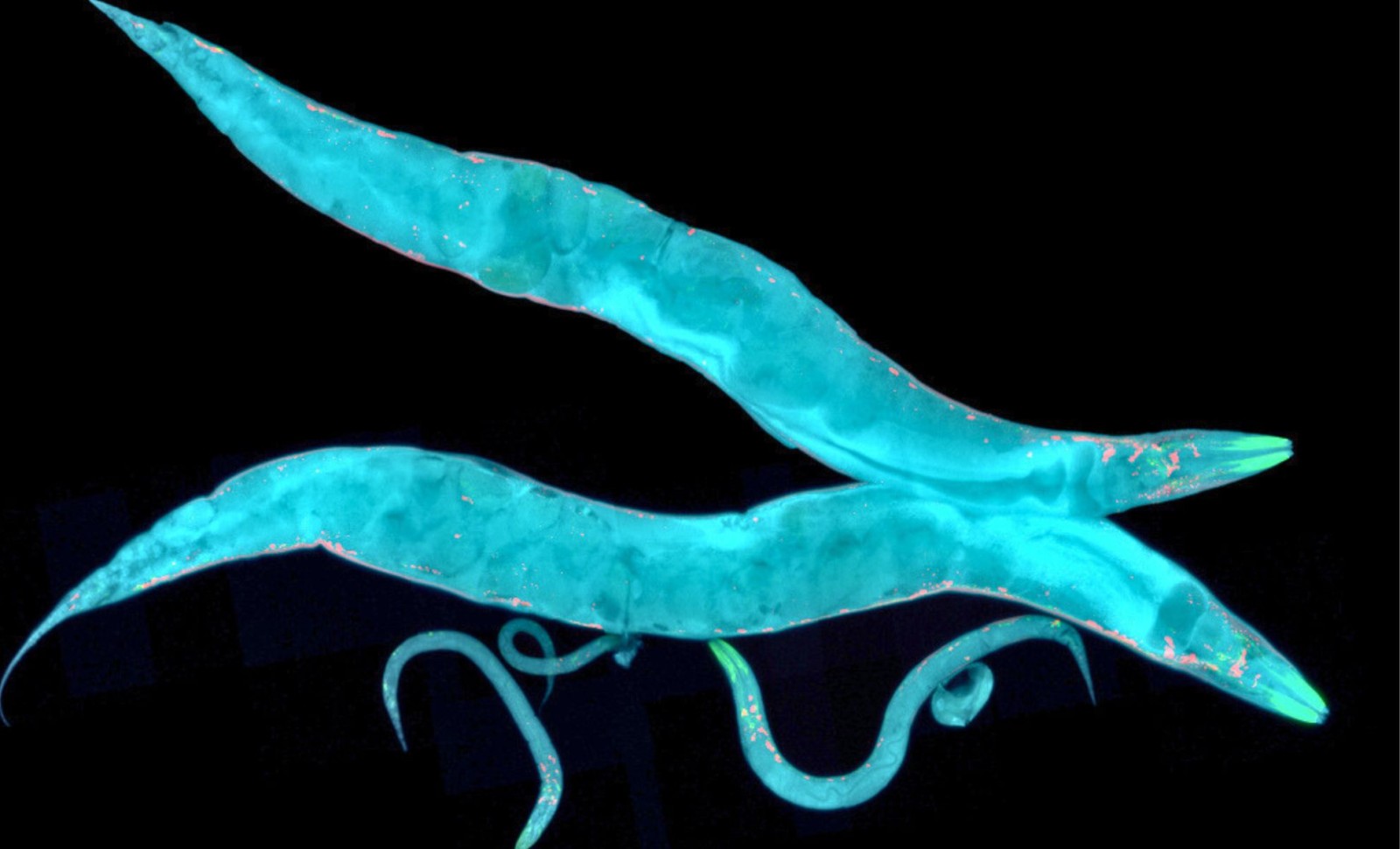
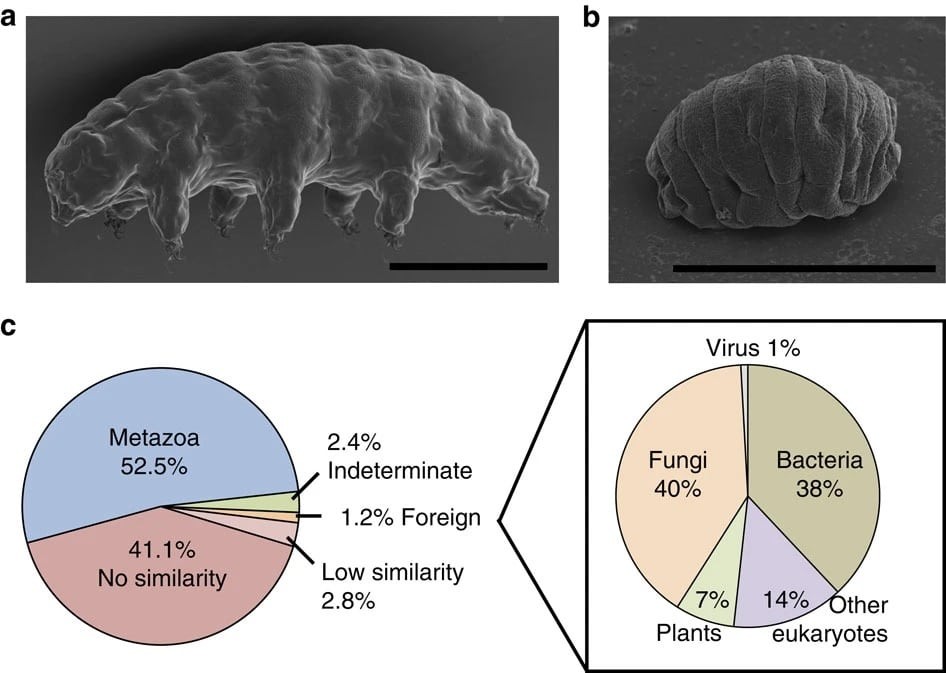
A protein exclusive to tardigrades—tiny creatures renowned for surviving extreme environments including intense heat, freezing temperatures, and the vacuum of space—has now been found to lengthen the lifespan of a completely different species. This protein, called Dsup (“damage suppressor”), shields DNA from oxidative harm and radiation damage, making it a promising candidate for research into aging and stress resistance.
Published in the journal Science Advances, the study revealed that introducing Dsup into Caenorhabditis elegans, a widely used model animal, led to a marked increase in resistance to oxidative stress and extended the worms’ median lifespan—without compromising their fertility, development, or motility.
Discovered initially in the genome of the radiation-hardy tardigrade Ramazzottius varieornatus, Dsup attaches to DNA, physically shielding it from damaging agents like hydroxyl radicals. This investigation confirmed for the first time within a living organism that a single tardigrade gene can simultaneously enhance both stress tolerance and longevity.

Robust DNA Protection Without Side Effects
The Dsup gene first gained recognition when introduced into human cells, where it decreased DNA damage caused by X-ray exposure by around 40%, as reported in a 2016 study published in Nature Communications. Subsequent structural analyses demonstrated how Dsup binds to nucleosomes and prevents radiation-induced DNA breaks by interacting directly with DNA strands.
Building on this knowledge, the recent Science Advances work engineered a single-copy Dsup transgene into the genome of C. elegans. The Dsup protein was primarily expressed in reproductive cells and was detected in somatic nuclei of muscle and intestinal cells. Remarkably, unlike many lifespan-extending genetic modifications, worms expressing Dsup maintained normal fertility and mobility.
Exposing these transgenic worms to 90 Gy of X-ray radiation—a dose fatal to most organisms—resulted in significantly increased survival rates, with this resistance even present in their progeny. Additionally, the Dsup worms showed better tolerance to oxidative agents such as hydrogen peroxide and paraquat, confirming broad-spectrum cellular protection.
Reducing Stress Rather Than Triggering Responses
Interestingly, Dsup does not activate the worm’s own defense pathways. Using a fluorescent marker, the team monitored DAF-16/FOXO, a critical regulator that moves into the nucleus during oxidative stress. In worms with Dsup, DAF-16 activation was slower, implying that the cells were experiencing less oxidative stress.
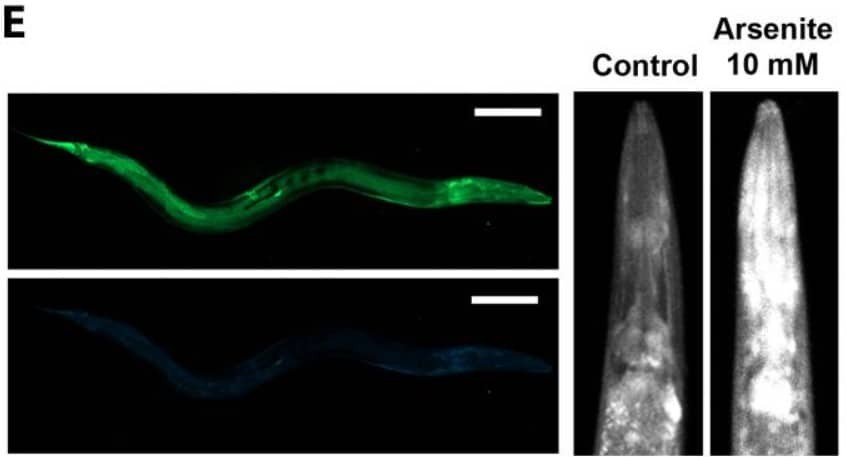
To confirm this, researchers employed a genetically encoded HyPer biosensor that lights up in the presence of hydrogen peroxide. When exposed to arsenite, worms expressing Dsup displayed lower levels of reactive oxygen species (ROS) compared to controls, providing direct evidence of reduced oxidative damage.
Metabolic profiling using Seahorse assays further showed that these worms had lower mitochondrial respiration rates, a feature often linked to lifespan extension. Crucially, this mitochondrial slowdown did not compromise cellular energy or structure, suggesting a deliberate regulatory shift rather than damage.
Confirmed Longevity Impact with Reversibility
Tests on lifespan demonstrated that Dsup significantly extended median lifespan in C. elegans. To validate this, RNA interference was used to silence the Dsup gene, which eliminated the lifespan extension, confirming the protein’s direct role.
In contrast to other longevity mutants like daf-2 or clk-1, Dsup-expressing worms did not experience delayed development, smaller broods, or decreased metabolic rates. Their movement, reproductive output, and behavior were comparable to wild-type worms.
This stands in clear contrast to earlier studies in Arabidopsis plants, where Dsup conferred DNA protection but no longevity increase, implying that lifespan benefits depend on the host organism's biology.
Implications for Developing Future Resilience Technologies
Although Dsup’s exact mechanism continues to be unraveled, evidence suggests it protects cells through direct DNA binding and reducing oxidative metabolism. By preventing reactive oxygen species accumulation at the root, rather than just triggering stress responses, Dsup paves the way for new approaches to radiation protection and cellular defense.
Past efforts to express Dsup in other animals, such as Drosophila, caused developmental issues, probably due to high gene dosage or unsuitable promoters. The C. elegans results benefited from a single-copy gene insertion with germline-specific expression, likely avoiding those negative effects.
The study opens exciting prospects for biotechnology: while not yet ready for clinical use, proteins like Dsup could become part of future strategies to enhance cellular resilience, with potential applications in space exploration, aging interventions, and radiation therapy.
- Categories:
- Science










0 comments
Sign in to Comment