
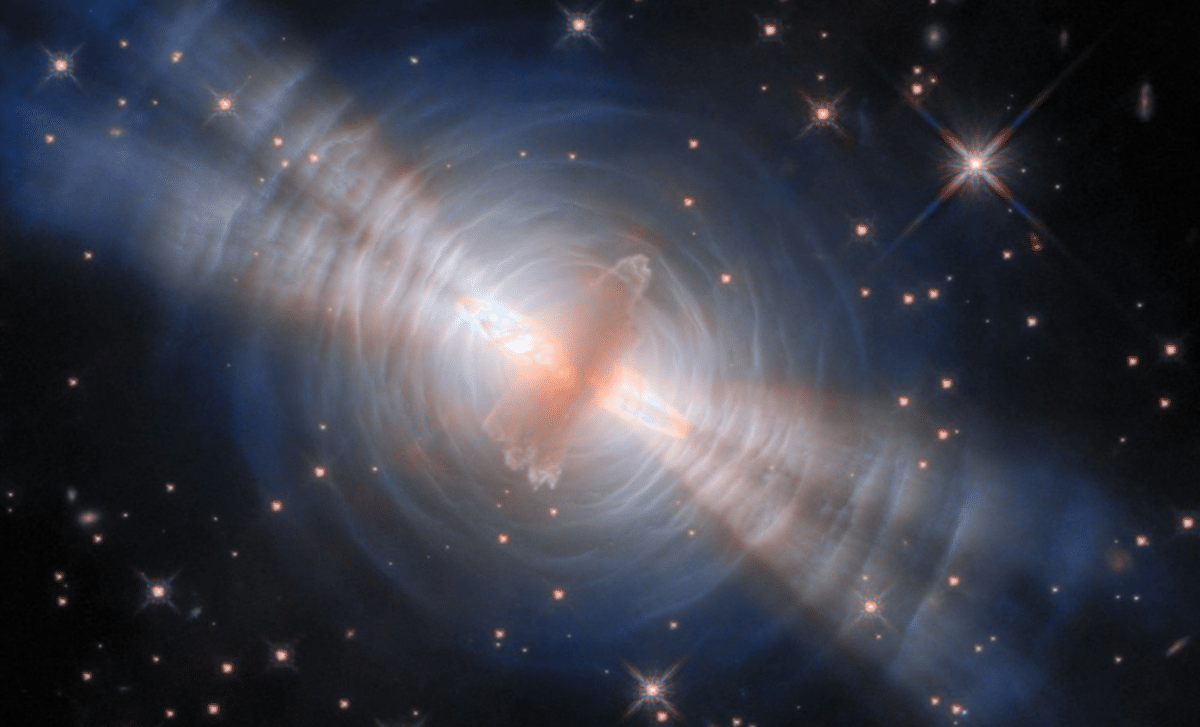
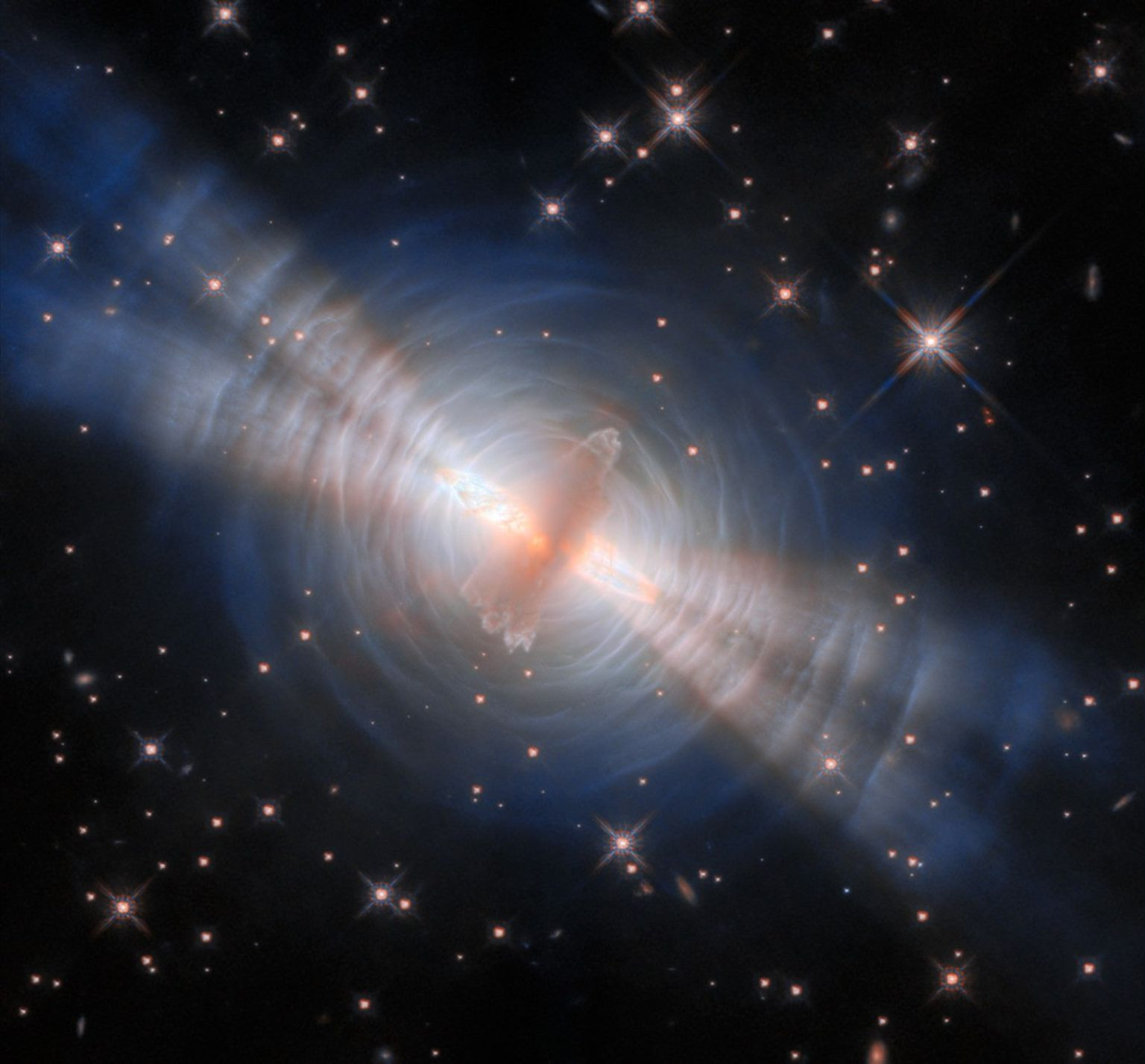
NASA's Hubble Space Telescope has captured some of the most detailed images ever of the Egg Nebula, a magnificent celestial formation approximately 1,000 light-years away in the constellation Cygnus. Released on February 10, 2026, these observations reveal captivating patterns of illumination and shadow sculpted by a dying star, highlighting the fine structures of a nebula during its pre-planetary phase. This environment offers crucial knowledge about the final stages of sun-like stars, with Hubble's new imagery set to enhance our comprehension of nebula creation and stellar aging processes.
Exploring the Egg Nebula: Insights into a Star’s Final Transformation
Situated around 1,000 light-years from Earth in Cygnus, the Egg Nebula presents a unique window into stellar death mechanics. Classified as a pre-planetary nebula, it represents the evolutionary phase just before a planetary nebula forms, occurring when a star sheds its outer layers. Captured by NASA’s Hubble Space Telescope, the images expose the complex interactions between gas, dust, and light in this star’s dying environment.
As a star like the Sun runs out of fuel, it expands and loses its outer envelopes, creating a glowing shell composed of gas and dust. The Egg Nebula is invaluable to astronomers because it displays this fleeting transition while stellar activity is still underway. Utilizing Hubble’s Wide Field Camera 3, the latest photos unveil breathtaking clarity of the nebula's layered gas and dust formations.

Hubble's Unparalleled Resolution: A Detailed Look at the Cosmic Egg
The Egg Nebula has been studied multiple times by Hubble, but these most recent visuals provide the finest level of detail yet. Hubble’s unique ability to depict sharp and deep views sets these images apart. As reported by NASA Science, the nebula’s dust clouds generate a striking contrast, where light from the central star pierces through polar “eyes,” illuminating the surrounding gas and dust with a ghostly glow. These beams of polarized light reveal an intricate symmetry, giving the nebula its characteristic egg-like appearance.
The symmetrical formations arise not from explosive forces like a supernova but from an orchestrated process centered on the star’s carbon-rich core expelling layers in a patterned fashion. These findings challenge conventional views on how stars conclude their lifecycle, opening new avenues for understanding the complex choreography of stellar death.
Significance of Researching Pre-Planetary Nebula Phases
Investigating pre-planetary nebulae such as the Egg Nebula offers essential perspectives on the steps leading to planetary nebula formation. During this short transitional episode lasting a few thousand years, a star expels its outer layers, revealing a heating core that ionizes the surrounding gas. This ionized envelope produces a glowing shell that can foster new star systems as the dispersed material mingles with universal gases.
Grasping this stage is vital to understanding how life-essential elements like carbon and oxygen originated and are distributed across space. The dust and gases shed by dying stars ultimately become the building blocks of future star systems, including our own. Studying nebulae like the Egg Nebula enables scientists to trace back the materials that formed Earth and the foundations for life itself.
The Egg Nebula: Signs of Hidden Stellar Companions
One fascinating element of the Egg Nebula is evidence suggesting the presence of companion stars interacting gravitationally with the dying star at its center. Recent Hubble observations reveal twin light beams illuminating the nebula’s polar regions, implying gravitational forces at work between the primary star and one or more obscured companions. These hidden stars, concealed within dense dust, might be shaping the expelled gas and dust shells’ structure and dynamics.
Gravitational effects from these companions could explain the nebula’s symmetrical arcs and lobes. This insight presents a challenge to traditional stellar evolution theories by revealing more intricate dynamics governing a star’s final life stages. Understanding these interactions grants astronomers deeper knowledge about the forces sculpting a star’s ultimate fate.
- Categories:
- News


0 comments
Sign in to Comment