
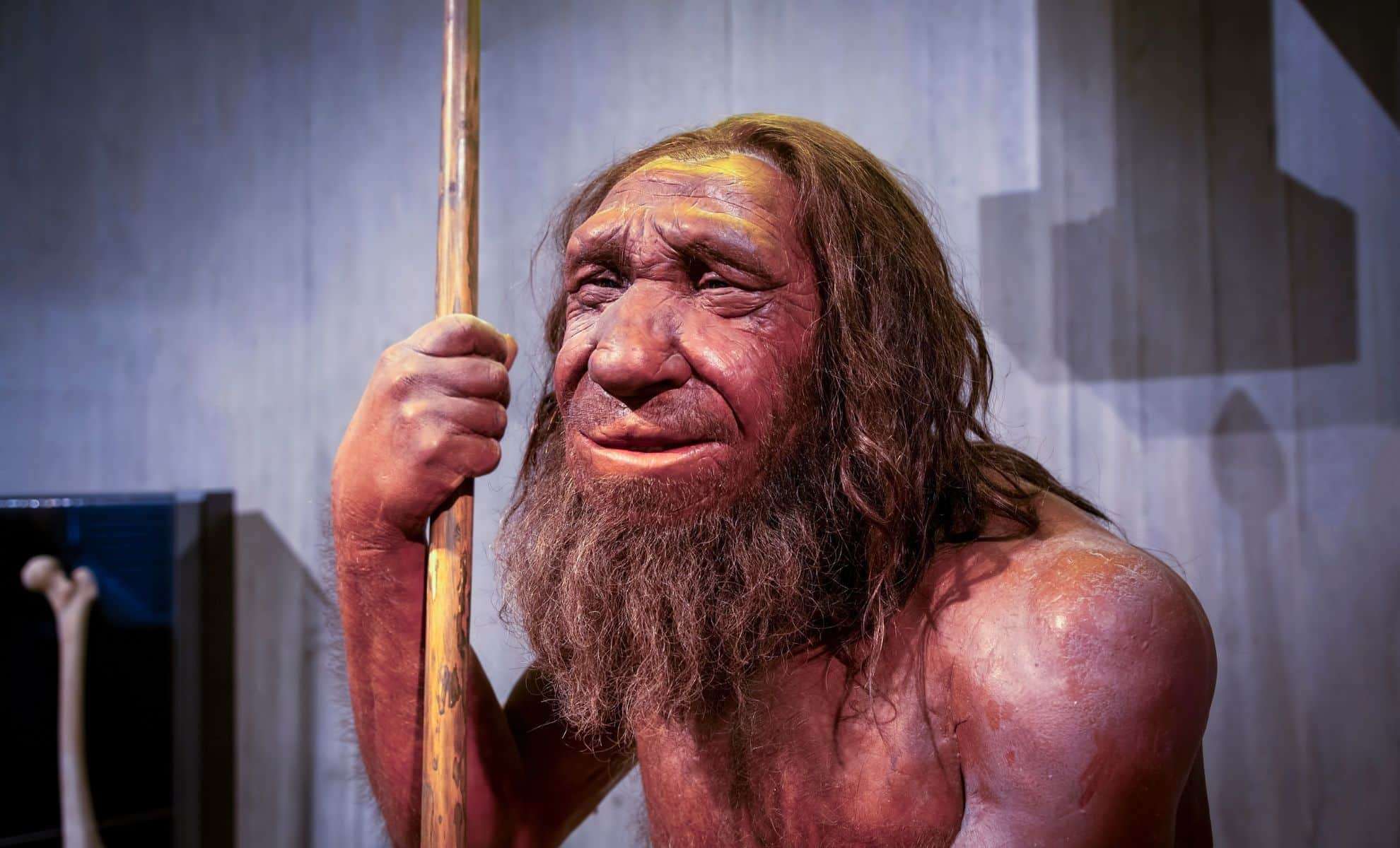
For roughly 40,000 years, Homo sapiens have been the sole human species inhabiting Earth. Our extinct relatives, such as the Neanderthals and Denisovans, vanished long ago, leaving behind only ancient fossils and genetic clues. But what if these archaic humans had survived? How might they look in the present day, and could they coexist within modern society?
Neanderthals: Robust Physiques with Distinct Traits
Daily Mail reports that Neanderthals, our nearest extinct human relatives, appeared around 400,000 years ago. Their physical characteristics would probably resemble fossil evidence closely, with a more compact and muscular frame compared to today’s humans. Known for their pronounced brow ridges, larger skulls, and smaller foreheads, Neanderthals had broader hips and shorter limbs, creating a unique posture distinct from Homo sapiens.
Specialists reject the outdated stereotype of Neanderthals as clumsy cavemen. Rather, they would represent a human variation sharing most traits with us. Anthropologist Professor John Hawks from the University of Wisconsin-Madison explains, “We don’t know of any physiological traits that make Neanderthals distinct. Almost every physical trait in Neanderthals overlaps in its variation with ours today.”

Denisovans: An Enigmatic Human Relative
Compared to Neanderthals, Denisovans remain enigmatic due to limited fossil remains. The recent discovery of a complete Denisovan skull marked a major breakthrough. Based on this skull and other partial bones, scientists estimate Denisovans were even larger and more powerfully built than Neanderthals, featuring wide faces, prominent cheekbones, and broad mouths.
Even so, much about their precise appearance remains uncertain. Researchers continue to reconstruct their features, but it’s believed Denisovans had distinct physical traits setting them apart from modern humans. Their relatively large craniums and brains suggest strong environmental adaptations, though more discoveries are needed to clarify their full appearance.
The Enduring Genetic Influence of Neanderthals and Denisovans
While these archaic humans have vanished, their genetic legacy endures within modern humans. Interbreeding between early Homo sapiens, Neanderthals, and Denisovans resulted in many individuals today carrying traces of their DNA. Some populations show more pronounced genetic signatures inherited from these ancient relatives.
For example, Denisovan ancestry is especially notable in people from East Asia and Oceania, including Tibetans, who possess genes aiding high-altitude survival. This genetic exchange indicates these extinct groups contributed significantly to our evolutionary history.
Dr. Hugo Zeberg of Sweden’s Karolinska Institutet highlights that Neanderthals and Denisovans never fully vanished but merged with humans over millennia. “If they hadn’t gone extinct, they might have continued to interbreed and further intermix our genes,” he states, emphasizing that modern humans are a genetic mosaic of these ancient species.
Would Neanderthals and Denisovans Thrive in Today’s World?
Despite their enduring genetic influence, Neanderthals and Denisovans might have faced challenges adapting to the complex social structures of the modern era. Neanderthals lived in smaller, insular groups and exhibited less sociability compared to modern humans, potentially limiting their ability to flourish in today’s interconnected societies.
Dr. April Nowell, a palaeolithic archaeologist at the University of Victoria, explains that Neanderthals lacked some cognitive flexibility and social skills found in Homo sapiens. Their limited linguistic capabilities and absence of genes linked to creativity and self-awareness could have hindered their integration. She adds, “If Neanderthals were better at not ‘following the herd’ and more of those tendencies were present, I bet much of our world would be different.”
- Categories:
- News






0 comments
Sign in to Comment