
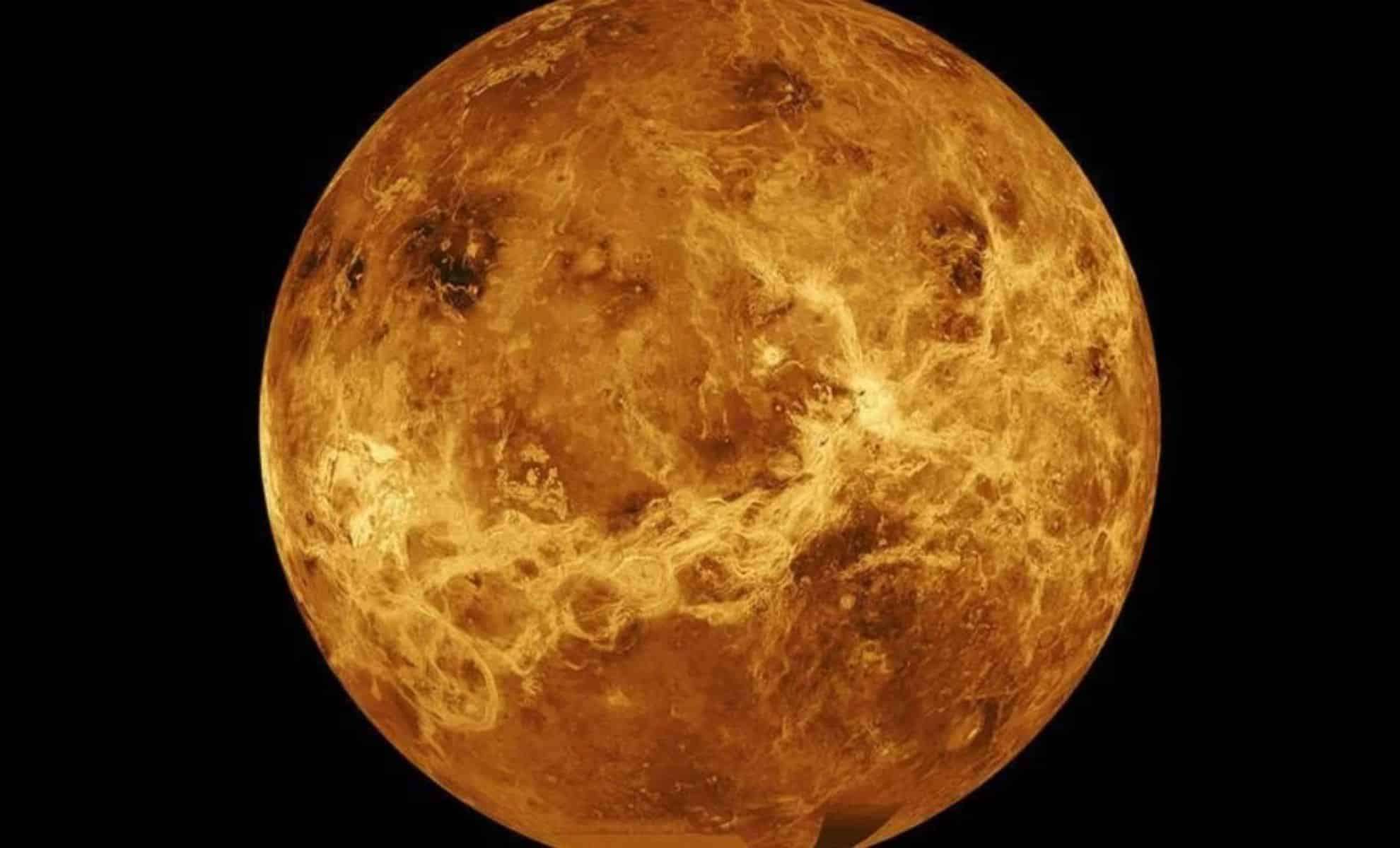
For many years, scientists viewed Venus — often called Earth’s sister planet — as a lifeless, unchanging world, its scorched surface locked in a static state. However, fresh analyses of data from NASA’s Magellan orbiter have unveiled a surprising truth: Venus continues to experience geological activity. This discovery overturns longstanding beliefs and offers new perspectives on planetary geology.
NASA’s most recent research, led by Gael Cascioli from the University of Maryland in Baltimore County and NASA’s Goddard Space Flight Center, highlights ongoing processes reshaping Venus’ terrain. Revisiting radar and gravity datasets from the Magellan mission reveals that Venus’ inner layers remain dynamic, continuously altering the planet’s exterior. These insights not only reshape our view of Venus but also provide clues about the geological forces that could have influenced early Earth.
Venus: A Planet Actively Sculpted by Internal Forces
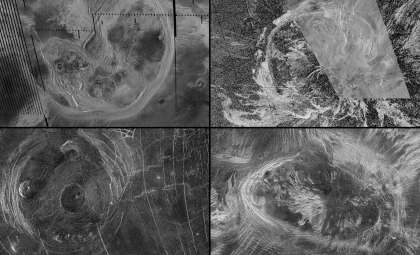
The surface of Venus is marked by more than 75 enormous circular features called "coronae." These prominent structures signal vigorous geological action beneath Venus’ dense atmosphere. They form as mantle plumes—rising columns of hot rock—push and pull at the planet’s crust, indicating tectonic-like deformation despite the absence of Earth-style plate tectonics.

Unlike Earth’s shifting plates, Venus’ outer layer is relatively rigid but still bends and fractures under mantle heat. This internal warmth accumulates, causing the crust to stretch and flex. The study points out, “Out of 75 giant circular scars on the surface called coronae, 52 sit above hot, buoyant mantle plumes that continue to push and pull the crust today.” This ongoing activity disproves previous ideas of a geologically dormant Venus, revealing instead a vibrant, dynamic surface.
Reinterpreting Magellan Data: Signs of a Restless Venus
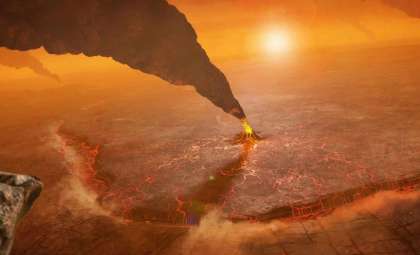
The Magellan spacecraft, operational from 1990 to 1994, mapped nearly the entire Venusian surface using radar. Initially, this data suggested a stable planet, but new examinations reveal continuous surface evolution. Notably, volcanic vents remain active, including one near Maat Mons which expanded notably within just eight months. Such evidence confirms that volcanic processes on Venus are not just remnants of a past era but persist today.
“The VERITAS gravity maps of Venus will boost the resolution by at least a factor of two to four,” states Suzanne Smrekar from NASA’s Jet Propulsion Laboratory. Scheduled for launch in 2031, the VERITAS mission will deliver high-definition observations that enhance our understanding of Venus’ present-day geological dynamics. The improved gravity mapping promises to illuminate the active processes reshaping the planet.
Parallels Between Venus’ Geology and Early Earth
Discovering active geology on Venus offers a window into ancient Earth’s formative epochs. Much like Venus, Earth may have supported dynamic crustal movements driven by volcanic activity and mantle convection during its youth. Investigating Venus’ current geological phenomena allows scientists to infer conditions that might have prevailed during Earth’s early development.
The presence of mantle plumes and volcanic features on Venus provides a valuable model for the types of internal forces shaping terrestrial planets. Insights gained here could shed light on the evolution of Earth’s surface, atmosphere, and hydrosphere. Suzanne Smrekar emphasizes that the VERITAS mission is poised to reveal crucial data that could transform our grasp of both Venusian and early terrestrial history.
Implications for Venus’ Climate Evolution
The revelation of Venus’ ongoing geological activity also influences theories about its climatic past. Today, Venus endures extreme heat—temperatures nearing 900°F (475°C)—caused by a runaway greenhouse effect. Yet, scientists hypothesize that billions of years ago, Venus may have been more temperate, with liquid water and conditions akin to early Earth.
Examining the mantle-driven activity and volcanic processes aids in understanding how Venus transitioned from potentially habitable to its current hostile state. These studies may clarify how internal heat impacted atmospheric changes and the breakdown of water cycles on the planet.
VERITAS: A New Era in Venusian Exploration
The upcoming VERITAS mission promises to revolutionize our ability to study Venus’ geology. Launching in 2031, VERITAS will employ synthetic-aperture radar to capture detailed images of the planet’s surface. By observing gravity anomalies, it will track crustal deformation in near real-time, deepening knowledge of Venus’ internal mechanisms.
“The VERITAS gravity maps of Venus will boost the resolution by at least a factor of two to four,” Suzanne Smrekar explains. This enhanced clarity will help scientists detect subtle tectonic and volcanic activities, enabling breakthroughs in comparative planetology and furthering insight into Venus’ living geology.
Could Venus Have Once Harbored Life?
An exciting implication of Venus’ active geology is the possibility that the planet once offered conditions suitable for life. Evidence of recent volcanic and tectonic activity suggests that Venus’ environment has undergone dramatic shifts, potentially starting with a stable atmosphere and liquid water.
Though Venus is now inhospitable, studying its geological evolution could reveal how it transitioned from a potentially habitable planet to one with extreme surface conditions. This knowledge is vital for assessing the habitability of similar exoplanets and understanding planetary life cycles.
Active Geology and the Quest for Extraterrestrial Life
The discovery of Venus’ geological liveliness also impacts the wider search for life beyond Earth. Planets exhibiting active internal processes and volcanism are considered promising candidates for sustaining microbial life. Understanding how Venus’ interior dynamics influence its surface aids in identifying planets with the right conditions for life elsewhere in the universe.
As research progresses, our comprehension of potentially habitable environments expands. The confirmation of Venus’ geological activity challenges previous notions and broadens the scope of planets considered in the search for extraterrestrial life.
- Categories:
- News









0 comments
Sign in to Comment