
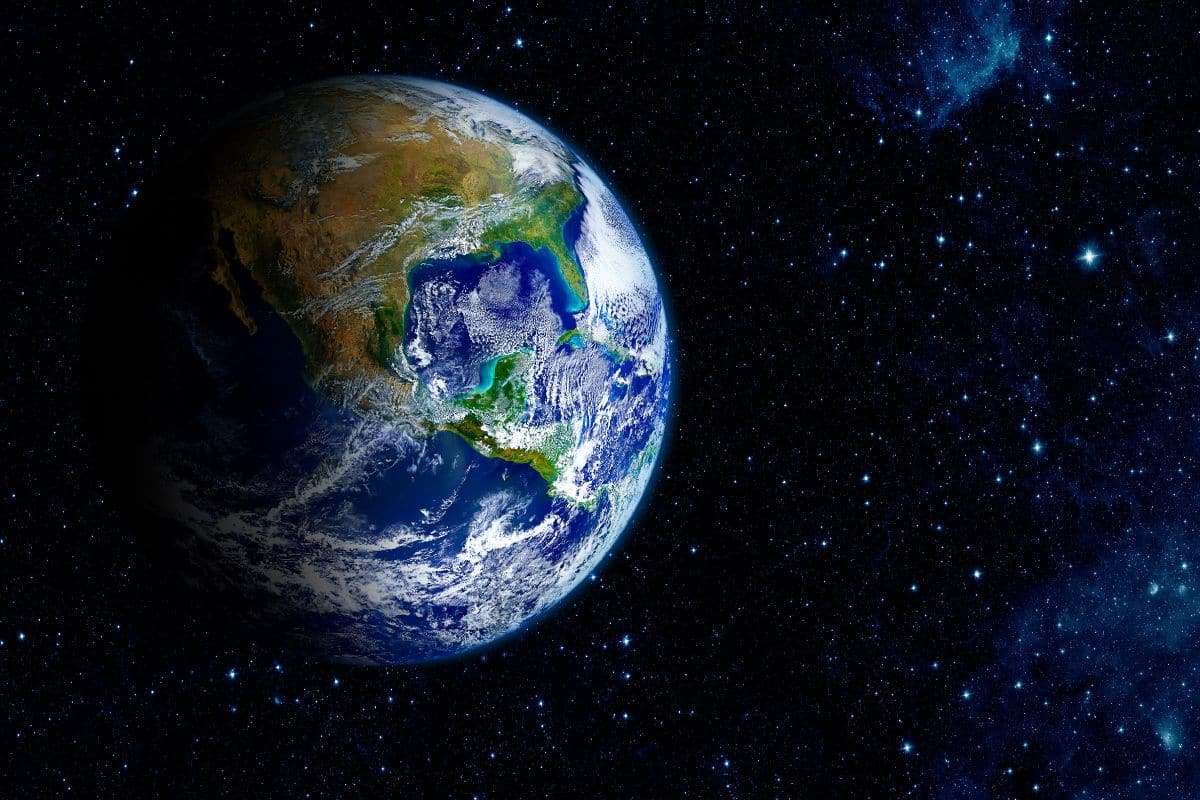
Our planet’s atmosphere currently contains abundant oxygen, a critical element that sustains diverse living organisms. Yet, recent scientific findings indicate this oxygen-rich environment is fleeting. Experts estimate that in approximately a billion years, Earth will experience a significant decline in oxygen, rendering it largely uninhabitable for most life.
Reverting to a Low-Oxygen Era
Earth’s atmosphere was not always abundant in oxygen. Nearly 2.4 billion years ago, the Great Oxidation Event (GOE) marked a pivotal rise in oxygen levels, enabling the evolution of complex organisms. However, research published in Nature Geoscience reveals this oxygen-rich period is temporary.
Scientists from Toho University and the Georgia Institute of Technology simulated Earth’s atmospheric changes, suggesting that as the Sun’s brightness intensifies, increased solar radiation will cause greater breakdown of carbon dioxide. Given that CO₂ fuels photosynthesis, its decline will reduce oxygen production.

“Scientific discussions on Earth’s biosphere lifespan have long centered on solar brightening and geochemical cycles involving carbonates and silicates,” explains environmental researcher Kazumi Ozaki.
Eventually, Earth will resemble its pre-GOE state, characterized by methane-rich and oxygen-poor conditions.
Swift and Severe Oxygen Decline
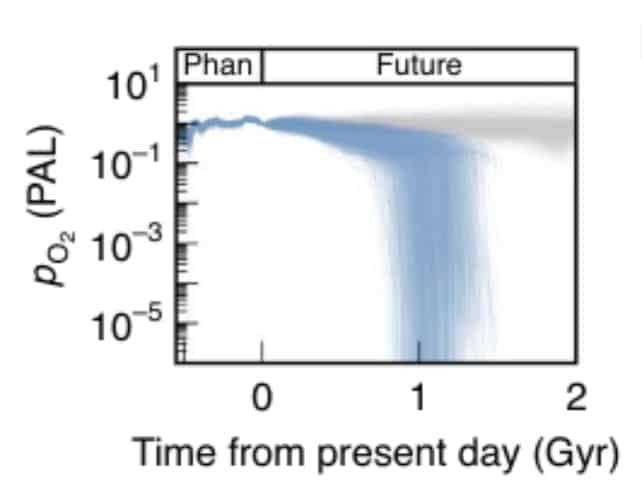
Though this shift is expected in the distant future, once it starts, oxygen levels will plummet rapidly on a geological timescale. Researchers predict amounts will decrease by a factor of a million, threatening survival for oxygen-dependent species.
Earth scientist Chris Reinhard from Georgia Tech emphasizes, “The decline of oxygen will be extraordinarily drastic—roughly a million-fold less than current levels.”
With the ozone layer gone, harmful solar radiation will bombard the surface, further endangering life. Only anaerobic microbes that do not depend on oxygen will continue to thrive.
Implications for Alien Life Searches
This research influences how we seek signs of life beyond Earth. Oxygen is commonly regarded as a vital biosignature, but if oxygen-rich atmospheres are temporary, many inhabited planets may lack detectable oxygen.
NASA’s NExSS (Nexus for Exoplanet System Science) initiative explores alternative biosignatures, recognizing the limitations of oxygen as a sole indicator.
What Lies Ahead for Life on Earth?
Although humanity won’t witness Earth’s oxygen depletion, this study highlights a vital truth: our planet’s habitability is finite. Prior to the atmosphere’s drastic changes, increased solar heat and ocean evaporation will already pose major challenges.
The findings emphasize the transient nature of Earth’s oxygenated environment. The breathable atmosphere we depend on today is but a brief moment in Earth’s extensive timeline, destined to fade and leave a planet unsuitable for most forms of life.
- Categories:
- Science












0 comments
Sign in to Comment