
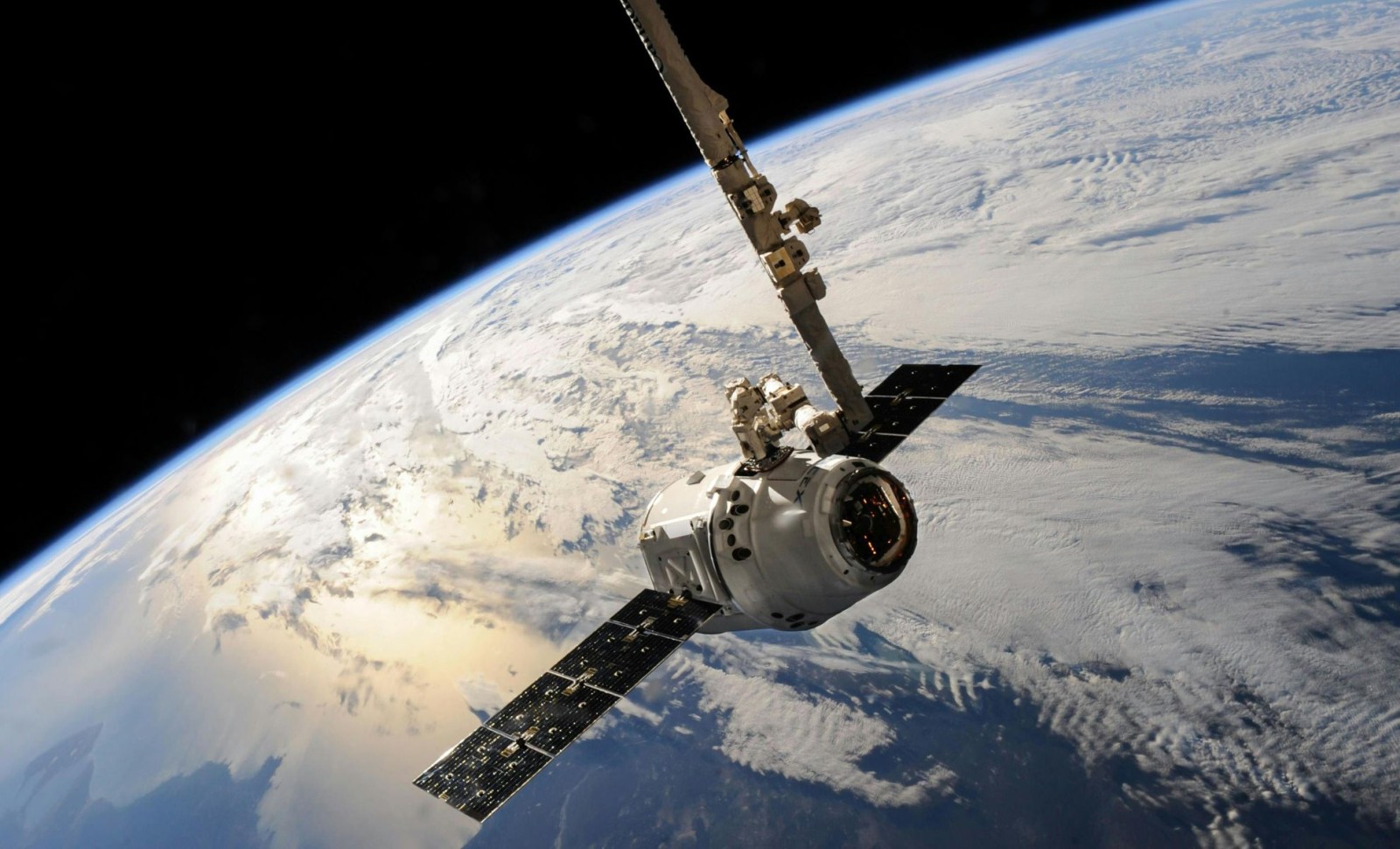
India is set to deploy its largest-ever communications satellite into orbit this Sunday. The spacecraft, tipping the scales at more than 4.4 tonnes, will be launched using the country’s most robust rocket to date.
The Indian Space Research Organisation (ISRO) announced that the satellite named CMS-03 will be sent into space from the Sriharikota launch center located in Andhra Pradesh. The scheduled liftoff time is 5:26 p.m. local time (1156 GMT). As reported by Phys.org, this mission marks a significant step in advancing India’s space capabilities, both in terms of payload size and extended coverage.
India’s space program has steadily progressed since 2008, rising as a notable force in planetary missions and satellite development. As the world’s most populous country, India is focused on expanding its space infrastructure to enhance autonomy and scale.

Record-Breaking Satellite and Launch Vehicle
The CMS-03 satellite has a mass of roughly 4,410 kilograms (9,722 pounds), making it the heaviest communications satellite India has ever launched. It will be hoisted into orbit by the LVM3-M5, a towering 43.5-meter rocket ISRO credits as its most powerful launch vehicle.
This rocket was previously employed for the Chandrayaan-3 mission, which achieved a successful moon landing in August 2023. This feat positioned India alongside Russia, the United States, and China in executing a controlled lunar touchdown.
While ISRO has not detailed specific modifications to the rocket, Phys.org describes this LVM3 version as an “upgraded” model compared to the one used for Chandrayaan-3.
Expanded Connectivity Across Sea and Land
The CMS-03 satellite is designed to deliver communications coverage over a broad maritime area alongside complete coverage of the Indian mainland, according to ISRO. Although detailed technical specs are yet to be published, the satellite’s mass suggests a noteworthy increase in operational range.
ISRO highlighted that the mission aims to strengthen communication networks, especially in regions where ground infrastructure is sparse or unreliable. The satellite is expected to provide improved services for both civilian needs and India’s extensive communication ambitions across terrestrial and maritime zones.
A Key Advancement in India’s Space Strategy
Since its inaugural lunar mission, India’s space program has consistently reached new heights. With progressively ambitious projects, ISRO is setting clear goals for the future. Phys.org notes that India intends to launch an unmanned orbital flight before gearing up for its maiden crewed spaceflight in 2027.
The government’s vision extends even further. As reported by Phys.org, Prime Minister Narendra Modi has announced a goal to place an astronaut on the Moon by 2040. This highlights a long-term focus on enhancing national spacefaring and exploration capabilities.
The launch of CMS-03 underscores these ambitions. As India’s heaviest communications satellite so far, it symbolizes both a technical breakthrough and a strategic milestone in the nation’s expanding space endeavors.
- Categories:
- Space







0 comments
Sign in to Comment