

Planet Labs PBC is set to deploy its inaugural hyperspectral satellite, Tanager-1, marking a transformative advancement in the company’s Earth imaging technology.
Developed through a partnership with the Carbon Mapper Coalition and NASA’s Jet Propulsion Laboratory (JPL), this cutting-edge satellite promises unprecedented Earth observation capabilities.
Planned for launch from Vandenberg Space Force Base via SpaceX’s Transporter-11 Rideshare, the mission could launch as soon as July. Tanager-1’s deployment signifies a breakthrough moment, allowing for far more detailed and expansive data collection than previously possible.

Enhanced Spectral Imaging with Tanager-1
Tanager-1 is engineered to capture information across over 400 spectral bands, greatly expanding Planet’s capacity to analyze Earth’s surface. Unlike conventional systems limited to the visible spectrum, hyperspectral imaging covers a wide range including visible and shortwave infrared wavelengths, enabling detection of materials and environmental phenomena invisible to standard cameras.
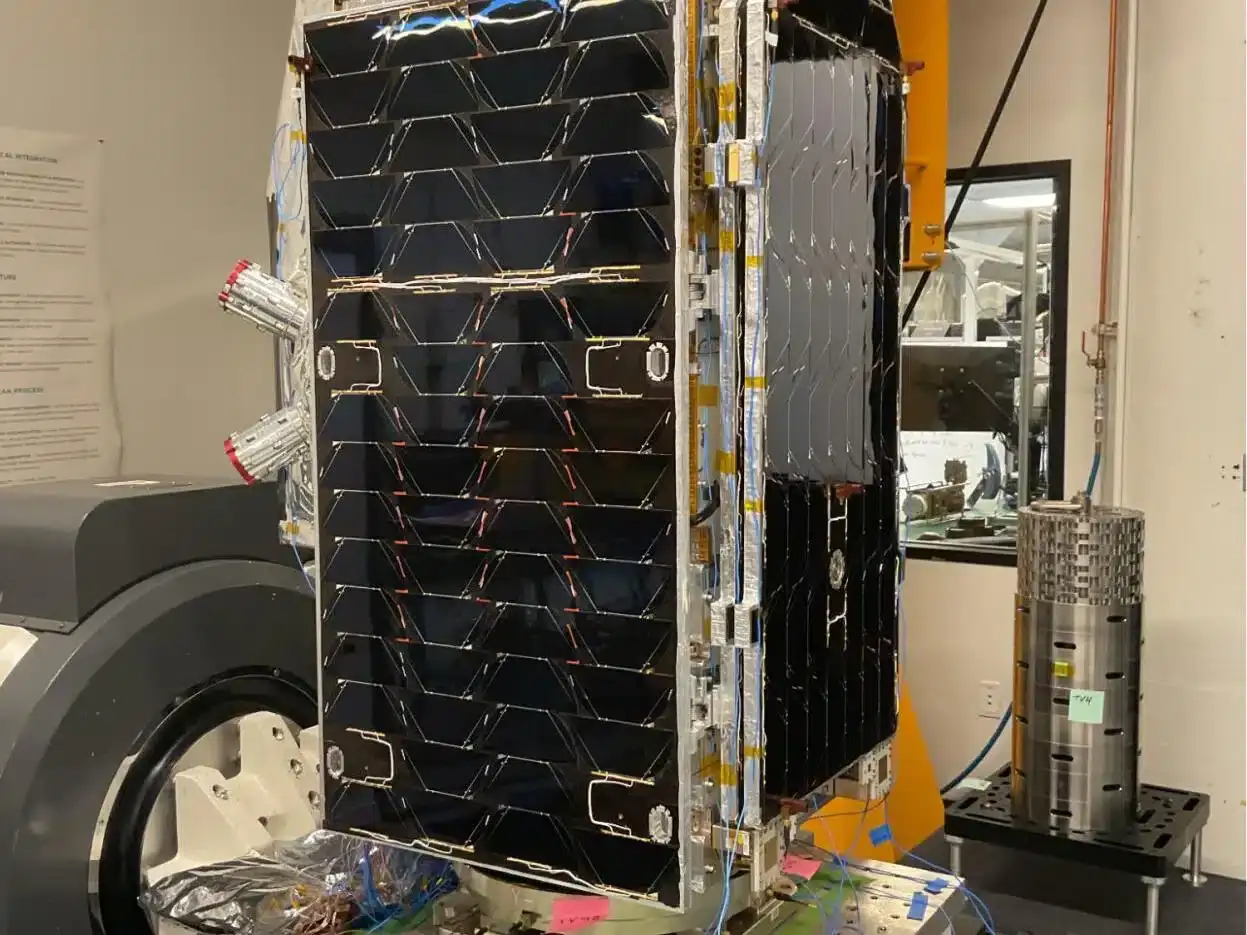
The sophisticated imaging spectrometer, designed at JPL, ranks among the most intricate optical instruments ever deployed by Planet. It builds upon decades of technology used in airborne and spaceborne sensors like the Airborne Visible/Infrared Imaging Spectrometer (AVIRIS) and the Earth Surface Mineral Dust Source Investigation (EMIT).
Data from Tanager-1 will enable diverse applications, such as pinpointing and tracking greenhouse gas emissions, including major methane and carbon dioxide sources. This capability is vital for tackling climate change through precise monitoring of pollutant release.
Beyond tracking emissions, Tanager-1’s hyperspectral data will assist in evaluating biodiversity, soil and vegetation health, mineral identification, and water quality assessment, making it a multipurpose tool for environmental research and commercial use.
Impact on Environmental Monitoring and Industry
The arrival of Tanager-1 represents a milestone for Planet Labs in both ecological and commercial spheres. Its ability to gather rich hyperspectral information enhances Planet's service offerings and market reach. It particularly benefits the Carbon Mapper Coalition, which leverages this data to better understand and reduce greenhouse gas emissions, supporting informed policy-making and climate action.
There is considerable interest among sectors like agriculture, oil and gas, and governmental bodies, keen to use detailed spectral insights to optimize crop management, resource discovery, and environmental compliance. Although hyperspectral data markets are still developing, Planet’s innovative technology places it at the forefront of this emerging arena.
Financial Performance and Future Operations
Planet Labs recently posted $60.4 million in revenue for fiscal Q1 2025, a 15% increase year-over-year largely fueled by government contracts. This positive trend is expected to accelerate with Tanager-1’s launch and the new services it will enable. The U.S. National Reconnaissance Office has extended its contract with Planet for imagery and data storage, underscoring sustained demand for high-quality Earth imagery.
Alongside Tanager-1, Planet plans to send 35 SuperDove satellites to augment its flagship daily global observation network. This expanded fleet will improve continuous Earth coverage for applications ranging from defense to commercial markets, offering rich datasets and predictive analytics critical to decision-makers.
Planet aims to achieve adjusted EBITDA profitability by the end of fiscal 2025. Launching Tanager-1 is a pivotal part of this objective, expected to attract fresh clients and deepen partnerships. The company’s emphasis on cutting-edge imaging and reliable data delivery positions it for enduring growth in the competitive Earth observation sector.
Scaling Up Planet’s Hyperspectral Fleet
Following the deployment of Tanager-1, Planet will expand its roster of hyperspectral satellites, leveraging agile aerospace methods to deliver high-resolution, detailed Earth data. This expansion is integral to Planet’s broader plan to elevate its imaging precision and provide actionable intelligence.
Building on the earlier success of the Pelican-1 technology demonstrator, which shares the same small satellite platform, Planet is committed to integrating advanced spectral imaging across its constellation.
With a unique blend of innovative aerospace strategies and state-of-the-art technologies, Planet’s satellite network delivers versatile, comprehensive observational capabilities. From routine global monitoring to specialized hyperspectral sensing, the company continues to push boundaries in Earth observation.
The future of planetary monitoring is bright, with Tanager-1 setting the stage for expanded hyperspectral missions. As global demand for detailed, accurate Earth data surges, Planet is strategically positioned to supply these needs with advanced technology and pioneering data analysis, opening a new chapter in understanding our world.
- Categories:
- Astronomy ,
- News ,
- Space ,
- Aircraft













0 comments
Sign in to Comment