
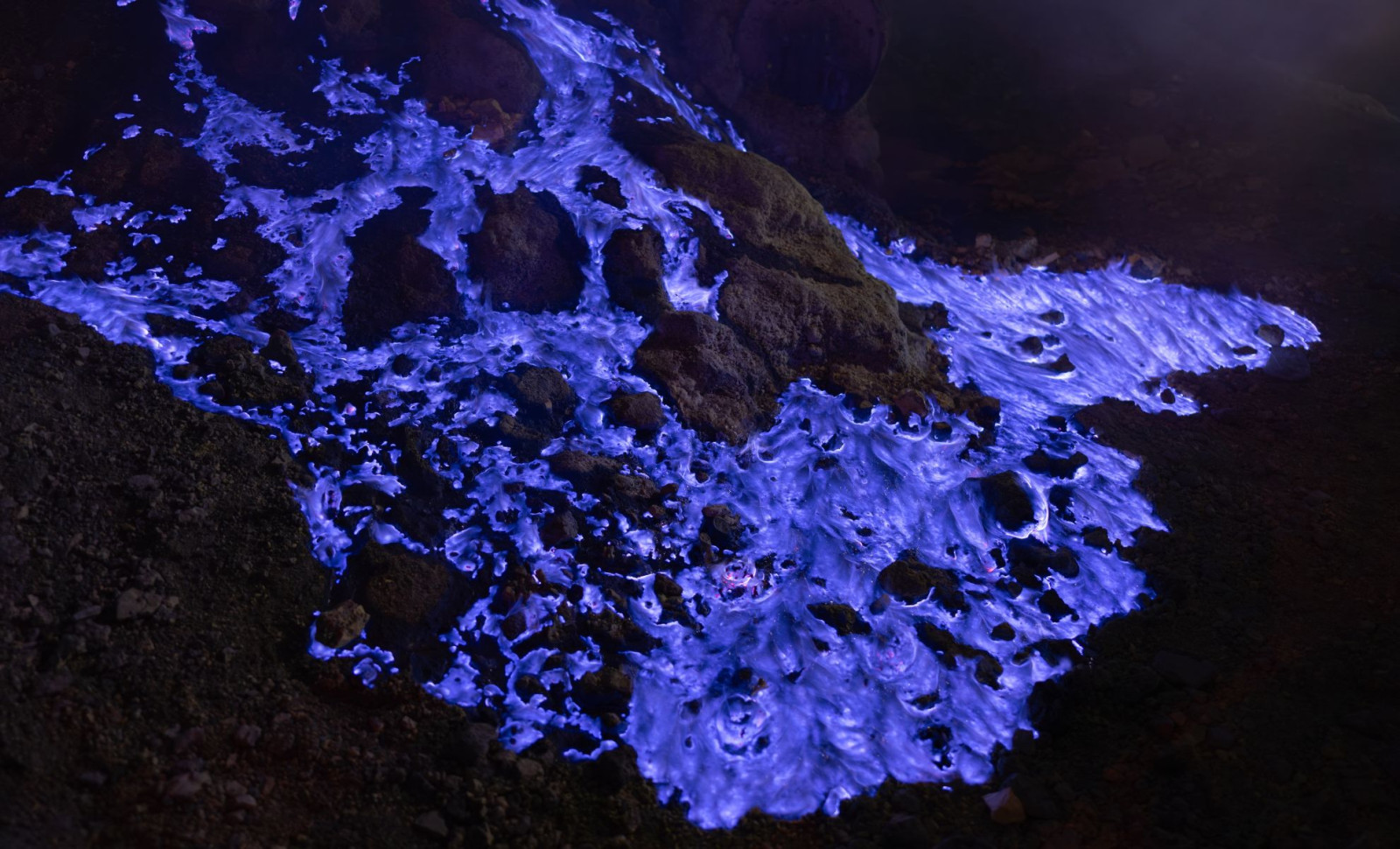
Indonesia’s Kawah Ijen volcano reveals an extraordinary spectacle at night: an intense blue luminescence unlike the typical red-orange glow of molten lava. This surreal neon blue radiance comes from streams of burning sulfur, creating an unforgettable visual unlike any other volcanic display.
The unique blue flames have fascinated scientists and photographers worldwide, intriguing with their vibrant, otherworldly shimmer. Unlike conventional lava flows, these flames are not molten rock, but a chemical reaction that adds to the volcano’s enigmatic allure.
What Causes the Blue Flames?
Most imagine lava as a fiery red liquid, but the blue flames seen at Kawah Ijen are caused by burning sulfur gases, not molten rock. ZME Science explains that sulfur gases escape through cracks in the crater, heated to temperatures above 600 °C (1,112 °F). When these gases ignite upon contact with oxygen, they emit a vivid blue flame.

This intense heat-induced sulfur combustion produces the glow, not magma itself. The visual effect mimics flowing lava, leading to the moniker of “blue lava.” Nevertheless, it is the burning sulfur that fuels this eerie, electric blue light rather than molten rock.
The Flowing Sulfur and the “Cerulean Eruption”
Beyond the flames, Kawah Ijen also features molten sulfur that accumulates and runs down the volcano’s slopes. This blazing liquid sulfur creates glowing streams resembling rivers of lava, deepening the illusion of blue lava flowing down the mountainside. Known as a Cerulean eruption, this rare phenomenon is among the most stunning volcanic spectacles worldwide. Similar events occur in places like Ethiopia’s Danakil Depression, but Kawah Ijen remains one of the most celebrated sites for witnessing it.
As the liquid sulfur burns with bright blue flames, it cascades down the volcanic terrain in fiery rivulets. This blue fiery flow mirrors traditional lava rivers but with an ethereal glow that transports observers to a scene out of science fiction. Photographers such as Thomas Fuhrmann, who documented the display in 2018, describe the sight as a surreal encounter with nature’s fierce beauty.
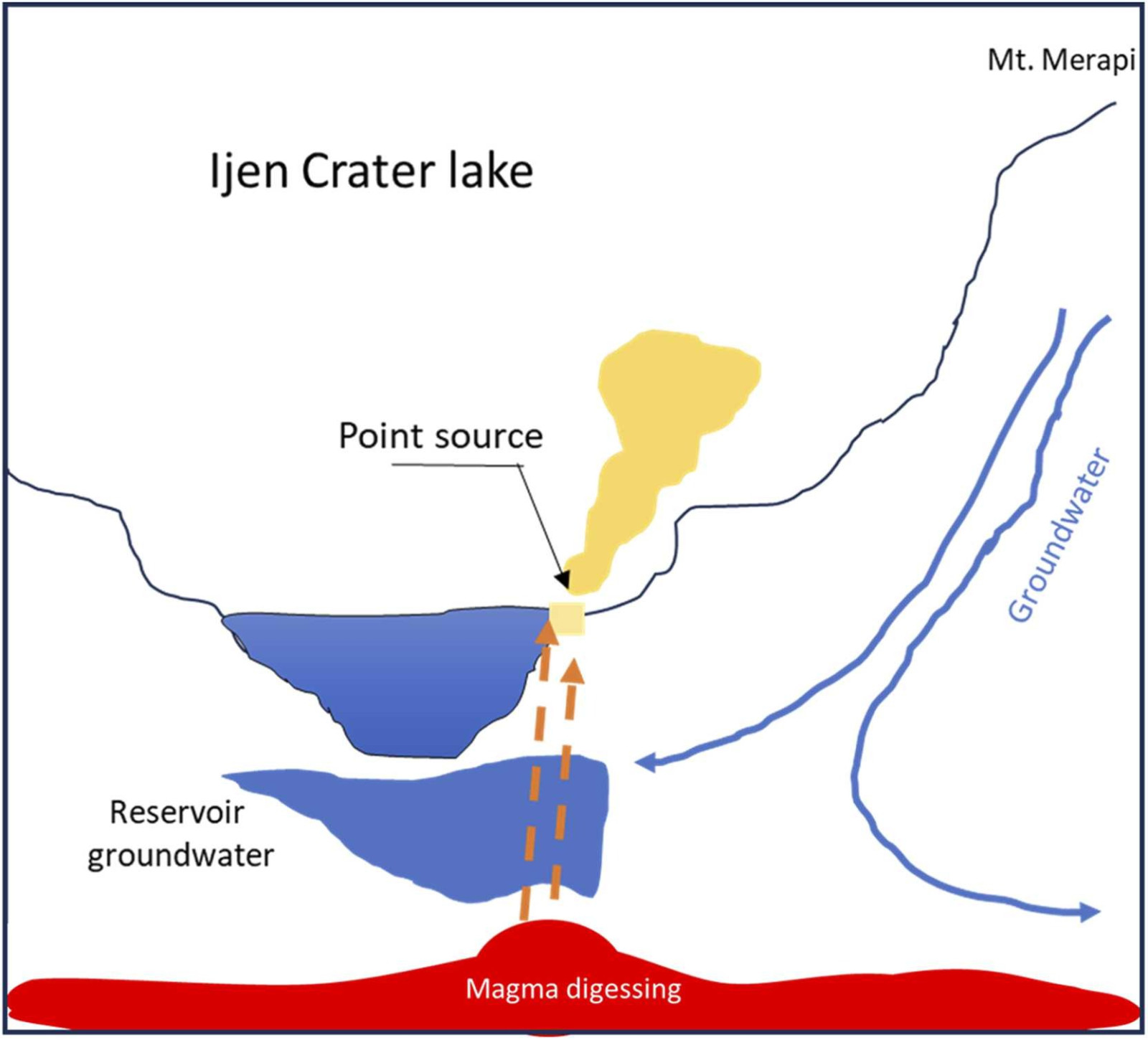
Perils of Sulfur Mining Amidst the Blue Flames
While the dazzling blue fire captivates visitors, it also reveals hazardous working conditions. Local miners extract sulfur from the volcano under hazardous and toxic circumstances. A study featured in Toxicology Reports details how miners often defend themselves using only damp cloths against thick sulfur smoke and fumes. After the flames die down, they gather the solid sulfur and transport heavy loads up the steep, dangerous slopes daily, endangering their health and safety.
The harvested yellow sulfur, nicknamed “Devil’s Gold,” is essential for various industrial applications, including fertilizer production and chemicals. Despite the risks and minimal protective gear, miners persist in their demanding work within this volatile environment.
- Categories:
- News









0 comments
Sign in to Comment