
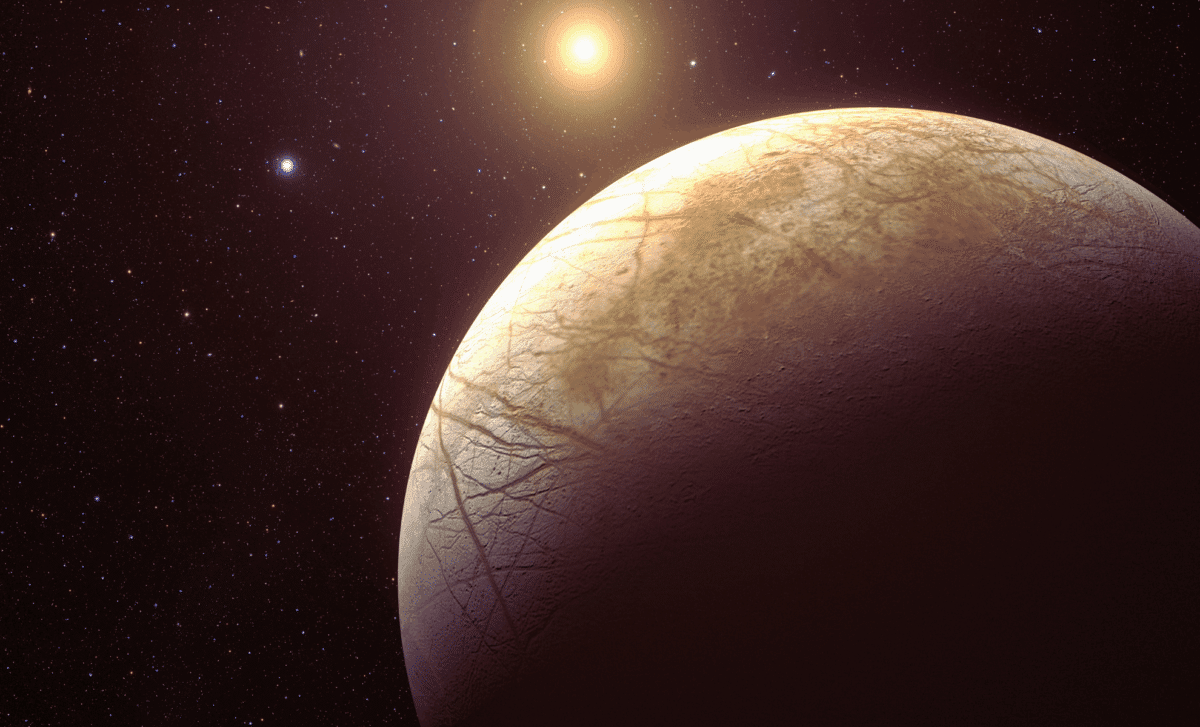
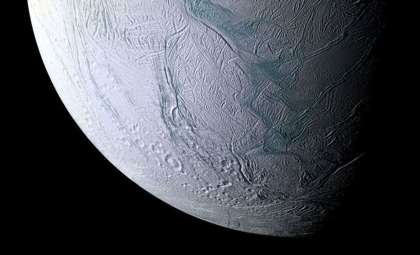
A group of engineers based in Germany has unveiled a cutting-edge laser drilling system designed to revolutionize our approach to exploring the frozen landscapes of the solar system. Departing from bulky mechanical drills and energy-intensive melting devices, this method harnesses focused light for precisely penetrating ice layers. This breakthrough could enable scientists to reach subsurface oceans on worlds such as Europa, Enceladus, and icy regions on the Moon and Mars.
Shedding Light on Subsurface Oceans
The aspiration to access vast hidden oceans beneath the icy crusts of moons like Jupiter’s Europa and Saturn’s Enceladus has fascinated planetary scientists for many years. These concealed waters are prime candidates in the search for life beyond Earth. However, drilling through thick ice has posed significant engineering challenges. Recently, a new publication in Acta Astronautica detailed an innovative laser drilling technique that promises to overcome these hurdles.
Originating from the Institute of Aerospace Engineering at Technische Universität Dresden, this device consumes ice by vaporizing it with a concentrated laser beam, bypassing traditional melting or mechanical cutting methods. This process, called sublimation, converts ice directly into vapor, avoiding the need for heavy drilling rods or power-hungry cables.

“We’ve created a laser drill that enables deep, narrow and energy-efficient access to ice without increasing instrument mass — something mechanical drills and melting probes cannot achieve,” explained Martin Koßagk, lead author of the study.
Contrary to standard drills that become increasingly cumbersome at depth, the Dresden team’s design positions all hardware at the surface, making the system lightweight. Vaporized ice exits through a slender borehole, carrying with it dust and gas that can be examined to determine chemical composition, density, and possible biosignatures. This design minimizes power use and enables subsurface investigations using small landers with limited payload capacities.
Overcoming Subsurface Obstacles
Despite its promise, the laser drill faces practical challenges beneath planetary surfaces. Where pockets of rock or dust interrupt the icy layer, the vaporization process halts. In such cases, operators would need to relocate the drill to continue. Hence, Koßagk and his team stress the importance of using supporting technologies.
“It is therefore important to operate the laser drill in conjunction with other measuring instruments,” Koßagk told Space.com. “Radar instruments could look into the ice and locate larger obstacles, which the laser drill could then drill past.”
By integrating these tools, missions can better analyze subsurface ice structures before drilling, targeting regions most likely to yield valuable scientific data. Future developments include a dust-separation system and shrinking the device for space qualification. The laser drill prototype has demonstrated high efficiency in trials conducted in the Alps and Arctic, quickly boring through snow and ice while maintaining low energy consumption.
Beyond its role in exploring other worlds, this technology holds promise for Earth-based applications such as avalanche forecasting and studying snow density. Mounted on drones, this lightweight tool could safely collect data from dangerous slopes without risking human safety.
The Icy Frontiers of Tomorrow
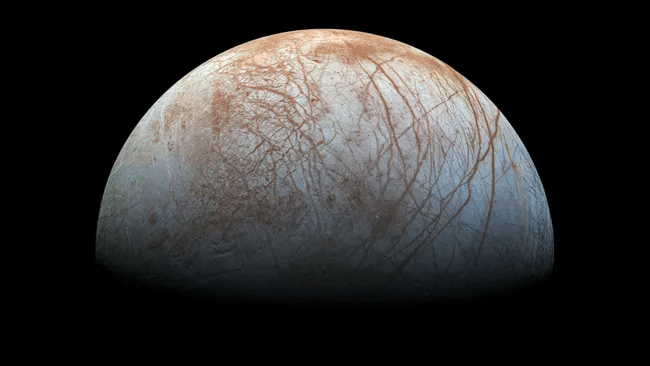
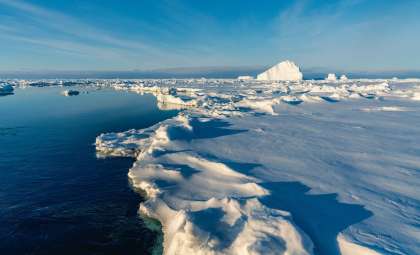
The quest to uncover the secrets beneath the frozen crusts of moons like Europa has captivated researchers for decades. This new laser drilling approach brings that mission closer to fruition. Europa’s vast saltwater ocean, sealed under potentially tens of kilometers of ice, represents one of the solar system’s most compelling habitats for extraterrestrial life. Heating from tidal forces sustains these environments, but accessing them has remained beyond the reach of conventional drilling tools.
By vaporizing ice instead of melting it, the laser-driven system significantly reduces power demands while maintaining precise control, avoiding risks such as refreezing or mechanical entanglement. The scientific team envisions coupling the drill with mass spectrometers and dust analyzers to study materials released during drilling. These measurements could reveal vital information about the chemical composition — including salts, organic molecules, and isotopic signatures linked to hydrothermal or biological processes. Even minor anomalies might provide clues to past or present life-supporting conditions.
- Categories:
- News

0 comments
Sign in to Comment