
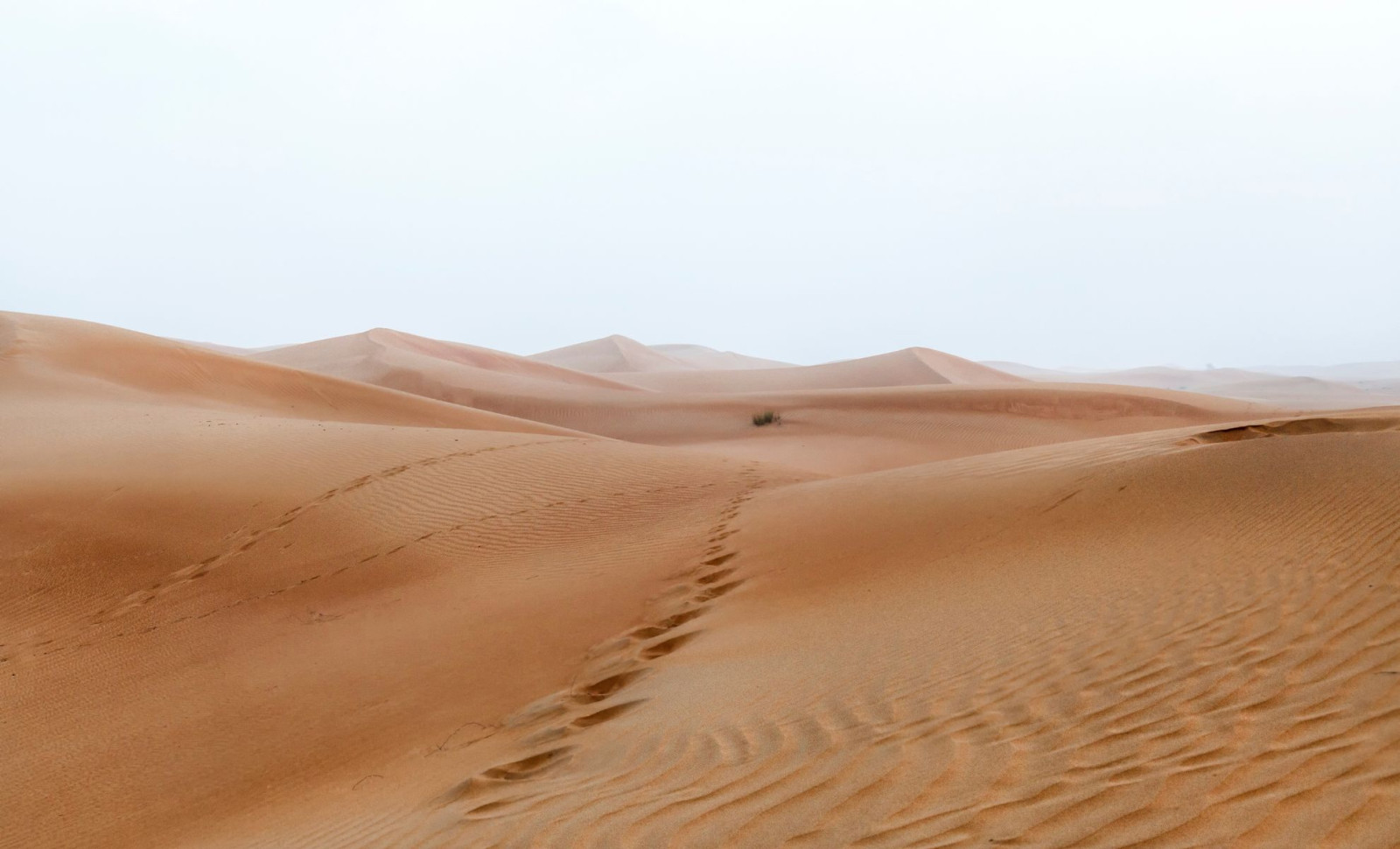
In northern China, a nearly six-decade-long experiment reveals that inoculating desert dunes with cyanobacteria can accelerate soil restoration from around 15 years down to just one or two. This strategy, which leverages engineered biological soil crusts, provides an alternative way to combat desertification without relying solely on tree planting.
Traditionally, efforts to halt desert expansion have focused on planting vegetation. Along the fringe of the Taklamakan Desert, China has implemented extensive green belts to stabilize moving sands. Although effective, these projects demand significant time and investments.
Microbial Architects of Soil Formation
The primary agents are cyanobacteria, hardy microbes that harness sunlight for energy and withstand high temperatures. Upon receiving moisture, they secrete adhesive polysaccharides that bind sand particles together, forming a delicate surface layer known as a biological soil crust.

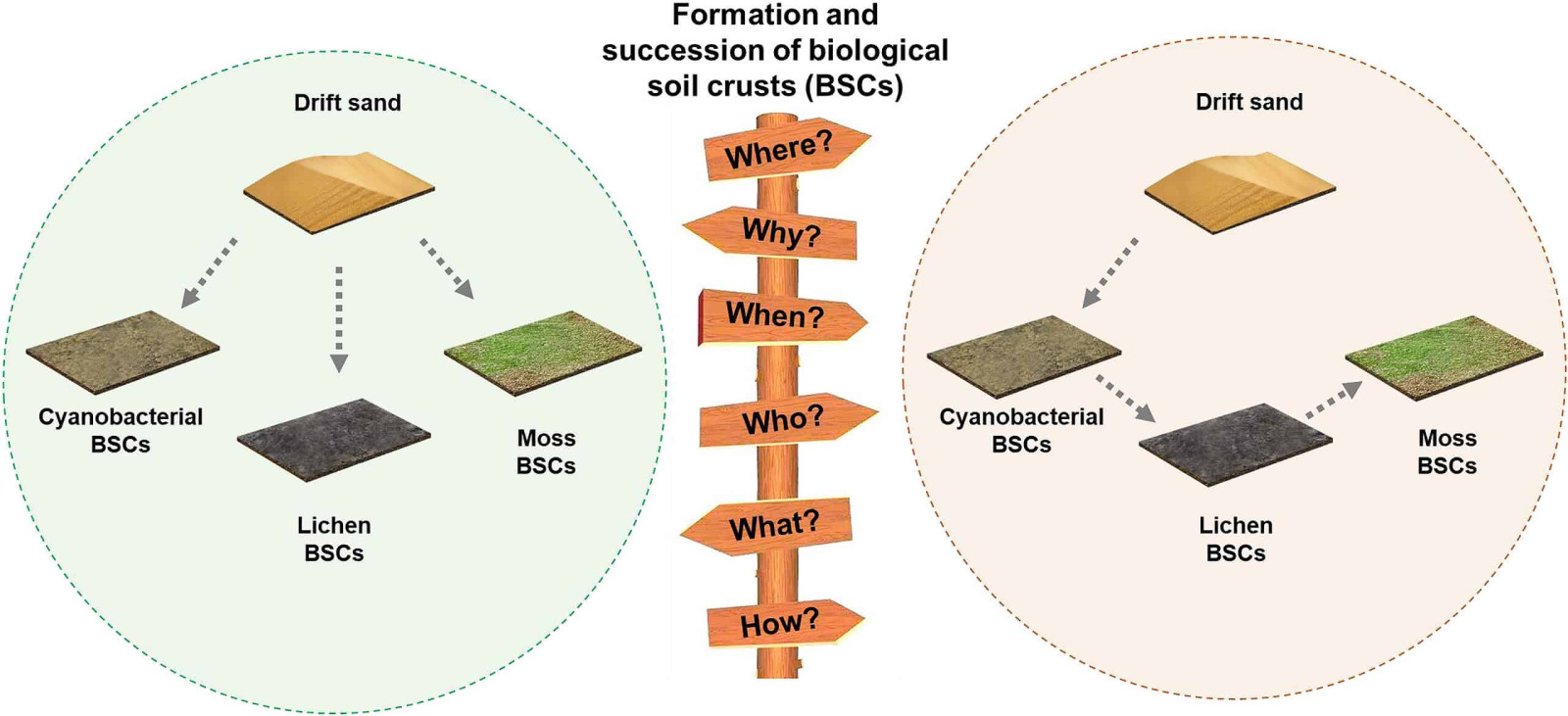
Research detailed in Soil Biology and Biochemistry shows that Natural Biological Soil Crusts (NBSCs) form gradually over approximately 15 years. Once established, they help prevent wind erosion and create hospitable conditions for indigenous grasses and shrubs to grow.
Accelerating Soil Crust Formation
The study contrasted naturally formed crusts with Induced Biological Soil Crusts (IBSCs), which result from directly introducing cyanobacteria into the sand in situ. The team discovered that induced crusts attained similar stability in just one to two years.
This improvement was quantifiable: as the crusts matured, carbon and nitrogen concentrations rose substantially, enhancing the soil’s fertility. The data underscored a strong link between the development of crust layers and nutrient enrichment.
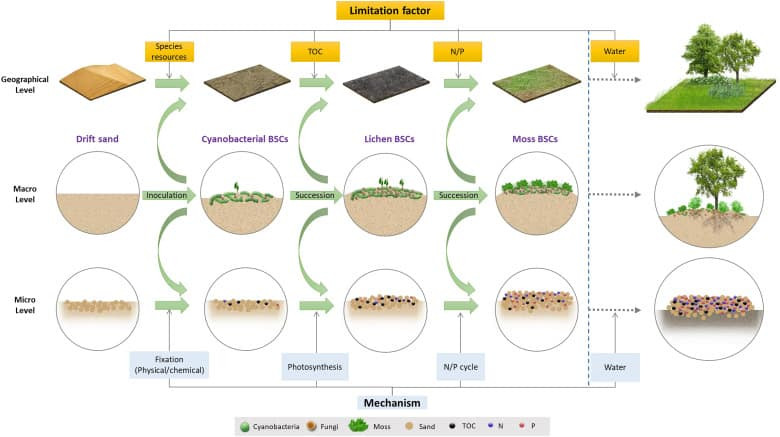
At the Shapotou Desert Research and Experiment Station, researchers optimized microbial deployment methods. Originally, spraying liquid cultures required bulky equipment and electricity—impractical in remote dunes. The team then formulated dry “solid inoculants” combining cyanobacteria with organic matter. These lightweight mixtures can be manually or drone-dispersed into inaccessible regions. Once moisture is present, the microbes become active, binding sand particles together.
Heat-Resilient but Physically Vulnerable
Over time, the introduced crusts integrate with native microbial populations. Rather than remaining simple bacterial layers, the elevated carbon and nitrogen foster colonization by diverse organisms, gradually enhancing the ecosystem’s complexity.
However, the biological crusts are fragile to physical disruption. Vehicle paths or livestock trampling can undo years of microbial progress almost instantly. While robust against heat and solar radiation, the crust remains susceptible to mechanical damage.
Desertification impacts approximately 40 percent of the global land area. China aims to rehabilitate close to 100,000 mu (about 6,600 hectares) using these microbial solid inoculants in the coming five years. Though a relatively small region, the approach embodies a vital principle: prepare the soil with microbes before reforesting.
- Categories:
- Science





0 comments
Sign in to Comment