
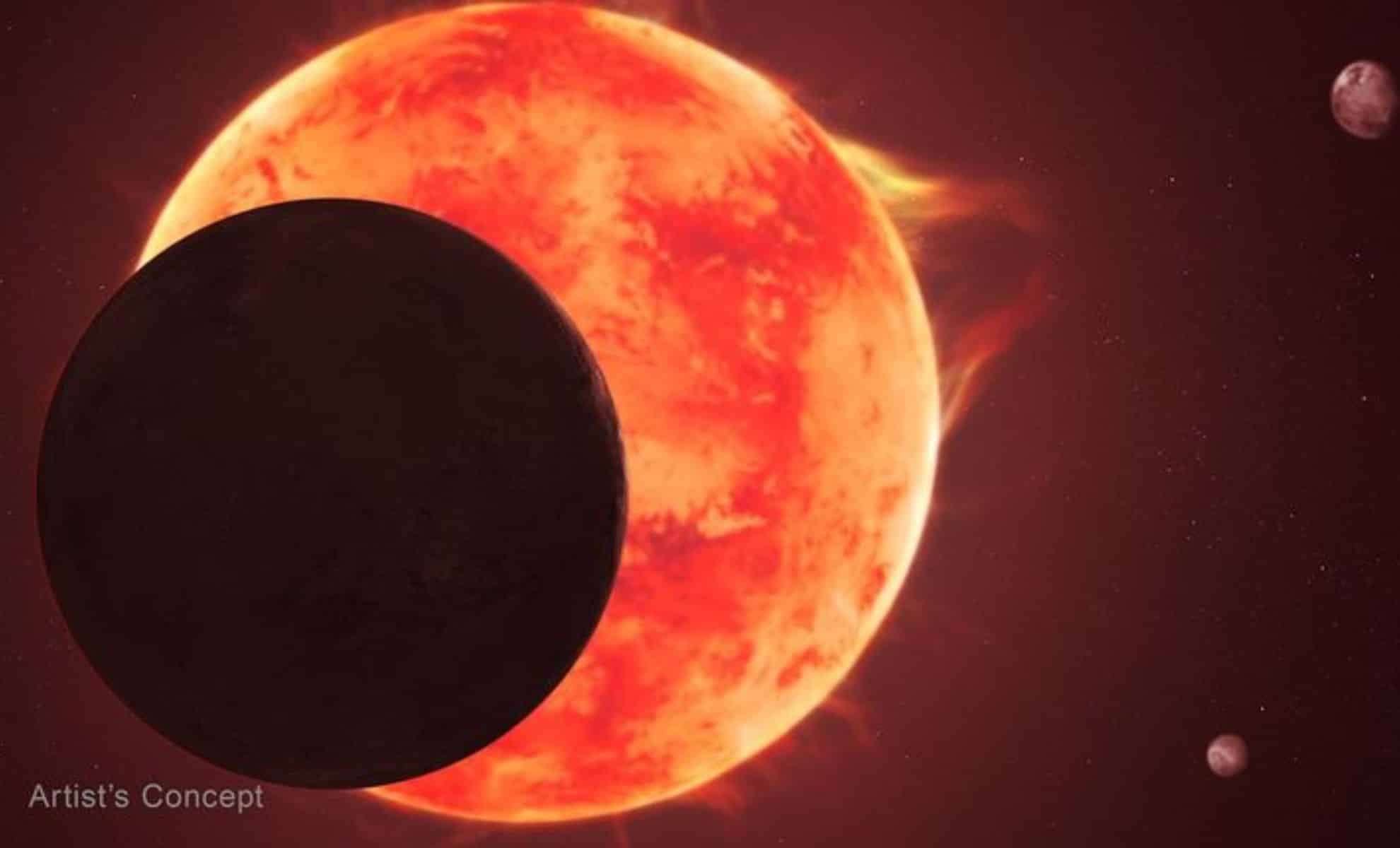
The TRAPPIST-1 system, featuring seven Earth-sized worlds orbiting a faint red dwarf, has been a key focus for astronomers exploring planets that might support life. Of particular interest was TRAPPIST-1 d, positioned in the star’s habitable zone where conditions could allow liquid water. Yet, recent observations from NASA’s James Webb Space Telescope (JWST) have reshaped this view. According to research published in The Astrophysical Journal, scientists employed JWST’s infrared instruments to examine the atmosphere of TRAPPIST-1 d and found no evidence supporting an Earth-like environment.
The joint study by the University of Chicago and the Trottier Institute for Research on Exoplanets (IREx) reveals the absence of key atmospheric gases—water vapor, methane, and carbon dioxide—on TRAPPIST-1 d, diminishing hopes that this planet resembles Earth’s habitable conditions.
What TRAPPIST-1 d Represents in Exoplanet Research
TRAPPIST-1 d has attracted excitement due to its Earth-like size, rocky surface, and orbit within the habitable zone of an ultracool dwarf star. Scientists anticipated it might possess an atmosphere similar to Earth’s, a crucial step toward confirming its potential for life. The possible existence of liquid water further boosted these expectations.

The latest measurements from the JWST’s Near-Infrared Spectrograph (NIRSpec) challenge this optimism. Findings show that TRAPPIST-1 d lacks atmospheric signatures typically linked to habitability, such as water, methane, or carbon dioxide. As Caroline Piaulet-Ghorayeb, researcher at the University of Chicago and IREx, states, “Our goal is to understand if environments like Earth’s can be found elsewhere and under what conditions. JWST is enabling this quest for Earth-sized planets, and for now, TRAPPIST-1 d appears unlikely to be an Earth analog.”
Exploring Why TRAPPIST-1 d Shows No Atmosphere
The failure to detect a clear atmosphere on TRAPPIST-1 d opens up several explanations. Piaulet-Ghorayeb suggests, “The absence could be due to a thin atmosphere, similar to Mars, that evades detection; or it might be cloaked by dense, high-altitude clouds resembling those on Venus, obscuring atmospheric signals; alternatively, it could simply be a bare rocky surface without any atmosphere.”
Each scenario offers a distinct implication. A thin atmosphere could indicate a fragile environment, complicating the planet’s habitability. Thick clouds might hide critical gases but make confirmation challenging, while no atmosphere suggests a lifeless terrain unfavorable for water or life.
The Impact of TRAPPIST-1’s Active Red Dwarf Star
TRAPPIST-1 d and its companion planets orbit a star known for intense flares and elevated radiation, which can strip planetary atmospheres. Located at just 2% of the Earth-Sun distance, TRAPPIST-1 d faces extreme exposure that might explain its atmospheric loss or absence.
Piaulet-Ghorayeb adds reassurance, “While TRAPPIST-1 d lacks a prominent atmosphere, other, more distant planets in the system may still hold onto water and atmospheres, keeping prospects for life alive in this intriguing star system.”
What This Means for the Hunt for Habitable Worlds
Discovering that TRAPPIST-1 d doesn’t possess an Earth-like atmosphere marks a setback but also enriches our understanding of planetary atmospheres and their survival. As Shawn Domagal-Goldman, acting director of NASA’s Astrophysics Division, highlights, “A key part of NASA’s search for extraterrestrial life is learning which planets can maintain atmospheres and why.”
JWST’s groundbreaking infrared observations are unveiling details about atmospheres on distant, smaller exoplanets beyond the capabilities of previous telescopes. This progress is paving the way for future initiatives like NASA’s Habitable Worlds Observatory, which aims to further investigate the potential for life elsewhere in our galaxy.
- Categories:
- News





0 comments
Sign in to Comment