
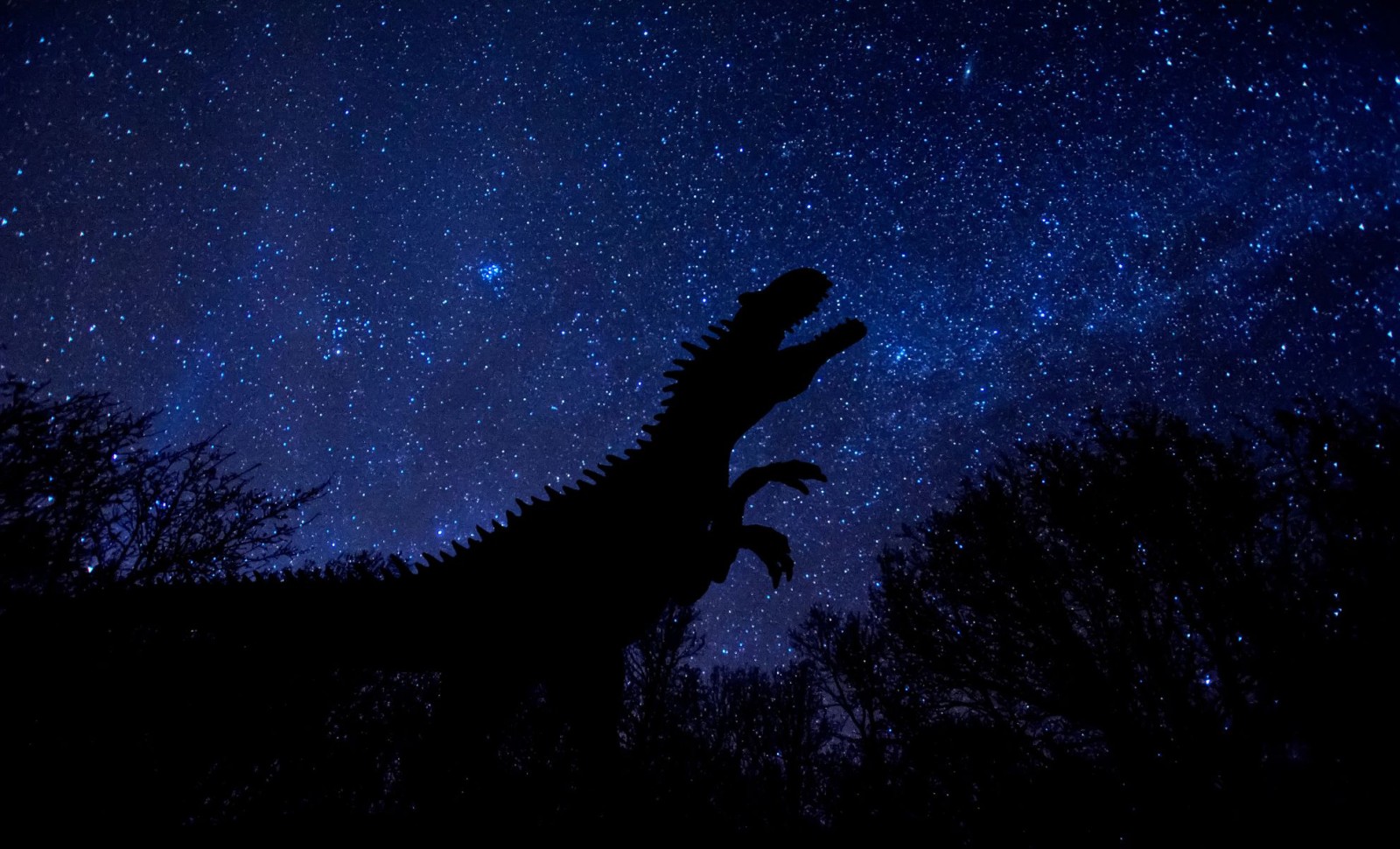
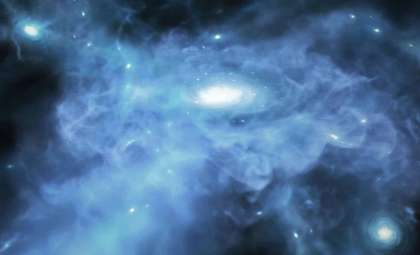
Using the powerful James Webb Space Telescope, astronomers have identified groundbreaking evidence of gargantuan, short-lived stars from the universe’s infancy. These "dinosaur-like" stars, boasting masses up to 10,000 times greater than our Sun, most likely ended their lives collapsing into supermassive black holes. This process left behind distinctive chemical traces that offer crucial insights into how these cosmic behemoths formed.
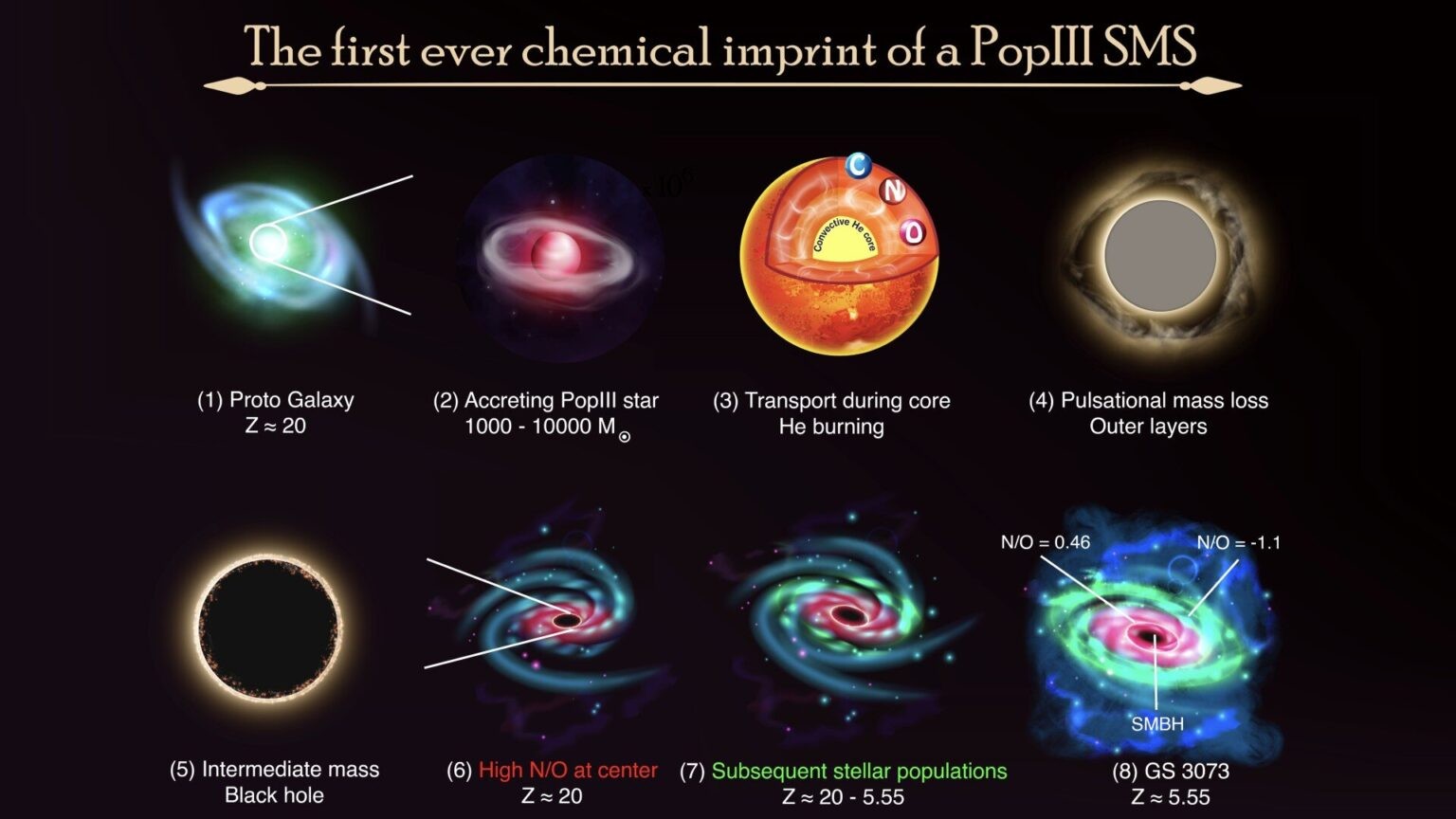
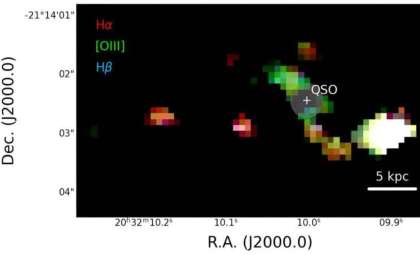
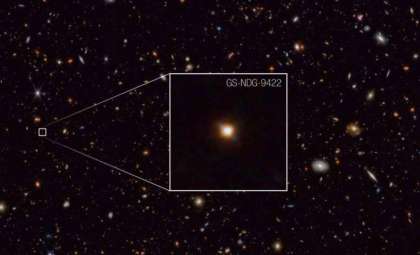
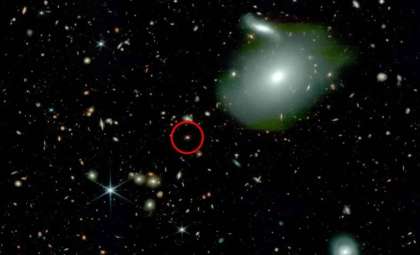
The discovery emerged from an analysis of the galaxy GS 3073, which displayed an unusual chemical profile—specifically, an irregular nitrogen-to-oxygen ratio. This unique signature is linked to the explosive demise of these massive stars, whose fleeting existence was marked by intense stellar activity.
Gigantic Stars Illuminating the Early Universe
The existence of ultra-massive stars from the universe’s earliest epochs has been hypothesized for decades. Daniel Whalen, a researcher at the University of Portsmouth and co-author of the research published in The Astrophysical Journal Letters, explains:

“Our latest discovery helps solve a 20-year cosmic mystery. With GS 3073, we have the first observational evidence that these monster stars existed,” he said.
Whalen refers to these celestial giants as “prehistoric titans,” whose rapid and violent lifespans resulted in “cosmic fossils” in the form of black holes.
“These cosmic giants would have burned brilliantly for a brief time before collapsing into massive black holes, leaving behind the chemical signatures we can detect billions of years later. A bit like dinosaurs on Earth — they were enormous and primitive. And they had short lives, living for just a quarter of a million years — a cosmic blink of an eye,” he added in a statement released by the University of Portsmouth.
A Distinctive Chemical Signature
The unusual nitrogen-to-oxygen ratio in GS 3073 serves as a critical clue, defying explanation by conventional stellar processes. Devesh Nandal from the Center for Astrophysics, Harvard & Smithsonian, describes this chemical imbalance as a "cosmic fingerprint."
“And the pattern in GS3073 is unlike anything ordinary stars can produce. Its extreme nitrogen matches only one kind of source we know of — primordial stars thousands of times more massive than our sun.”
This evidence suggests these supermassive stars, with their extraordinary nuclear fusion rates, were responsible for dispersing these elements. Their short but intense lifetimes set the stage for supermassive black hole formation and influenced the chemical makeup of future galaxy generations.
Connecting the Stars to Supermassive Black Holes
The transformation of these gigantic, "dinosaur-like" stars into black holes offers a plausible mechanism for the rapid growth of supermassive black holes in the early cosmos. Unlike typical stars, these immense stars bypassed a supernova explosion, collapsing directly into black holes.
Whalen suggests that this instantaneous collapse created initial black holes with masses thousands of times larger than the Sun, accelerating their growth into the supermassive black holes currently observed. He proposes that these black holes could be the "descendants" of black holes birthed by these ancient colossal stars.
- Categories:
- Astronomy




0 comments
Sign in to Comment