
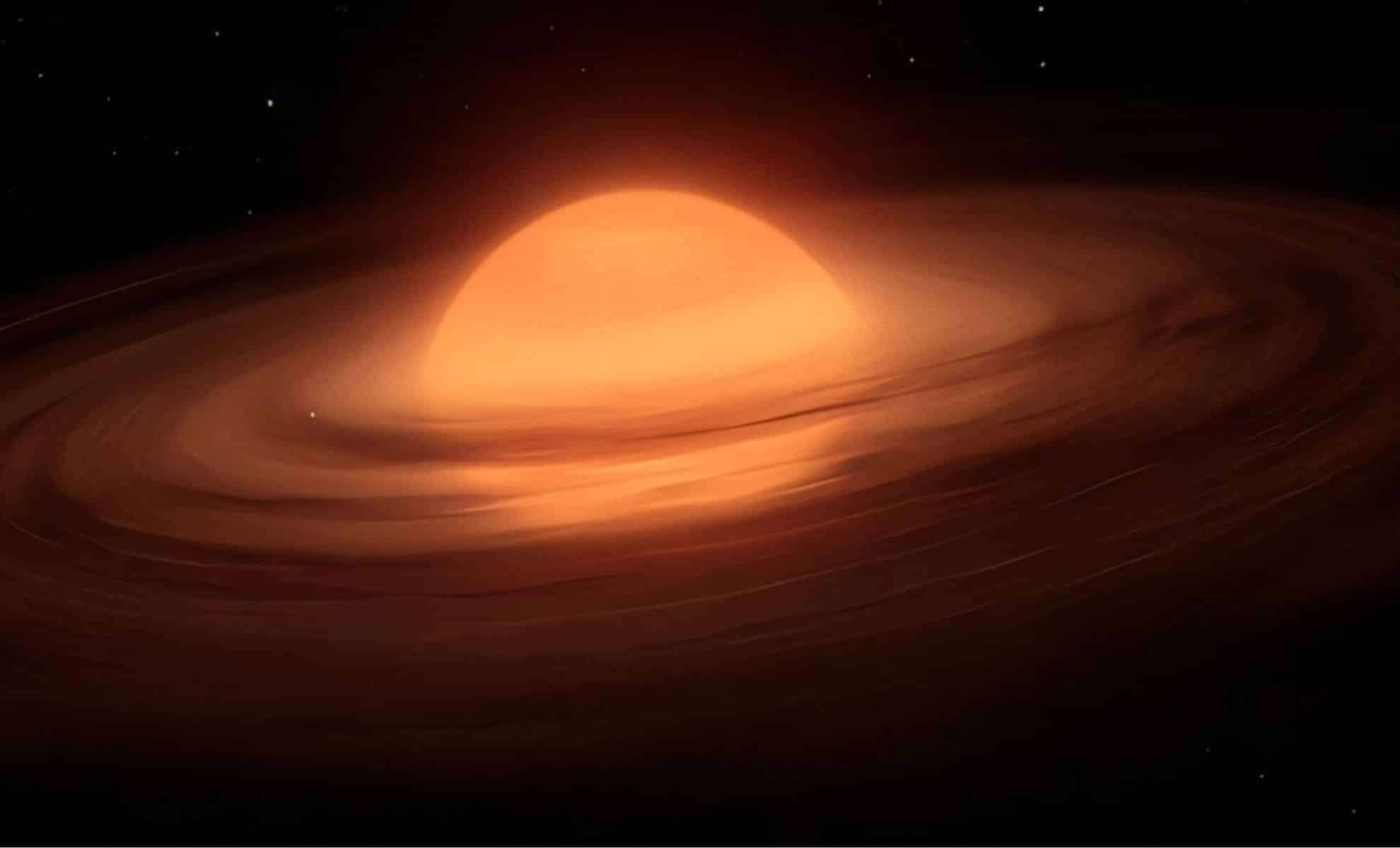
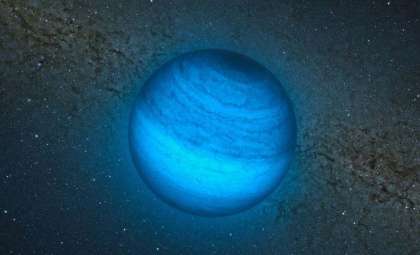
A recent study from the University of St Andrews has unveiled exciting evidence that massive rogue planets—those not orbiting any star—might develop their own planetary systems. Utilizing observations from the James Webb Space Telescope (JWST), scientists have identified free-floating planets with masses between 5 and 10 times that of Jupiter that possess the essential components for forming planetary systems, analogous to those typically found orbiting stars. This groundbreaking research, published on arXiv, expands our understanding of how planetary systems could arise even in the absence of a host star.
Detecting the Elusive Free-Floating Planets
Rogue planets are notoriously difficult to study because they don’t shine like stars. Unlike stellar objects that produce visible light through nuclear fusion, these planetary-mass bodies remain extremely faint and primarily emit in the infrared. This faintness, combined with their solitary nature, has often led researchers to regard them as rare oddities outside normal planetary formation models.
Thanks to the JWST’s cutting-edge infrared capabilities, astronomers have gained unprecedented access to these faint bodies. The latest data reveal that these free-floating giants share characteristics with youthful stars. Although lacking fusion, their features imply the ability to foster surrounding planetary material, hinting at the possibility of developing systems akin to those around stars, thereby broadening the scope for discovering new worlds.

Examining Young Wandering Giants
The investigation centered on eight youthful rogue planets, each with mass comparable to or somewhat exceeding Jupiter’s. These nascent objects exhibit signatures of ongoing planet formation processes. Through detailed infrared spectroscopic analysis conducted by the JWST from August to October 2024, researchers detected emissions indicative of silicate dust grains within circumplanetary disks. These grains are critical markers pointing towards the early assembly of rocky planets. Importantly, the dust surrounding these free-floating planets shows signs of both growth and crystallization, fundamental steps for creating solid planetesimals.
The study highlights that while the dust disks are smaller compared to those encircling stars, they could endure for millions of years—ample time for planetary building blocks to coalesce into moons or small planetary objects. As Dr. Belinda Damian, the study’s principal author, emphasizes, "The presence of these formative materials around planets barely larger than Jupiter, drifting solo in space, suggests that planet-building can happen without a stellar anchor."
Could Isolated Planets Host Their Own Systems?
Project lead, Dr. Aleks Scholz, explained the broader significance of these findings: "Collectively, our research indicates that giant planetary-mass objects may harbor miniature planetary systems, much like our solar system but drastically smaller in scale. However, whether such systems truly exist in nature is yet to be confirmed." This raises the intriguing prospect that lone, starless planets could sustain their own families of orbiting bodies.
This discovery challenges the longstanding idea that planetary systems form exclusively around stars. Although unconventional, the observed dust disks and silicate crystallization phenomena suggest that starless systems could indeed be feasible. This has profound implications for astrobiology, potentially widening the arenas where planets—and possibly life—might emerge beyond traditional star-centered environments.
- Categories:
- News



0 comments
Sign in to Comment