
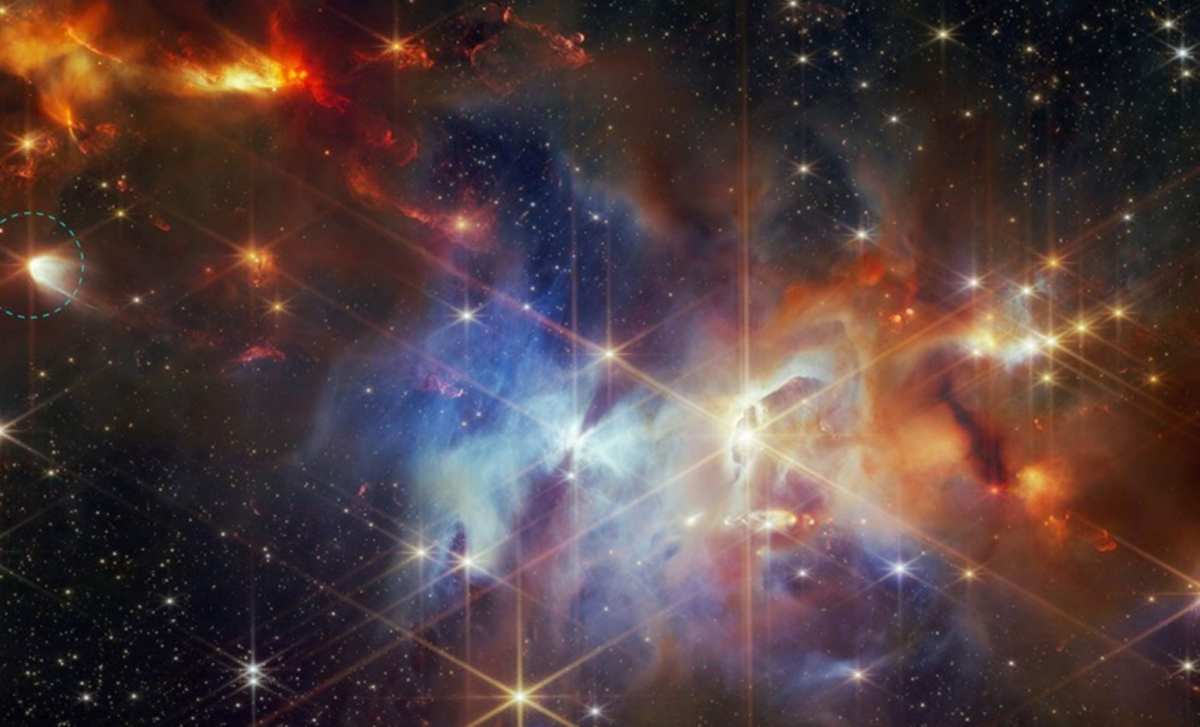
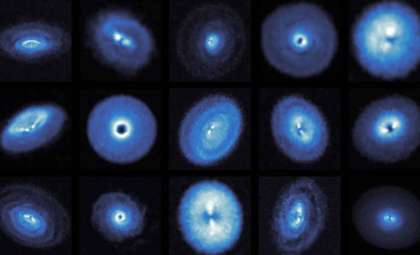
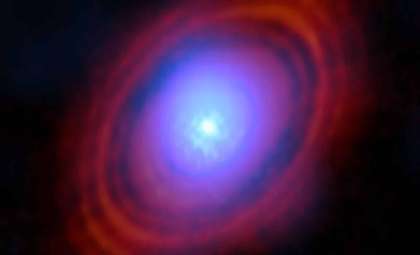
A nascent star, still in its formative stages, has been observed generating heat-formed crystals and propelling them out towards the cold outer edges of its planetary disk. Utilizing the latest data from the James Webb Space Telescope, researchers have detailed this phenomenon around the star EC 53 with unparalleled clarity, resolving a mystery that has puzzled planetary scientists for decades. These discoveries, published in a peer-reviewed article in Nature, illustrate the link between explosive stellar infancy and the frozen, distant objects found in developed planetary systems.
Decades-Old Cosmic Mystery Clarified
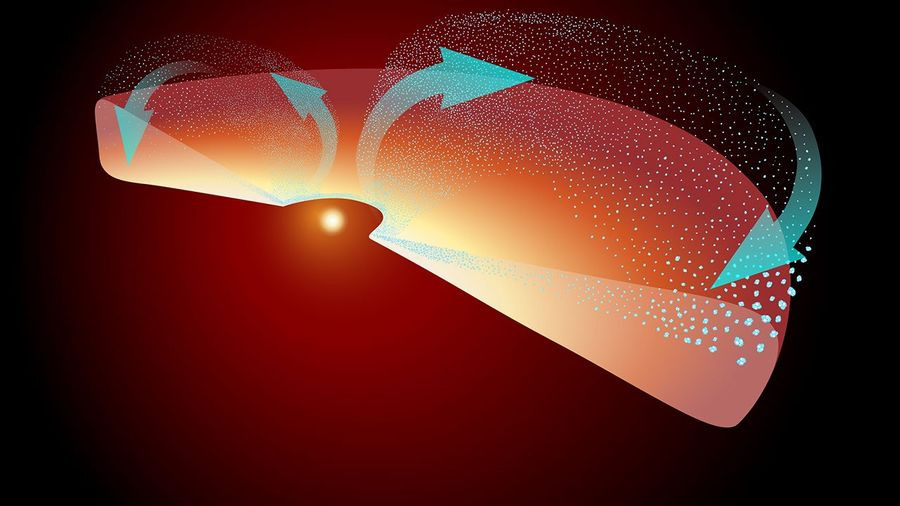
Scientists have long recognized that comets are composed of crystalline silicates, minerals formed only under extreme heat, yet these comets exist in frigid parts of space. Observations of EC 53 have now bridged this contradiction. Close to the star, intense temperatures convert ordinary dust into crystalline silicates, which James Webb has traced as they embark on a slow, turbulent migration outward across the disk.
The study, appearing in Nature, uses mid-infrared spectroscopy to pinpoint mineral types and monitor their distribution, revealing that crystal formation and outward transport are part of a single continuous sequence. This system serves as a valuable natural testbed where theoretical predictions meet observational evidence, bridging star formation models with actual young stellar behavior.

Stellar Winds as a Transport Mechanism
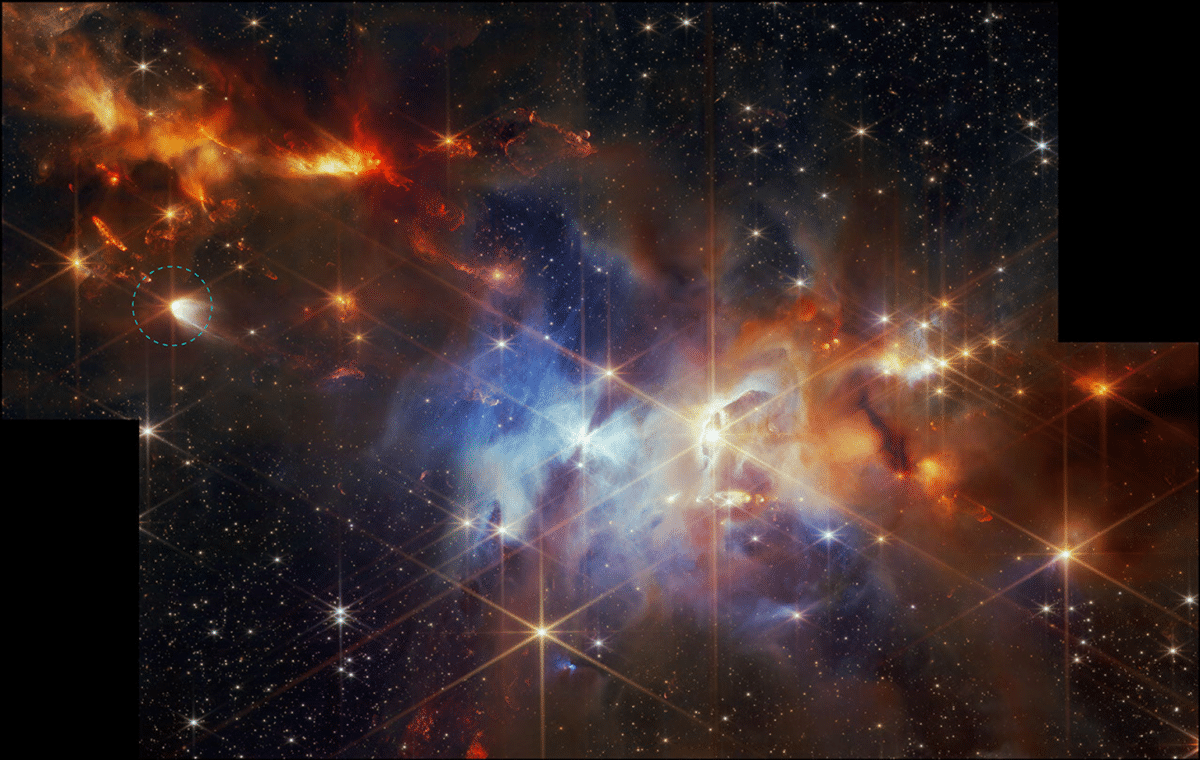
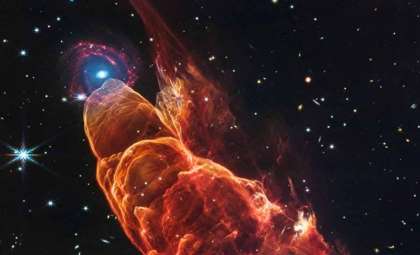
Central to this finding is the star EC 53, notable for its periodic energetic outbursts occurring approximately every 18 months. During these episodes, material is accreted from the disk while simultaneous ejections of gas and dust occur through layered outflows, effectively turning the inner disk into a launchpad for freshly formed crystals.
Jeong-Eun Lee, a professor at Seoul National University and principal investigator on the study, explained:
“EC 53’s layered outflows may lift up these newly formed crystalline silicates and transfer them outward, like they’re on a cosmic highway,” said Lee.
Lee also emphasized Webb’s role in this breakthrough:
“Webb not only showed us exactly which types of silicates are in the dust near the star, but also where they are both before and during a burst.”
These results confirm how powerful stellar winds act as conduits, transporting solid particles across distances once thought insurmountable between the star’s hot inner region and the cold outskirts of its planetary disk.
Earthlike Crystals Present in a Stellar Nursery
A particularly noteworthy result is the detection of silicate minerals common on Earth. Webb identified forsterite and enstatite, crystalline silicates that are significant components of our planet’s rocky interior. Their existence near EC 53 supports the idea that the fundamental materials forming rocky planets are prevalent throughout the galaxy.
Dr. Doug Johnstone of the National Research Council Canada remarked on the importance of this observation:
“Even as a scientist, it is amazing to me that we can find specific silicates in space, including forsterite and enstatite near EC 53. These are common minerals on Earth. The main ingredient of our planet is silicate,” noted Dr. Johnstone.
This evidence indicates that the materials that eventually assemble into Earth-like worlds begin to be processed and dispersed very early in the star formation timeline, long before planet formation completes.
Visualizing Material Flow Alongside Composition
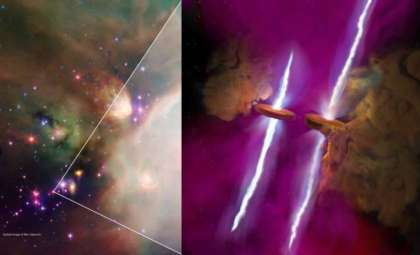
More than simply identifying mineral types, Webb’s capabilities have enabled the depiction of how these materials migrate throughout the stellar environment. Fast, focused jets emanate near the star’s poles, while broader, slower winds emerge from the inner disk, together shaping where dust and crystals ultimately accumulate.
Joel Green, a scientist at the Space Telescope Science Institute, commented on the achievement:
“It’s incredibly impressive that Webb can not only show us so much, but also where everything is,” said Green.
“Our research team mapped how the crystals move throughout the system. We’ve effectively shown how the star creates and distributes these superfine particles, which are each significantly smaller than a grain of sand.”
By tracing both the chemical makeup and kinetic pathways of dust and gas, these observations convert theoretical predictions into observable phenomena, depicting a dynamic environment where particles continually evolve.
From Turbulent Origins to Established Planetary Systems
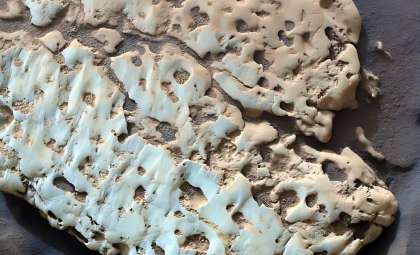
EC 53 remains shrouded in its natal dust and gas and is expected to linger in this stage for roughly another 100,000 years. Over much longer periods, interactions among dust grains will foster the growth of pebbles, rocks, and ultimately planets. The crystals launched into the outer disk today may one day be preserved within comets and icy bodies, carrying evidence of their fiery beginnings.
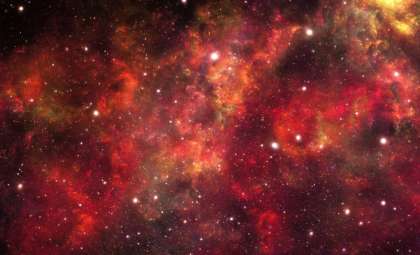
Situated about 1,300 light-years distant in the Serpens Nebula, EC 53 offers insights that extend far beyond its immediate vicinity. By tracking the entire life cycle of crystalline silicates, Webb has illuminated how early stellar turbulence shapes the orderly structures seen in mature planetary systems.
- Categories:
- Space


0 comments
Sign in to Comment