

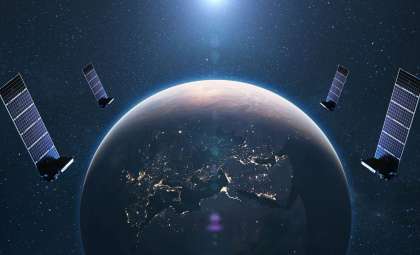
High on a remote hillside in Suwa, nestled in central Japan, engineers are gearing up to capture a faint but historic signal from above. In 2025, a satellite roughly the size of a home appliance is expected to orbit at an altitude of about 400 kilometers, harvesting sunlight and converting it into microwaves before sending that power to a ground receiver comprised of multiple antennas.
Named OHISAMA, meaning "sun" in Japanese, this initiative might seem small-scale initially—its output will only be sufficient to run a coffee machine. However, the broader vision is significant. OHISAMA represents Japan's inaugural demonstration of solar power generated in space, a concept rooted in science fiction for decades but only now becoming technologically attainable.
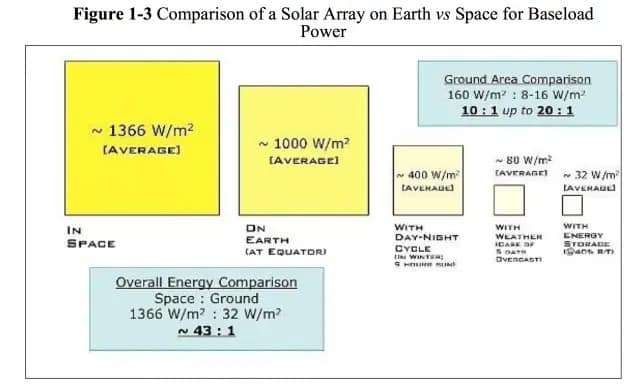
The core advantage is straightforward: capture solar radiation directly in orbit where sunlight is uninterrupted by atmospheric effects and transmit this energy wirelessly to Earth. This approach could revolutionize energy delivery by providing steady, renewable power anywhere on the globe, sidestepping the intermittent nature of land-based solar panels hindered by night cycles, weather, or geographic limits.

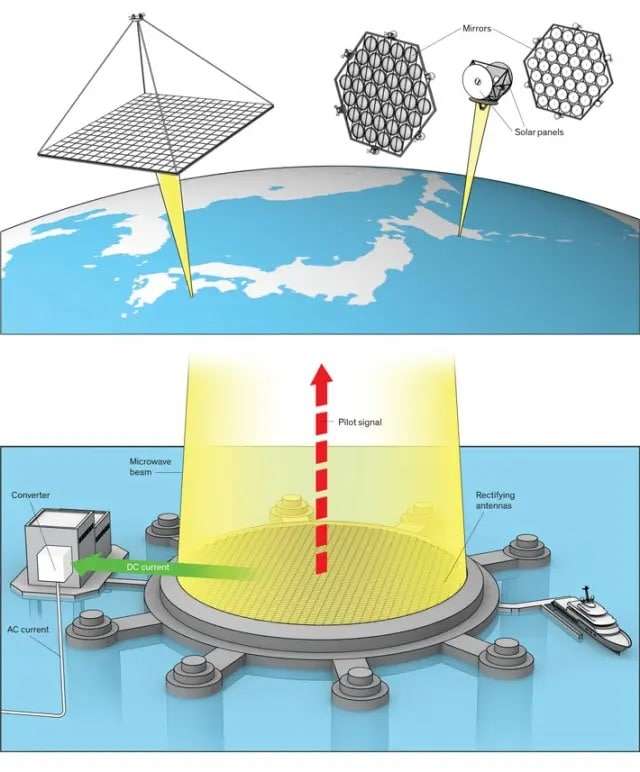
The idea dates back more than half a century, first envisioned by NASA engineer Peter Glaser in 1968. Technological barriers initially made the concept unfeasible, but breakthroughs in microwave wireless transmission, advanced lightweight components, and reduced launch expenses—largely driven by SpaceX and other private aerospace ventures—are moving the vision closer to execution.
Capturing Sunlight in Space, Delivering Power on Earth
The OHISAMA craft will be equipped with a compact two-square-meter photovoltaic panel and weigh approximately 400 pounds. Once in low Earth orbit, it will convert solar energy to microwaves aimed at a precisely aligned ground array of 13 antennas covering a 600-square-meter area in Suwa. This trial aims to confirm the precision of transmitting microwaves from orbit and the efficiency of energy capture on the ground.
Precision is vital: the microwave beam must remain accurate within 0.001 degrees—a level of control demanding cutting-edge beam steering technology. While orbiting Earth at speeds over 17,000 miles per hour, the satellite must maintain an exact aim on the stationary antenna array. Deviation risks energy loss or unintended radiation exposure.
Similar technologies have demonstrated promise in the past. In 2008, Hawaiian researchers managed to transfer 20 watts over a distance of 150 kilometers. According to a Waste to Energy International report, Japan aims to eventually launch an orbital solar array capable of producing 1 gigawatt of power within 25 years.
Japan’s Strategic Push for Space-Based Solar Energy
Japan’s motivation for this endeavor is driven by energy security concerns. With over 90% of its power supply imported, and following the 2011 Fukushima nuclear crisis, the nation intensified its focus on sustainable alternatives. Although still experimental, space-based solar represents a scalable, independent energy source.
The Japan Aerospace Exploration Agency (JAXA) has been investigating SBSP technology quietly for many years. Projects like the 1983 MINIX and 1993 phased array microwave transmissions confirmed foundational concepts. Japan's Basic Plan on Space Policy, initiated in 2009 and described in a government publication, officially endorses SBSP as a key objective for the country’s future energy infrastructure.
Geographical constraints add urgency—limited land for large-scale solar farms combined with a dense urban population make terrestrial expansion challenging. “Surface area has become a limiting factor,” explains Naoki Shinohara, a Kyoto University professor spearheading wireless power transmission research. “Looking upward is the logical next stage.”
Global Competition in Space Solar Energy Development
Japan faces competition worldwide. The U.S. Naval Research Laboratory flew its PRAM-FX experiment in 2020, while Caltech launched the MAPLE microsatellite in 2023, successfully transmitting power in orbit. These initiatives complement Japan’s OHISAMA mission, as detailed in this BGR article, which discusses the technical demands of maintaining precise satellite tracking and energy transfer.
Despite tackling different technical obstacles—such as maximizing energy conversion efficiency, ensuring beam accuracy, and maintaining safety protocols—these projects share a unified aim: establishing a new orbital solar energy network. Some envision a constellation of satellites delivering power that bolsters Earth’s grid, especially in regions vulnerable to outages or lacking infrastructure.
Still, challenges remain. A NASA study from 2021 suggested space-based solar power could cost up to ten times more than terrestrial renewable options. Concerns about the safety of directing microwave beams through the atmosphere persist, despite evidence indicating no harmful effects at operational levels.
- Categories:
- News









0 comments
Sign in to Comment