
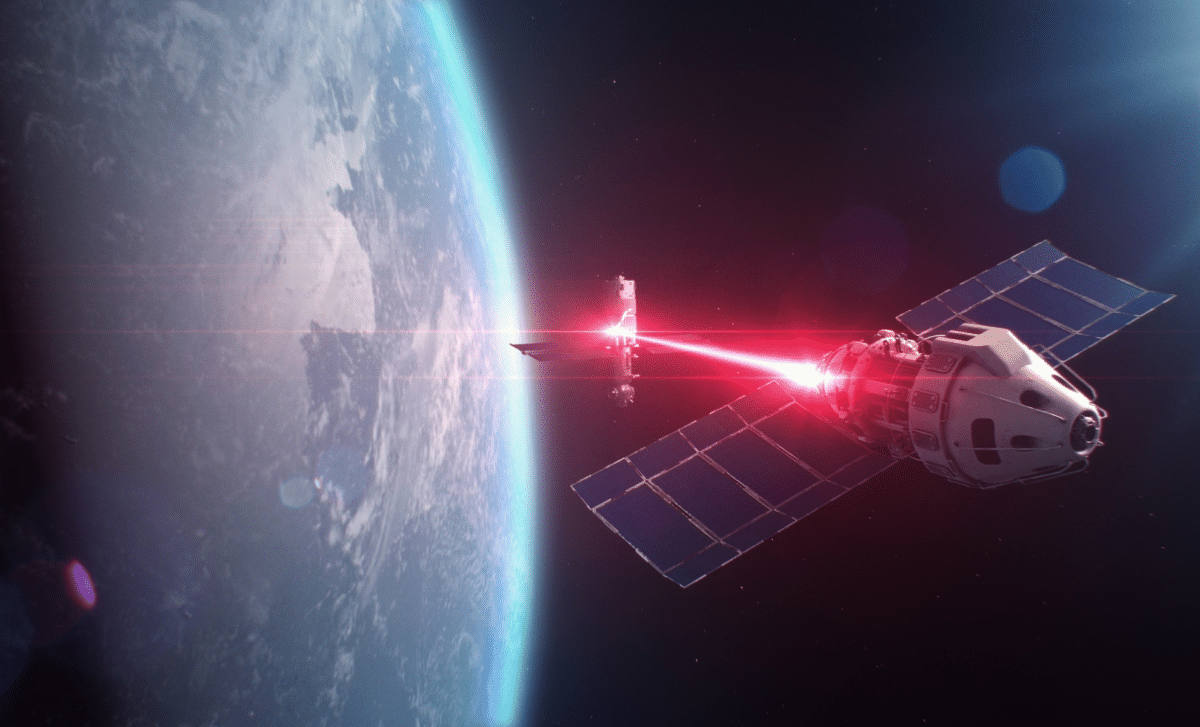
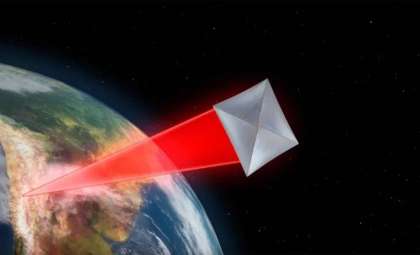
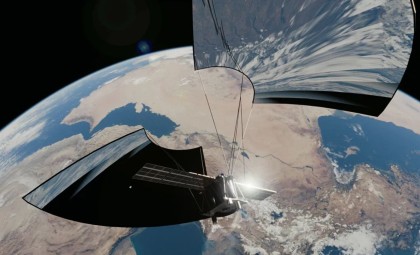
Future spacecraft might navigate the vastness of space without consuming traditional fuels, thanks to an innovative advancement. Recent research published in Advanced Science demonstrates that spacecraft can be propelled using laser light interacting with graphene, a material celebrated for its exceptional lightness and durability. This breakthrough paves the way for propulsion systems that operate without fuel, potentially simplifying and lowering the expenses of extensive space voyages, and ushering in a new chapter of cosmic exploration.
Harnessing Light to Transform Spacecraft Propulsion
The newly released study from Advanced Science reveals a remarkable effect where laser light can drive the movement of graphene aerogel blocks in a microgravity setting. Experiments showed that lightweight graphene foam cubes accelerated under laser illumination, a result difficult to achieve under Earth’s gravitational pull. The pronounced acceleration in weightlessness highlights the potential of laser light as a precise and controllable propulsion method. This finding stands to revolutionize existing propulsion technologies that have traditionally relied on chemical fuels.
“We are opening the path to a propellant-free propulsion future,” stated Ugo Lafont, an expert in materials physics and chemistry at the European Space Agency. Utilizing light to drive spacecraft forward without fuel promises to reduce both costs and operational complexity in space missions.

Graphene and Laser Light: A Powerful Combination
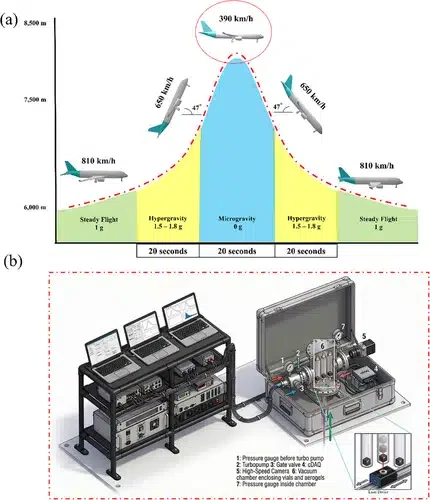
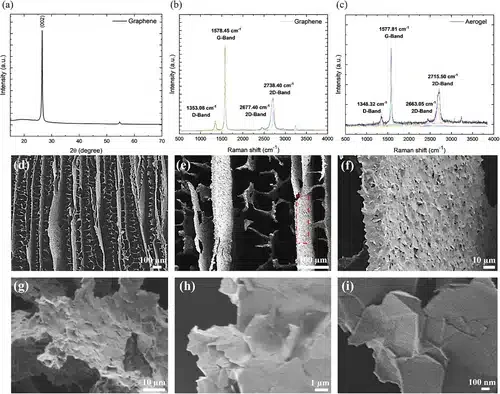
Graphene’s extraordinary properties, including its strength and conductivity, are central to this development. Researchers found that graphene aerogels—ultra-light foams crafted from graphene layers—can be propelled by laser light when tested in a weightless environment. During microgravity flight trials, laser exposure caused graphene cubes to accelerate markedly, whereas under standard Earth gravity, movement was negligible.
These trials took place inside a vacuum chamber aboard an aircraft simulating microgravity, freeing the samples from gravitational forces that normally impede such movement. This setting allowed precise measurement of the material’s response, demonstrating how laser-induced propulsion could enable highly accurate spacecraft maneuvers.
Advancing Toward Long-Duration, Fuel-Efficient Missions
What makes this innovation particularly promising is its potential impact on extended space travel. Existing propulsion methods require fuel, which adds significant mass and cost to spacecraft. The ability to steer and propel spacecraft using light instead may extend mission durations and enhance maneuverability, all while cutting back on fuel-related expenses.
Employing laser-driven propulsion offers the chance to alter spacecraft attitude and trajectory without resorting to traditional propellants. This could fundamentally change mission planning and execution, offering new horizons for deep space exploration.
- Categories:
- News



0 comments
Sign in to Comment