
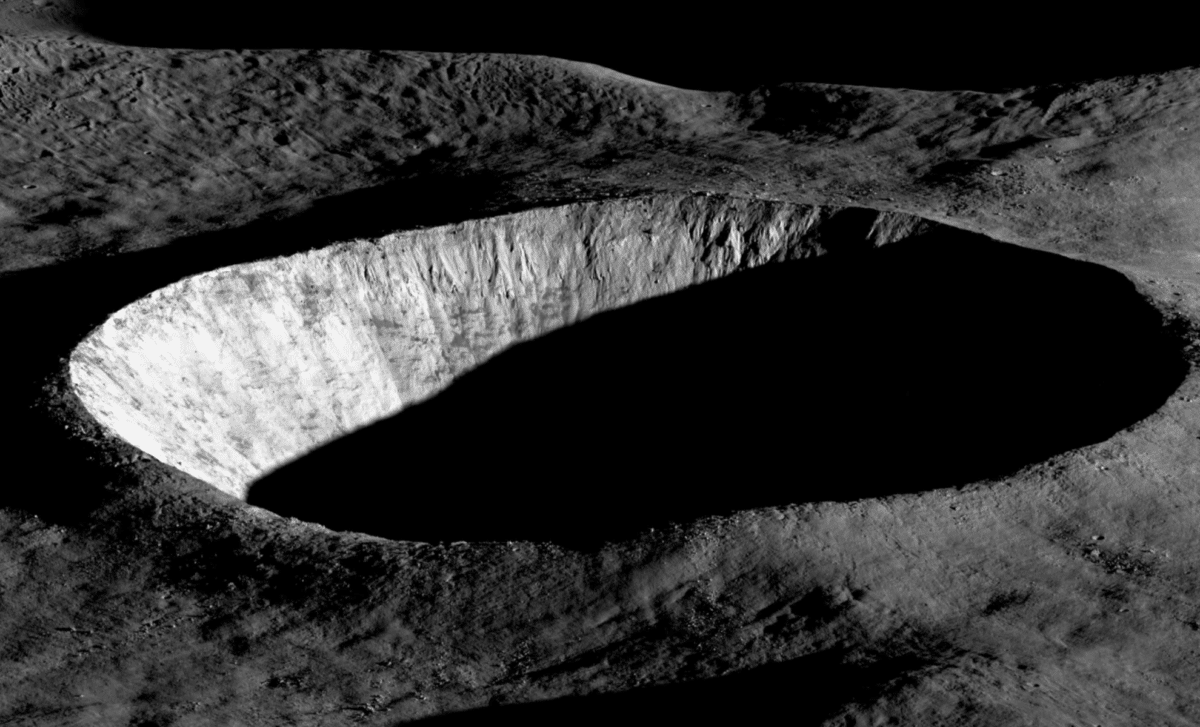
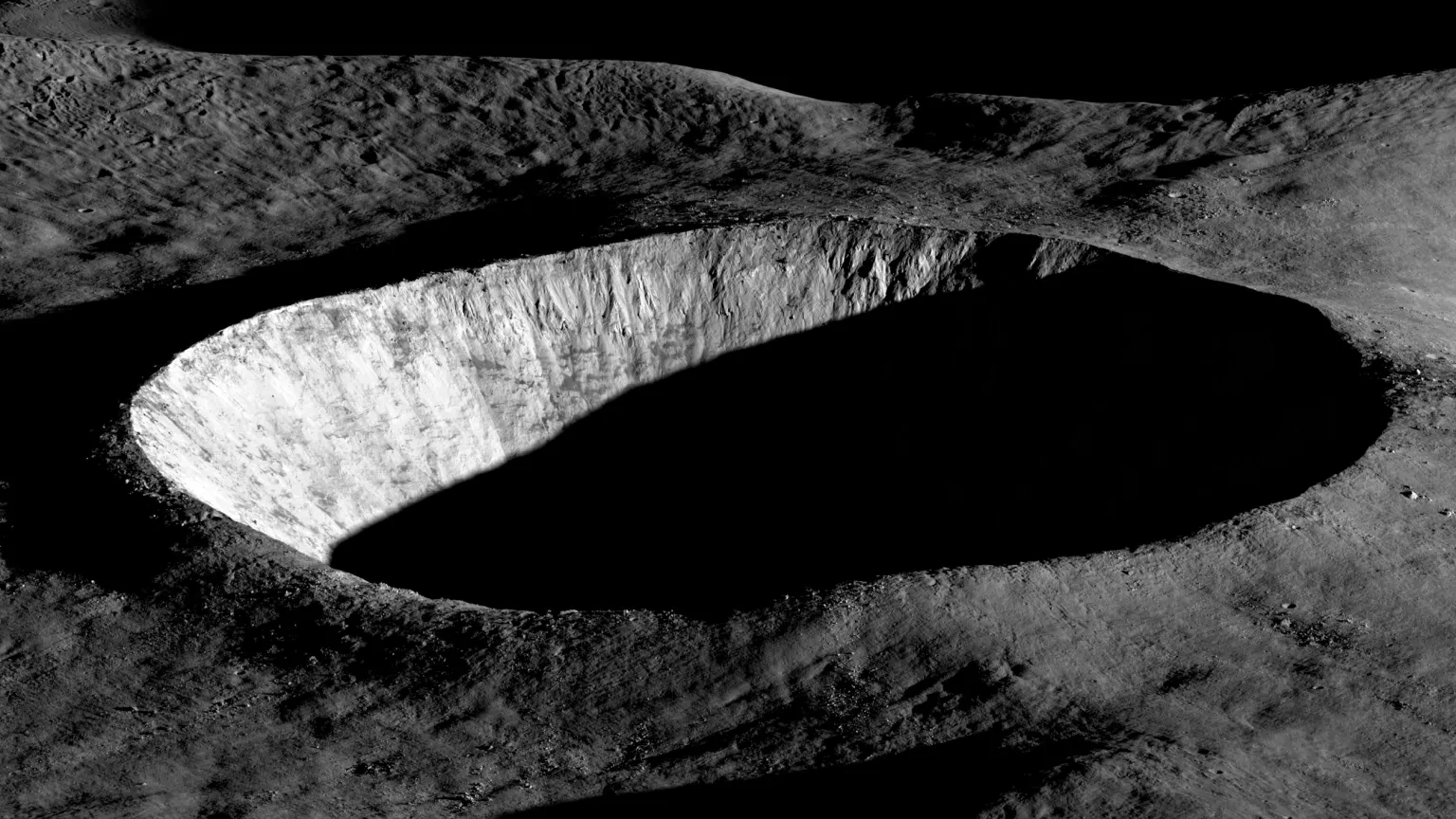
NASA’s Lunar Reconnaissance Orbiter (LRO) has unveiled a breathtaking new view of the Moon’s terrain. On August 30, 2023, the spacecraft snapped a striking photo of a previously unnamed lunar crater bathed in the gentle glow of dawn light. The interplay of shadows on the crater’s western rim offers more than a captivating image—it provides key geological insights into the Moon’s evolving landscape and hidden history.
This remarkable shot is part of NASA’s continued mission to chart the lunar surface with unprecedented precision. It supports upcoming missions geared toward human and robotic exploration by highlighting lunar features in vivid detail. Featuring high-resolution imagery captured by the LROC (Lunar Reconnaissance Orbiter Camera) that has been circling the Moon for over ten years, this photograph was recently honored as NASA’s Science Image of the Month for March 2026, underscoring the agency’s ongoing dedication to lunar discovery.
Insights from the Lunar Reconnaissance Orbiter Mission
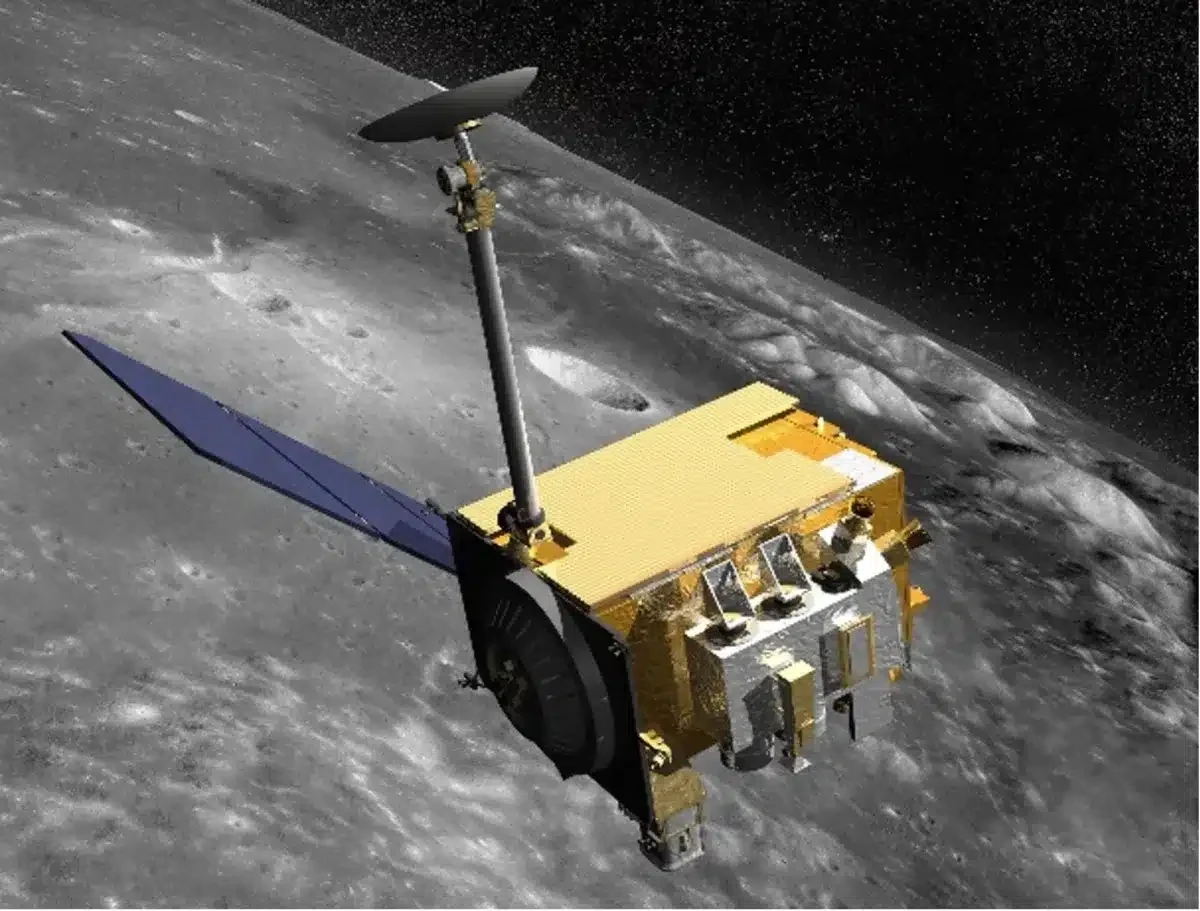
Since its launch in June 2009, NASA’s Lunar Reconnaissance Orbiter (LRO) has played a pivotal role in expanding our knowledge of the Moon. Carrying an array of advanced instruments, including the LROC, the spacecraft delivers detailed images, three-dimensional mapping, and essential data to guide future lunar expeditions. Its objectives include identifying secure landing zones, probing lunar resources such as polar ice deposits, and examining the Moon’s radiation environment, all critical steps toward supporting forthcoming human and robotic explorers.

The LRO has made groundbreaking strides, creating the most detailed maps of the lunar landscape to date and uncovering potential natural resources for sustaining future lunar bases. This recent crater image enriches a growing archive of remarkable discoveries made possible by the orbiter’s camera systems, which have also documented Apollo landing sites and facilitated experiments on lunar communication, all while capturing exquisite views of lunar regions never seen before.
Unlocking Secrets with NASA’s Remarkable Image
This picture of the unnamed crater exemplifies the cutting-edge capabilities of the LRO’s imaging technology. Taken in early dawn light, it reveals sharp contrasts in shadow and texture that would be invisible without such advanced tools. These contrasts highlight the unique lunar topography and deepen scientists’ comprehension of the Moon’s origin and geological evolution.
Far beyond a stunning photograph, this image serves as a glimpse into the Moon’s ancient geological narrative. As sunlight gently illuminates the crater’s western face, intricate details about its structure and composition come into focus, offering clues about past volcanic processes and erosional dynamics. Such imagery plays an essential role in pinpointing safe, scientifically valuable landing sites for future missions, enabling astronauts to explore once-inaccessible lunar terrain.
Technology Driving Lunar Imaging
The crater’s striking image was produced by the high-resolution LROC camera, which captures lunar scenes with remarkable detail. This imaging technology is crucial to LRO’s mission success, providing data that help construct detailed elevation maps and analyze surface features. By photographing the Moon under varying sunlight conditions, LRO reveals subtle topographic elements like hidden craters and ridges that enhance our understanding of lunar geology.
Beyond its scientific value, this image highlights the strength and longevity of NASA’s technological innovation. Operating for more than 14 years, LRO has consistently delivered high-quality lunar data, setting a high standard for sustained robotic planetary exploration. Each photograph contributes to a fuller picture of the Moon’s surface and the prospects it holds for future missions.
Connecting This Image to NASA’s Vision for Space Exploration
This remarkable image marks not just an achievement in lunar photography but also aligns with NASA’s expansive goals for space exploration. Data provided by LRO, including this detailed view of a new crater, will be indispensable for upcoming lunar ventures. NASA’s Artemis program, which aspires to reestablish a human presence on the Moon by decade’s end, will rely on this wealth of information to help design long-term habitats and exploration strategies.
With each new discovery, NASA deepens humanity’s grasp of our celestial neighbor. This stunning image reinforces the critical role of advanced technology in propelling space exploration forward and unlocking the Moon’s myriad secrets.
- Categories:
- Nasa











0 comments
Sign in to Comment