
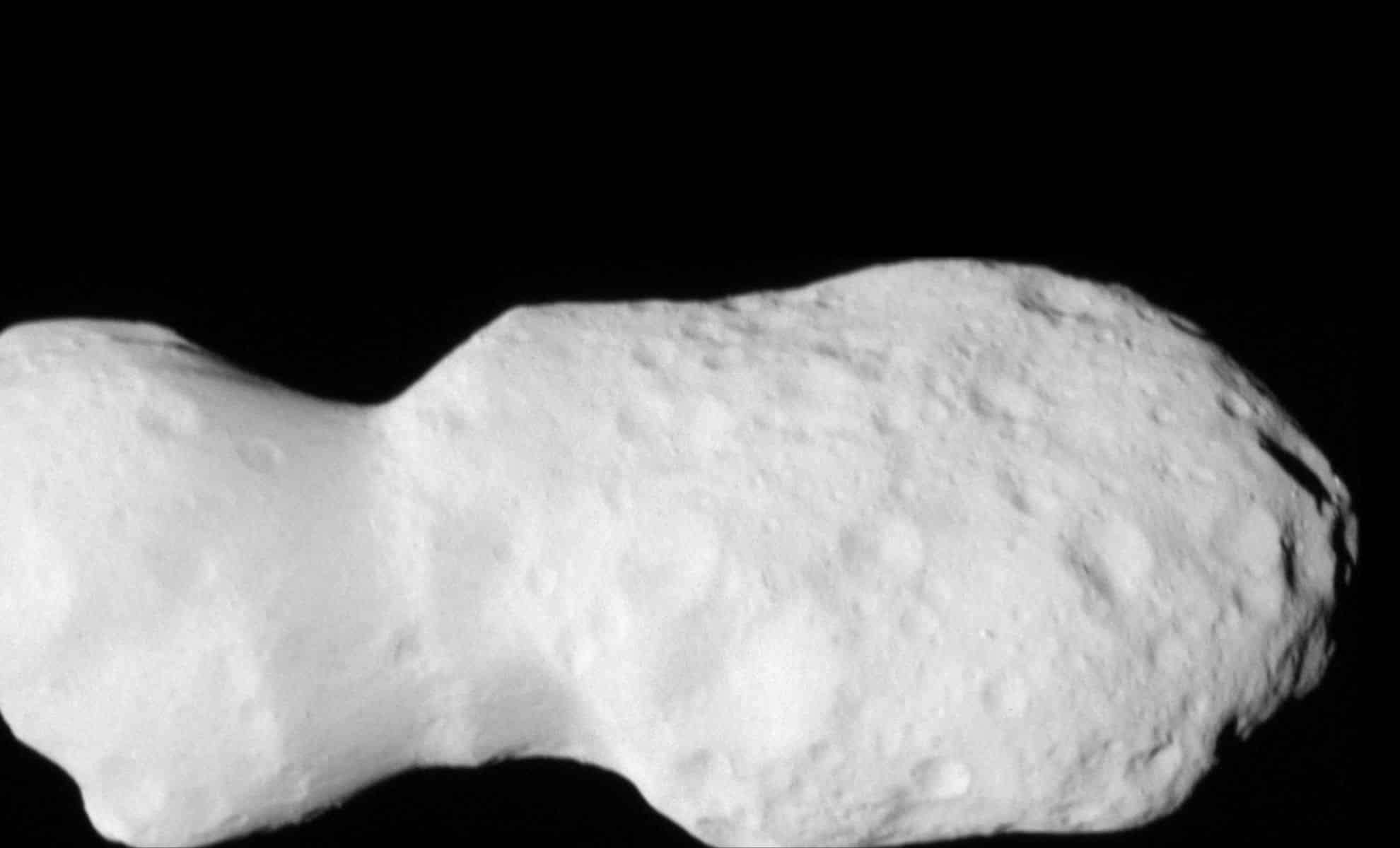
NASA’s Lucy spacecraft has achieved a remarkable feat by delivering detailed close-up imagery of the uniquely shaped asteroid Donaldjohanson. During a precise flyby on April 20, the probe approached within 600 miles of the asteroid, revealing its rare double-lobed structure that resembles two touching ice cream cones floating in space.
The asteroid’s name honors paleoanthropologist Donald Johanson, credited with discovering the Lucy fossil in 1974. According to NASA’s official mission blog, this encounter is a crucial step toward Lucy’s more challenging exploration of the Jupiter Trojan asteroids later this decade.
Asteroid with an Extraordinary Shape
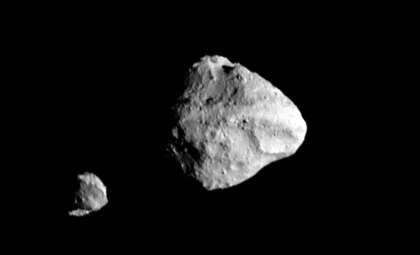
Donaldjohanson stands out because of its distinctive shape. The images clearly show a narrow, textured neck connecting two sizable lobes, identifying it as a contact binary formed by two objects that merged after a slow collision.

“Asteroid Donaldjohanson has strikingly complicated geology,” said Hal Levison, principal investigator of the Lucy mission from the Southwest Research Institute. “As we study the complex structures in detail, they will reveal important information about the building blocks and collisional processes that formed the planets in our solar system.”
NASA engineers likened the asteroid’s elongated shape to “nested ice cream cones,” and measurements show its length spans about 5 miles while its width is approximately 2 miles, larger than earlier estimates suggested.
Lucy’s Flyby Provides In-Depth Views
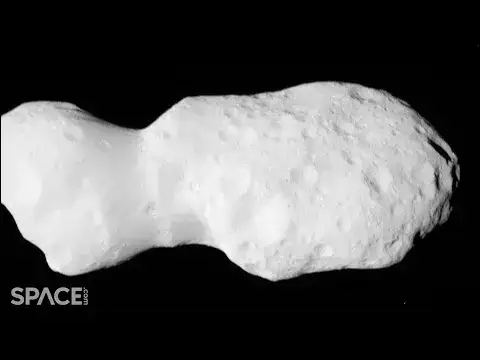
Captured every two seconds as Lucy sped past, the photos offer unmatched detail of Donaldjohanson’s surface, revealing ridges, uneven shapes, and stratified layers that affirm its contact binary nature, categorizing it among a rare group of such bodies in the asteroid belt.
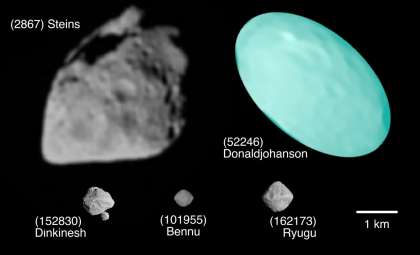
This was Lucy’s second asteroid encounter, following its 2023 flyby of asteroid Dinkinesh and its moon Selam, which was also determined to be a binary. These missions have been instrumental in calibrating the spacecraft’s instruments and navigation systems.
“The potential to really open a new window into the history of our solar system when Lucy gets to the Trojan asteroids is immense,” said Tom Statler, NASA’s Lucy program scientist. “And these early targets are already exceeding expectations.”
Looking Ahead: Exploration of Jupiter’s Trojans
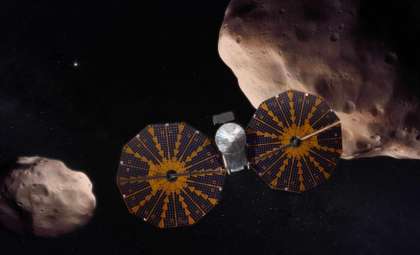
Though Donaldjohanson provided a captivating preliminary study, it is only a warm-up for Lucy’s primary mission — investigating the Jupiter Trojan asteroids. These ancient bodies orbit near Jupiter in stable gravitational zones and carry pristine material from the early solar system.
The first Trojan asteroid to be studied is Eurybates, with a scheduled visit in August 2027. Lucy aims to examine four more Trojans between 2027 and 2033. These targets have never been closely observed by any spacecraft, offering scientists valuable insights into planetary origins, solar system evolution, and the presence of organic molecules in space.
Meanwhile, Lucy continues its journey through the asteroid belt, collecting critical data in preparation for this next phase of its 12-year, $989 million mission. The success of these initial encounters bodes well for the groundbreaking discoveries yet to follow.
- Categories:
- News






0 comments
Sign in to Comment