
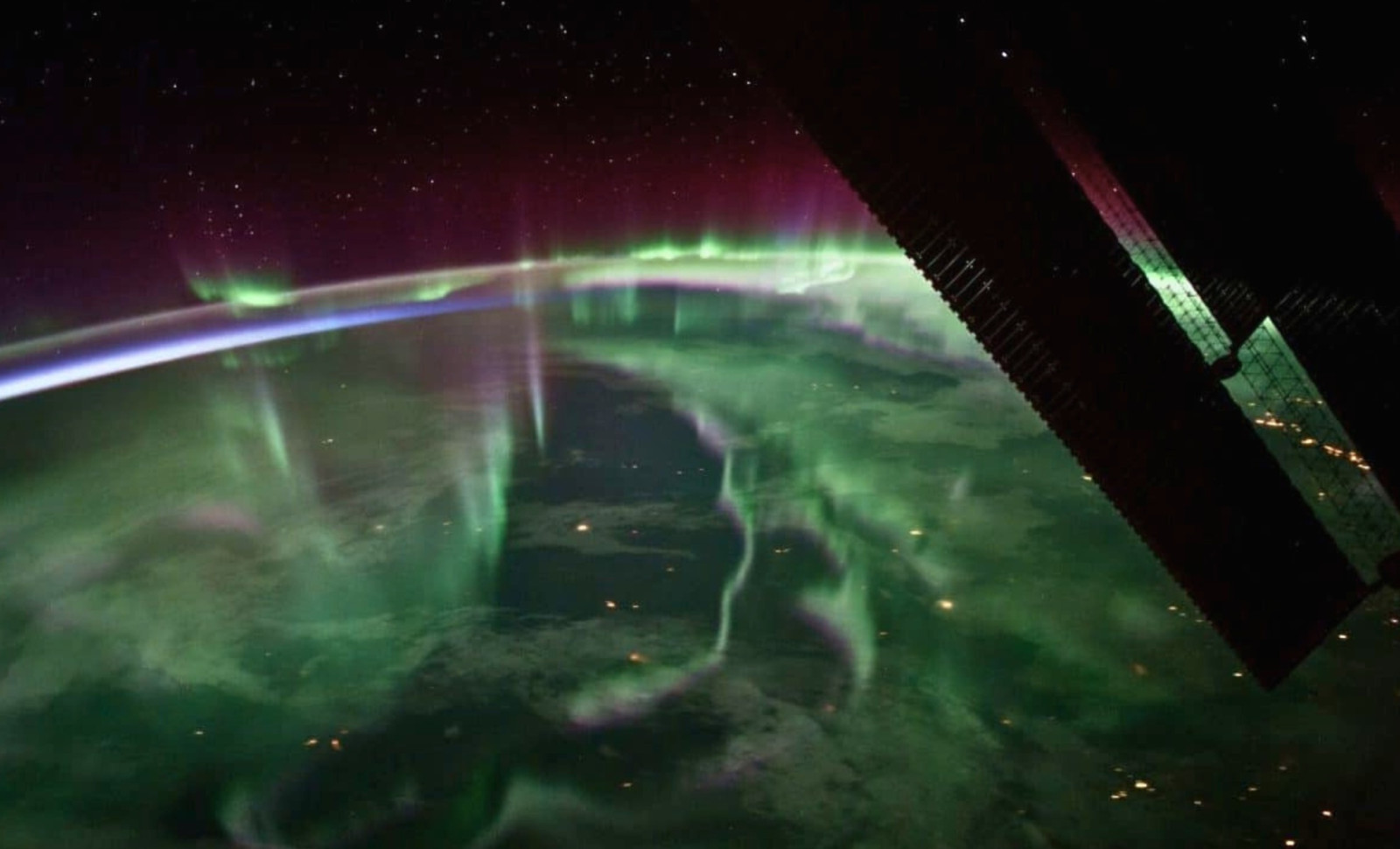
The latest update to the World Magnetic Model 2025, unveiled by the National Centers for Environmental Information (NOAA) alongside the British Geological Survey, confirms that Earth’s magnetic north pole is steadily moving closer to Siberia.
This shift carries significant implications beyond geophysics, as the model is crucial for ensuring that military and civilian navigation—including aircraft, ships, submarines, and GPS devices—remains accurate in response to changes in Earth’s magnetic field. The pole’s position is now officially nearer to northern Russia than Canada, marking a key geographic milestone after nearly two centuries of Arctic traversal.
Failure to update the magnetic model regularly would lead to cumulative navigation inaccuracies. Uncorrected magnetic declination can result in misaligned flight routes, sea lanes, and even military targeting systems. This makes each five-year model revision a critical event for multiple sectors.

Tracing a 2,200-Kilometer Migration Across the Arctic
Unlike geographic north, anchored by Earth’s rotational axis, the magnetic north pole is influenced by movements deep within the planet’s outer core. Electric currents generated by the flow of molten iron and nickel give rise to Earth’s magnetic field, causing the magnetic pole to drift as these currents fluctuate.
Over the past 190-plus years, the pole has journeyed more than 2,200 kilometers from its original location in the high Canadian Arctic. Its movement accelerated markedly in the 1990s, shifting from a slow meander to a rapid advance.
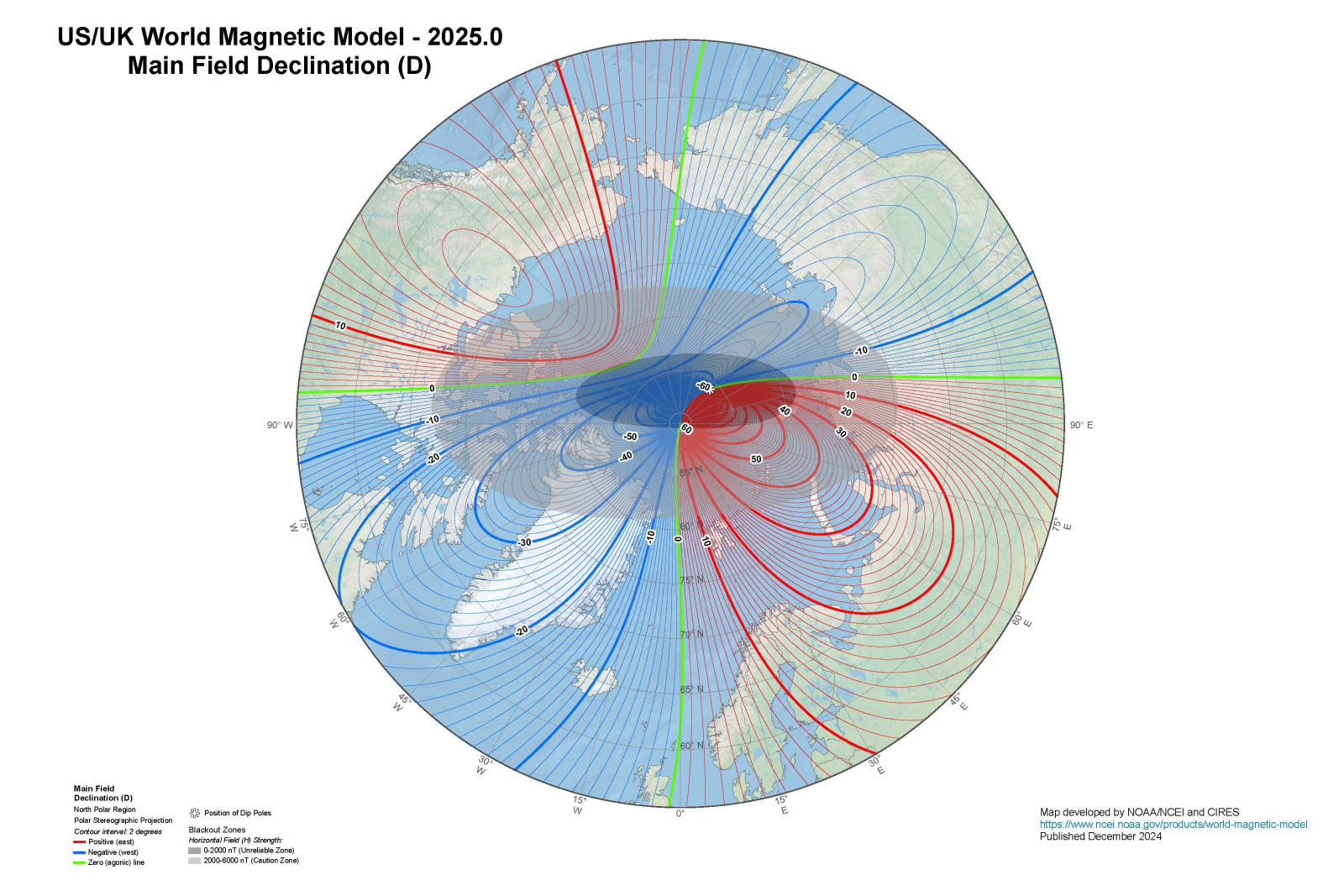
After surging at speeds up to 60 kilometers per year three decades ago, the pole's velocity has slowed recently to around 35 kilometers per year. This represents the most significant deceleration in the pole’s movement recorded so far, intensifying scientific investigation into the processes occurring roughly 3,000 kilometers beneath Earth’s surface.
Enhanced Precision Reduces Navigation Mistakes
Because Earth’s magnetic field evolves unpredictably, the World Magnetic Model receives updates every five years to prevent navigation drift. Without these adjustments, compass errors would escalate over time. The 2025 revision by NOAA NCEI is the latest scheduled enhancement.
This year, two editions were released: the standard WMM2025, which supports most global navigation needs, and for the first time, a high-resolution version called WMMHR2025. The latter significantly improves spatial accuracy, reducing detail from roughly 3,300 kilometers at the equator to about 300 kilometers.
The finer resolution offers enhanced directional reliability for operations in sensitive and complex environments. NOAA is actively promoting adoption of the high-resolution product, which promises practical benefits for Arctic aviation and polar missions requiring precise navigation.
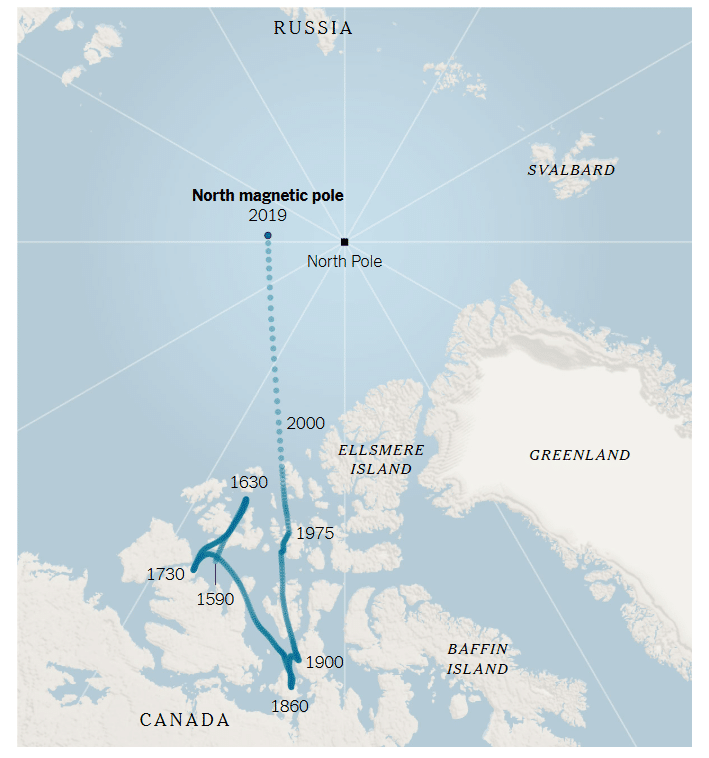
The update also adjusts the boundaries of magnetic blackout zones, regions near the poles where compass reliability declines due to magnetic interference. As the magnetic north drifts toward Siberia, these zones shift accordingly, influencing military operations and scientific research activities.
Integration from Smartphones to Military Vessels
The U.S. Federal Aviation Administration relies on the WMM to ensure the accuracy of commercial flight paths. The U.S. Department of Defense and NATO utilize it for navigation across various military domains, while the UK Ministry of Defence and UK Hydrographic Office incorporate it as a standard reference.
Consumer electronics manufacturers embed magnetic corrections into smartphone mapping apps and digital compass tools, meaning each time a phone is oriented north, it reflects the data contained within the World Magnetic Model. GPS satellites also integrate magnetic declination adjustments into their positioning calculations.
Commercial air traffic is especially dependent on precise magnetic data for Arctic routes, where GPS alone cannot guarantee full reliability. Similarly, naval ships and submarines navigating areas with limited GPS coverage depend heavily on up-to-date magnetic information.
Continuous Change, But No Reversal in Sight
Despite the magnetic north pole’s steady transition toward Russia, scientists see no evidence of an imminent geomagnetic reversal—a phenomenon where Earth’s magnetic poles flip locations. These reversals occur every several hundred thousand years, but current magnetic trends show no near-term indication of such an event.
Instead, the magnetic field continues to evolve in strength and orientation as a result of inner core dynamics, solar influences, and other forces. The field remains stable overall, not collapsing or reversing, but requiring constant monitoring and adjustment.
Ultimately, the key takeaway is clear: Earth’s magnetic north pole continues its migration, and the newly released WMM2025 and its high-resolution counterpart provide updated tools for governments, industries, and technology users to navigate a constantly shifting magnetic landscape.
- Categories:
- Science











0 comments
Sign in to Comment