
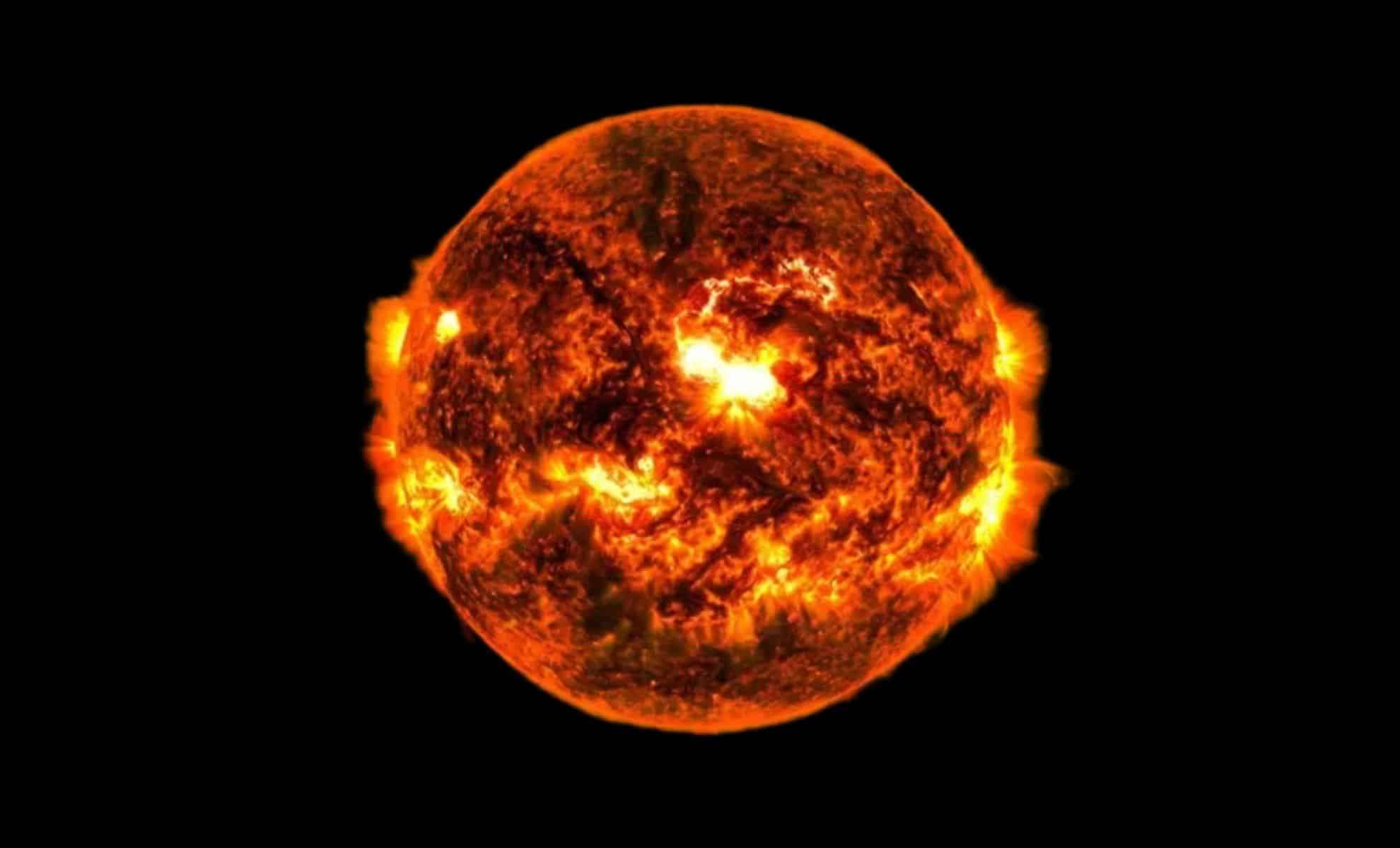
At 9:46 AM EDT on June 1, 2025, space weather monitors recorded a K-index of 8, nearing the exceptional level of 9 seen only during the strongest solar disturbances. This marks the onset of a powerful geomagnetic storm, with charged particles surging through Earth’s magnetic field and expected to continue disrupting the magnetosphere until at least June 3.
Details on the Solar Storm and Its Expected Effects
The Space Weather Prediction Center, part of the NOAA, has rated this event as a G4 storm, the second-highest category on their five-tier scale. Over the next two days, geomagnetic disturbances are forecast to remain strong, with the Kp index averaging 7.67 and occasionally reaching G4 intensities. There is also a smaller possibility that the storm could briefly escalate to G5, an extreme level seen roughly once every ten years in major solar storms.
Such intense geomagnetic activity has the potential to interfere with modern infrastructure. Electric power systems above about 45° geomagnetic latitude could experience induced currents that trigger protective shutdowns or cause voltage instability.

Pipelines may undergo higher corrosion rates due to increased electrical voltages, while high-frequency radio signals might experience outages lasting several hours. Satellite navigation systems could also temporarily fail or suffer degraded accuracy until magnetic conditions ease.
Origin and Significance of the Storm
The disturbance traces back to active solar region 4100 on the Sun, which has emitted multiple M-class solar flares over the past 24 hours. The strongest, rated M8.1, erupted at 8:05 PM EDT on May 30.
This event was followed by a full-halo coronal mass ejection (CME) hurtling toward Earth at approximately 1,938 kilometers per second (1,204 miles per second). Making the 93 million-mile journey in just two days, the CME impacted Earth’s magnetosphere near midday on June 1, coinciding with the spike in geomagnetic readings.
Solar wind speeds were already elevated before the CME arrived, caused by a negative-polarity coronal hole stream, slowing from about 800 km/s on May 31 to 650 km/s right before the impact. NOAA predicts a 75% chance of minor solar radiation storms daily through June 3. The likelihood of radio blackouts ranges from 65% for mild R1-R2 events to 25% for more intense R3-level disruptions.
Expected Disruptions Across the United States
During a G4 geomagnetic storm, long-distance electrical transmission lines act like enormous antennas, picking up excess currents that can heat transformers and compel grid operators to reduce load or deactivate segments. Automated safety systems may unintentionally disconnect critical infrastructure while protecting equipment. Satellite operations are challenged by surface charging effects, greater atmospheric drag in low Earth orbit, and difficulties with position and antenna alignment.
Weather permitting, vivid green and red auroras could be visible as far south as Alabama and northern California on the nights of June 1 and 2. Those outside the typical northern viewing areas will have a rare opportunity to witness these radiant skies simply by stepping outside after dark, with the most vibrant displays likely occurring after midnight local time when the night side of Earth faces the solar wind.
NOAA’s hourly updates indicate that strong geomagnetic activity will persist through the afternoon of June 1 before easing to milder G2 levels by midday on June 3. Residual solar wind turbulence may keep magnetometers active afterward. Since the CME’s magnetic orientation influences exact effects, forecasters caution that precise predictions remain challenging.
Preparing for Increasing Solar Activity
With the Sun nearing its peak in its cycle, strong solar events such as this will become more frequent. While infrastructure has been fortified since the significant 1989 Québec blackout, the growing reliance on satellites, drones, and networked systems means every intense storm tests our resilience.
Individuals can mitigate damage during geomagnetic storms by disconnecting non-essential devices to protect against voltage fluctuations. Amateur radio enthusiasts should expect interruptions on high-frequency bands and consider switching to lower frequencies or digital communications until conditions improve.
Staying updated and taking precautions is crucial, while also enjoying the breathtaking auroral displays that brighten the night sky whenever geomagnetic conditions allow.
- Categories:
- News






0 comments
Sign in to Comment