

A recently popular video displays individuals gathering marine fossils from the summit of a mountain, sparking widespread curiosity and speculation. Some attributed these findings to the biblical notion of a “great flood,” but the explanation grounded in science is far more compelling.
The discovery of marine fossils at extreme elevations offers valuable insight into the planet’s geological evolution over millions of years. While it might seem plausible to link these fossils to a single catastrophic flood, the real story involves ancient oceans and the gradual movement of Earth’s tectonic plates.
How Marine Fossils Appear at Such High Elevations
What causes marine fossils to be found thousands of meters above sea level? The answer lies in sedimentary rock formation. These rocks develop over extended timeframes as eroded sediments compact and harden, creating ideal conditions for fossil preservation. As noted by IFLScience, water-driven erosion breaks down rock material into fine particles. These particles then accumulate, compress, and lithify, occasionally encapsulating marine organisms like trilobites and brachiopods.

Explain this️‼️ pic.twitter.com/jzxKPJFR7d
— Nature is Amazing ☘️ (@AMAZlNGNATURE) March 4, 2025
Crucially, the existence of marine fossils embedded in these rocks confirms that the land was once submerged beneath ocean waters. The presence of such fossils is direct evidence that the current terrestrial environment was formerly an underwater habitat.
Plate Tectonics: Explaining the Elevation of Ancient Seafloors
To grasp the full picture, it’s essential to understand plate tectonics, the scientific framework describing the shifting of Earth’s lithospheric plates. This concept sheds light on how majestic peaks like Mount Everest came to bear fossilized marine remnants.
The Geological Society details that the Himalayas, including Everest, rose through the collision of the Eurasian and Indian plates some 40 to 50 million years ago. The immense pressure from this continental collision caused the Earth’s crust to crumple, thrusting oceanic layers skyward into towering mountain chains.
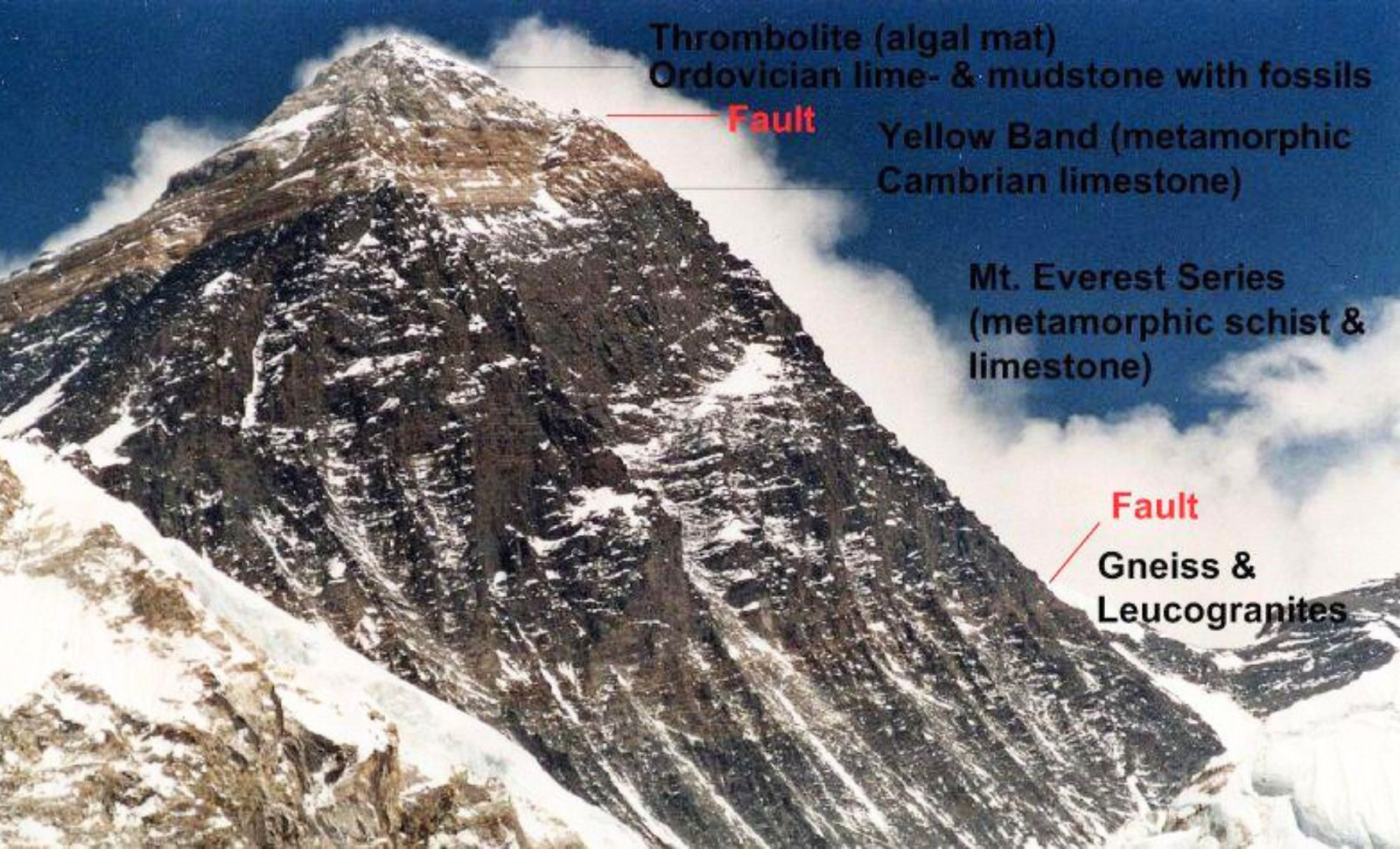
During this process, marine sedimentary rocks that were once ocean beds were elevated to impressive heights exceeding 8,000 meters (approximately 26,200 feet), carrying their fossilized life along with them.
The Lore Surrounding Marine Fossils in Mountains
Historically, the sight of marine fossils in mountainous terrains has sparked various interpretations, often intersecting with religious beliefs. Early observers struggled to rationalize these findings without modern geological context.
Leonardo da Vinci was among the pioneering thinkers to link these fossils to geological transformations. He hypothesized that chunks of Earth’s crust had fallen into water-filled gaps and were subsequently uplifted. Although not fully accurate, his ideas moved scientific thought closer to an understanding of Earth’s changing surface. However, since Da Vinci's findings were unpublished, many adhered to flood-based explanations for centuries.
It was only in the 1960s, following the widespread acceptance of plate tectonics—rooted in the 1920s discovery of continental drift—that the scientific community established why marine fossils exist atop mountains. Since then, extensive geological evidence has consistently supported this model.
- Categories:
- Science





0 comments
Sign in to Comment