
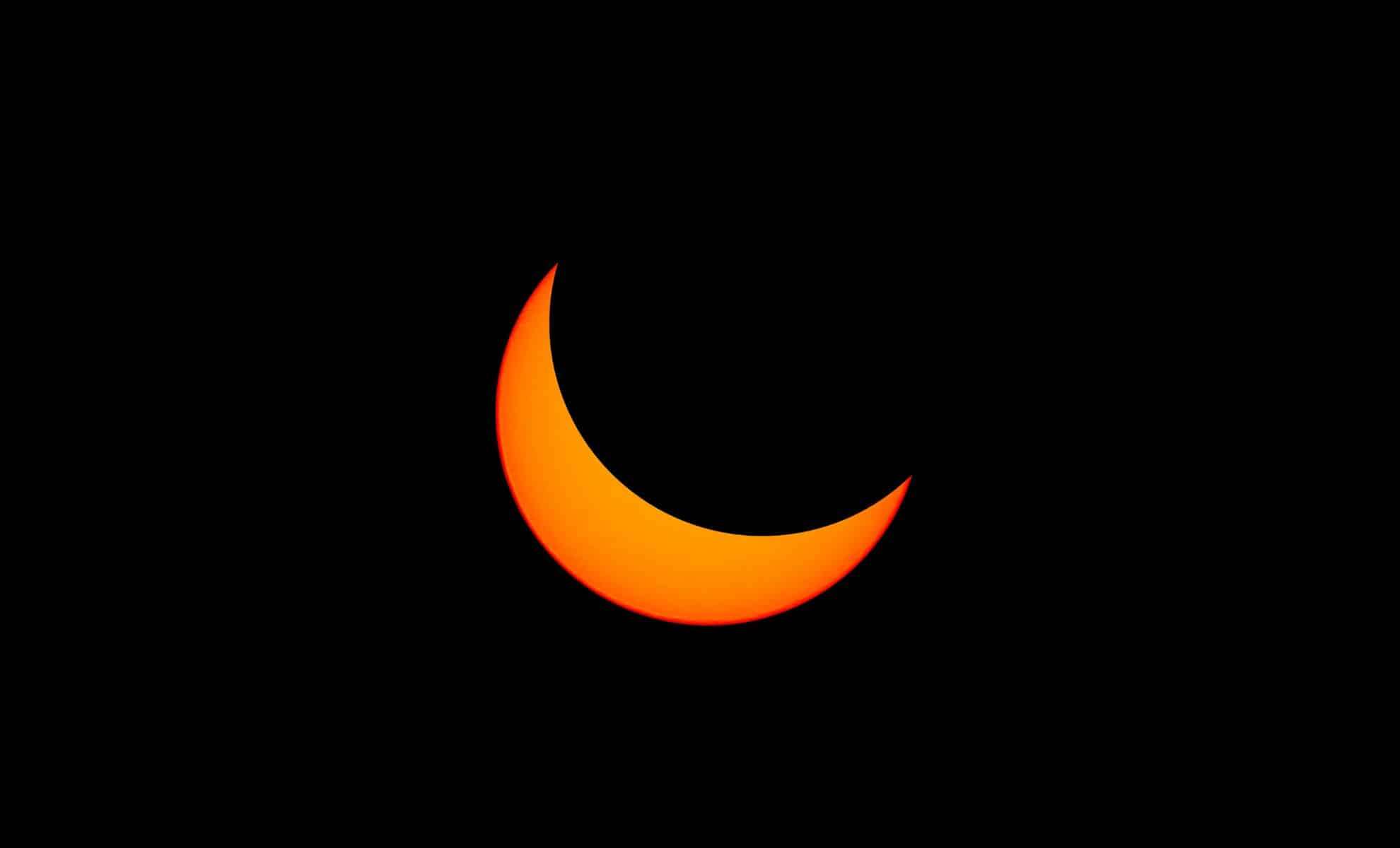
On September 21, 2025, a prominent partial solar eclipse will grace the skies over select regions including the South Pacific, New Zealand, and Antarctica. As detailed in a recent EarthSky report, this event will be the year’s last eclipse, with the Moon obscuring nearly 85% of the Sun at its peak, making it an especially striking partial eclipse.
An Early Morning Astronomical Display
The eclipse will commence at 17:29 UTC, coinciding with sunrise in many viewing locations. Spectators in New Zealand and parts of Antarctica will witness the gradual progress of the eclipse, reaching its maximum coverage at 19:41 UTC, concluding by 21:53 UTC when the Moon’s silhouette moves away from Earth’s vantage point.
Characterized as a “deep partial eclipse” by EarthSky, this event will not cause the Sun to vanish completely behind the Moon, but the substantial dimming may create subtle patterns of light on flat surfaces—phenomena which often escape casual notice.

This partial solar eclipse follows closely after a total lunar eclipse that occurred earlier in September 2025. Both eclipses take place within the year’s second eclipse season, a 35-day period marked by multiple eclipse events. The first eclipse season of the year unfolded in March, showcasing its own solar and lunar eclipses.
Part of the Long-Standing Saros Cycle 154
This eclipse is a member of the extensive Saros cycle 154, which enables astronomers to forecast eclipses through repeating orbital alignments of the Earth, Moon, and Sun. It is the 7th eclipse out of a total of 71 in this series, all of which occur at the Moon’s descending node—where it crosses southward over the ecliptic plane.
Unique to this series, each successive eclipse shifts the Moon’s path slightly northward, subtly altering visibility and eclipse characteristics over time. During this event, the Sun will be located against the backdrop of the constellation Virgo, adding extra intrigue for enthusiasts who relish spotting cosmic reference points during astronomical phenomena.
Prioritize Viewing Safety
Viewing a solar eclipse calls for strict eye protection. Directly looking at the Sun during any stage of the eclipse can cause irreversible harm to eyesight. EarthSky emphasizes the need to use officially certified eclipse glasses or solar filters, warning against the use of inadequate alternatives like regular sunglasses or smoked glass. Proper solar filters are also mandatory for telescopes and cameras aimed at the Sun during the eclipse.
To assist viewers in preparation, interactive maps and visual simulations from in-the-sky.org provide detailed eclipse pathways, specific timings for various cities, and animations of the Moon’s shadow moving across the Earth’s surface.
Reflecting on Past Eclipses to Anticipate the Future
Those curious about the upcoming eclipse’s nature can revisit the partial annular eclipse from June 10, 2021, during which up to 68% of the Sun was obscured in parts of the Northern Hemisphere. Photographers such as David Hoskin and James Trezza documented this event with remarkable photographs now available on EarthSky’s website.
Looking ahead, the September 21 eclipse sets the stage for more celestial highlights, including a major total solar eclipse in August 2026. However, this deep partial eclipse will serve as the dramatic astronomical finale of 2025.
- Categories:
- News






0 comments
Sign in to Comment