
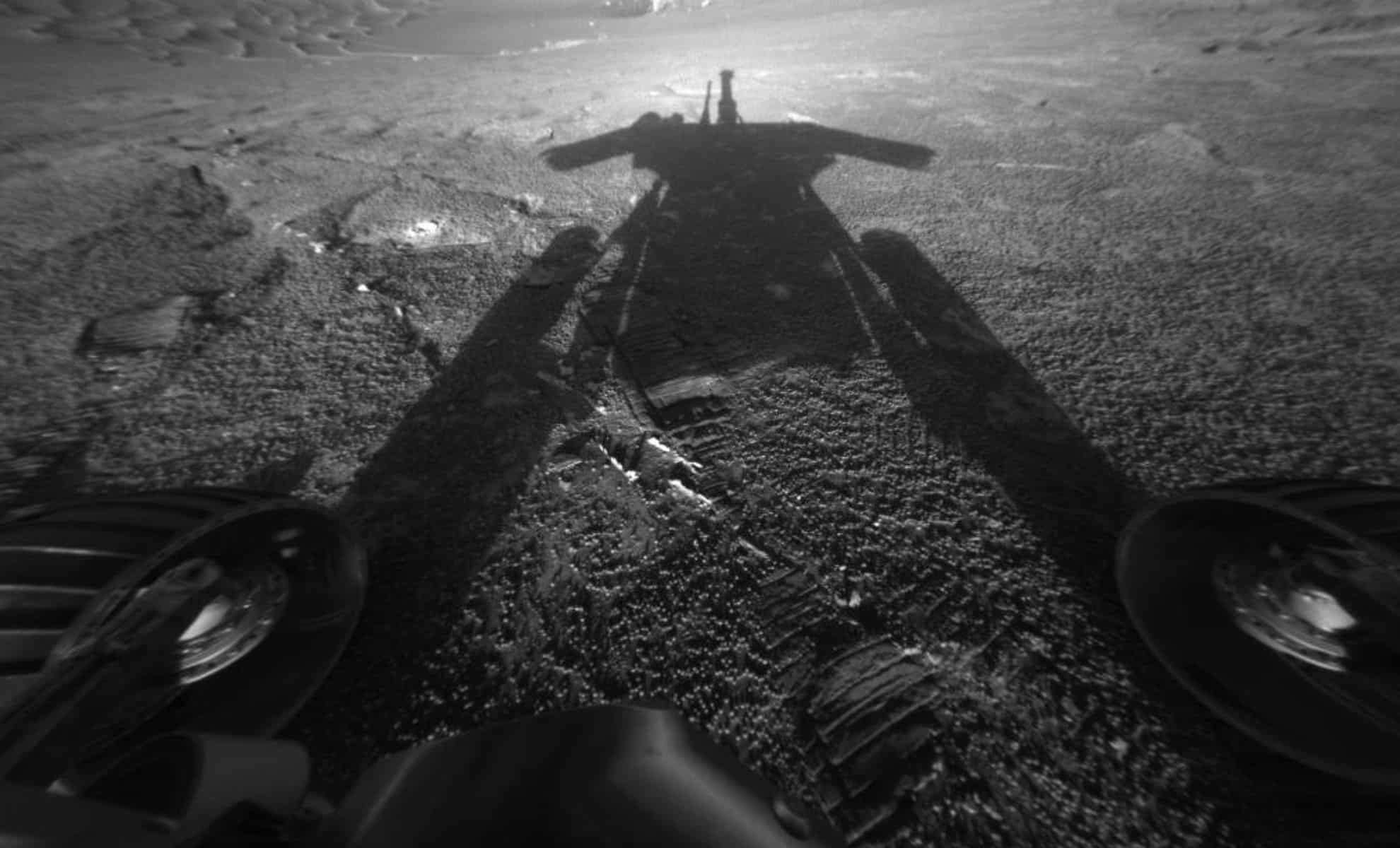
The Opportunity rover, hailed as one of NASA’s most triumphant interplanetary explorers, concluded its remarkable 15-year mission on Mars under somber circumstances in 2019. Its closing contact occurred during a severe dust storm spanning the entire planet, as researchers and engineers at NASA’s Jet Propulsion Laboratory (JPL) maintained hope up until the very end. Rather than a typical stream of telemetry data, Opportunity’s final transmission was a haunting photograph, marking an emotional finale to an extraordinary journey.
An Epic Expedition: Opportunity’s Martian Marathon
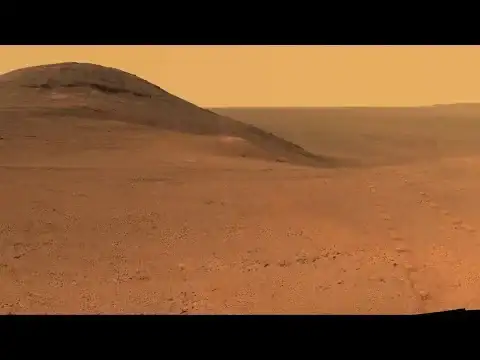
Originally launched in 2003 alongside its twin, Spirit, the Opportunity rover was designed for a brief 90-day mission to examine Mars’ surface. Defying expectations, it operated for 15 years, traversing over 45 kilometers (28 miles)—making it the first rover to complete a marathon distance on another world. Its primary target was Meridiani Planum, where it sought clues of historic water activity and geological records that could shed light on Mars’ ancient conditions.
The mission exceeded all hopes, yielding pivotal discoveries that reshaped our understanding of the Red Planet. Among its notable findings, Opportunity detected hematite—a mineral linked to the presence of water—which fueled the theory that Mars once harbored environments capable of supporting microbial life. The rover’s achievements laid the groundwork for successors like the Perseverance rover, now actively exploring Mars for signs of past life.

A Devastating Blow: The 2018 Martian Dust Storm
By mid-2018, Opportunity had long outlived its expected operational term. However, an enormous dust storm swept across Mars, one of the most intense in recorded history, drastically impairing the rover’s solar power generation. Coated in dust, Opportunity’s solar panels couldn’t absorb sufficient sunlight, forcing the rover into a dormant state. Despite hopes from the NASA team that it would survive and recharge as the dust settled, the rover never reawakened. After dispatching over a thousand recovery commands during several months, NASA formally concluded the mission.
Reflecting on the situation, NASA project manager John Callas remarked, “We were hopeful that the rover could ride it out. That the rover would hunker down, and then when the storm cleared, the rover would charge back up. That didn’t happen. At least it didn’t tell us that it happened. So, we don’t know.” The uncertainty around Opportunity’s fate created intense anticipation at NASA, yet the silence following the storm was profound.
The Last Signal: A Mysterious Final Image
Opportunity’s concluding communication arrived on June 10, 2018. Instead of the usual telemetry data, it transmitted an incomplete photo captured by its Pancam’s left eye, aimed at the Sun through a solar filter. The dense dust storm obscured the Sun, causing the image to appear as an eerie, dark expanse speckled with visual “noise.” Transmission interruption prevented the full image from being sent, resulting in a black void at the bottom portion.
NASA later clarified the white speckles were camera noise intensified by the near-total darkness due to the dust. “The Opportunity rover stopped communicating with Earth when a severe Mars-wide dust storm blanketed its location in June 2018. After more than a thousand commands to restore contact, engineers in the Space Flight Operations Facility at NASA’s Jet Propulsion Laboratory (JPL) made their last attempt to revive Opportunity Tuesday, to no avail. The solar-powered rover’s final communication was received June 10,” NASA stated.
- Categories:
- News









0 comments
Sign in to Comment