
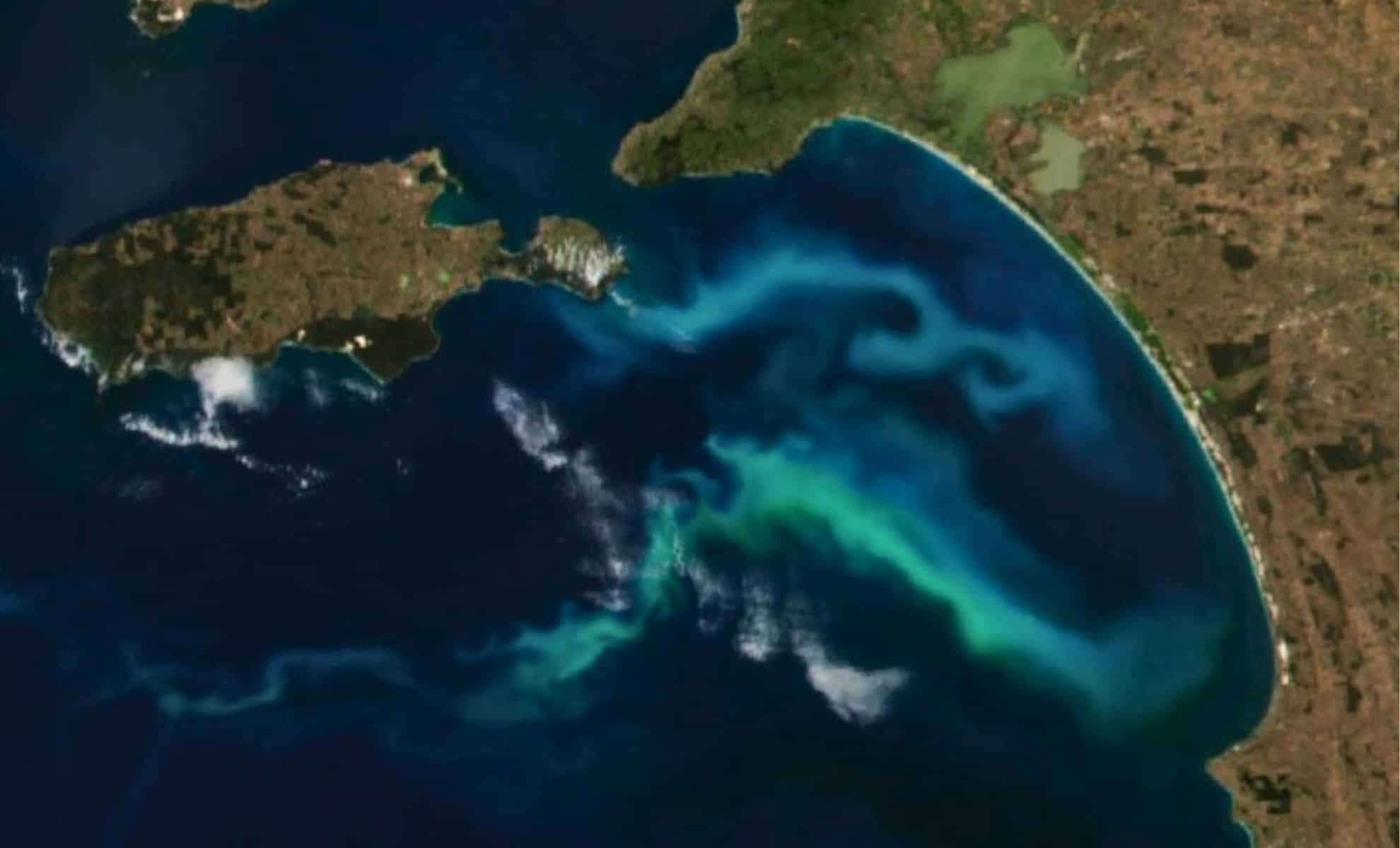
NASA satellites have recently detected a vast, luminescent swarm of marine organisms off Australia's southern shoreline. The vibrant turquoise glow stretching across the Great Australian Bight and the Tasman Sea signs a significant bioluminescent phytoplankton outbreak. This phenomenon, referred to by NASA as a striking “phytoplankton bloom,” was observed from space by sensitive imaging technology, verifying that the natural light comes from microscopic algae flourishing on the ocean's surface.
Space satellites capture phytoplankton luminescence
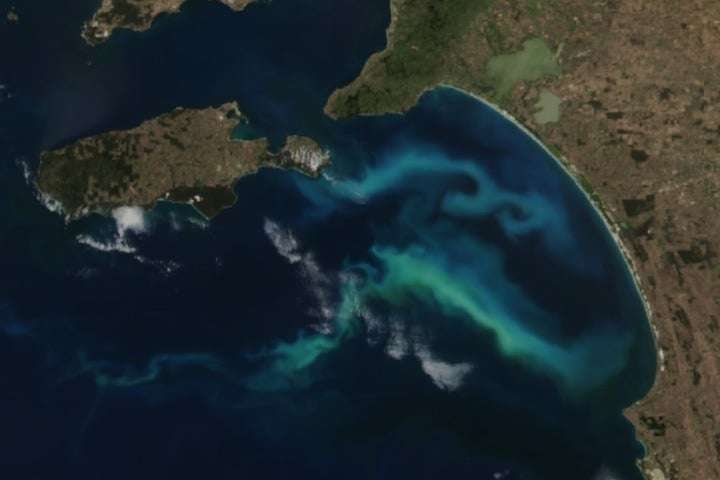
The glowing spectacle was first identified in images from NASA’s PACE spacecraft equipped with the Ocean Color Instrument (OCI). This sensor detected the radiant cluster in November 2024, lighting up waters between Australia’s southeast coast and Tasmania, particularly near the Bass Strait. Known for its strong currents and deep channels, the strait serves as an important navigational passage into Port Phillip Bay, where the city of Melbourne lies.
NASA noted that such blooms have appeared in this area previously. Earlier in January 2024, the Suomi NPP satellite observed similar events using its VIIRS (Visible Infrared Imaging Radiometer Suite) sensor, and even before that, in December 2023, the initial bloom was visible from space through NASA’s Terra and Aqua satellites. These continual observations allow scientists to monitor the bloom's development with high precision over time.

Tracing the origin of marine luminescence
Reported by Unilad, the bloom’s visibility to satellites stems from a dense concentration of chlorophyll-a, the pigment responsible for photosynthesis in phytoplankton. The shimmering gradient, spanning from green to turquoise, emanates from the photic zone—the ocean's surface layer where sunlight penetrates—supporting phytoplankton growth in nutrient-rich waters enriched by decomposed organic matter containing nitrogen and phosphorus.
Flinders University oceanographer Jochen Kaempf, who researches regional phytoplankton patterns, stated, “the green filament is unmistakably a phytoplankton bloom stretching along the continental shelf break at roughly 150 meters depth.” He also suggested that the adjacent blues might result from sediments stirred in shallow areas or from a different type of phytoplankton contributing to the observed glow.
Ecological impact in the Bass Strait ecosystem
Phytoplankton serve as the base of the oceanic food web, with their periodic blooms sustaining diverse marine species. Along Australia’s Bonney Coast, it is estimated that around 80 blue whales annually rely on these blooms, feeding on krill and small creatures that consume the phytoplankton. This bloom also attracts other marine fauna such as sardines, anchovies, tuna, crabs, and numerous fish, making this area a hotspot for marine biodiversity.
Beyond their food web significance, these algae contribute critically to global oxygen production and climate balance. NASA scientists highlight that these luminous blooms exemplify the complex interplay of ocean currents, nutrient flows, and seasonal cycles along southern Australia's coast. Their visibility from orbit celebrates the ecological value and remarkable beauty of these microscopic ocean inhabitants.
- Categories:
- News









0 comments
Sign in to Comment