
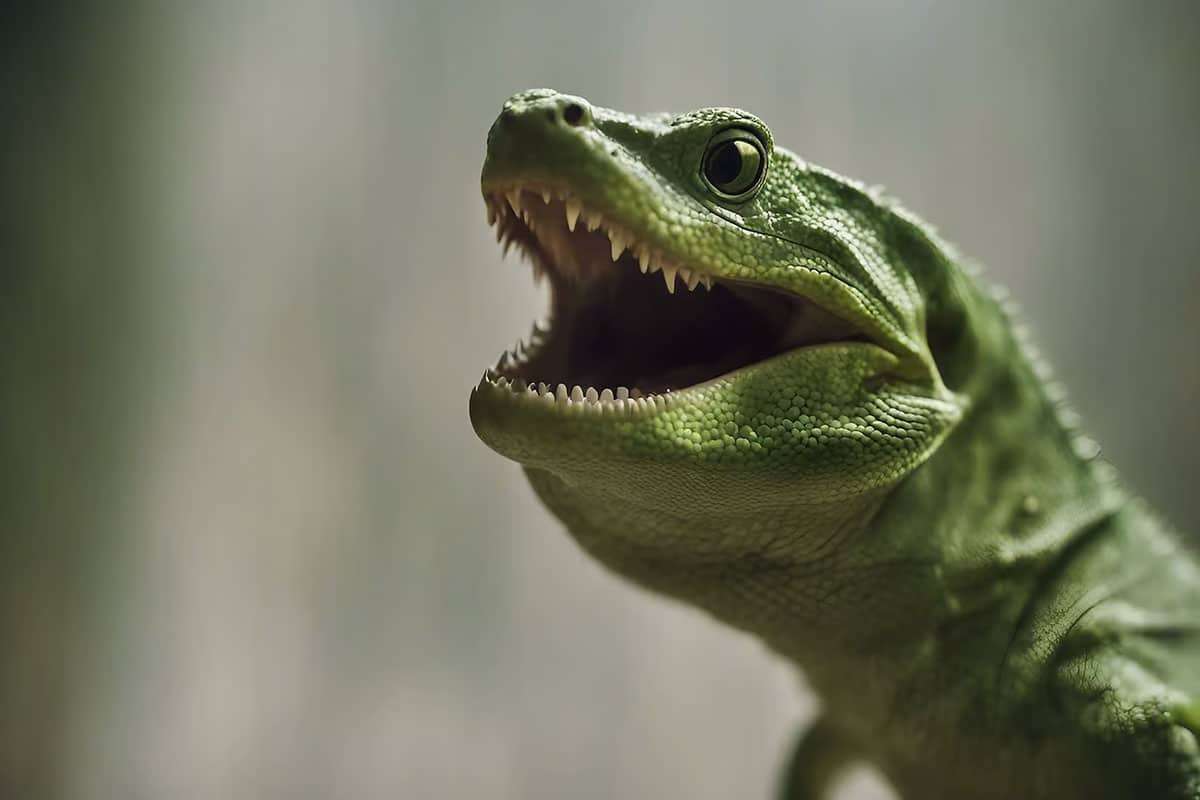
Scientists have unveiled a newly discovered species called Microzemiotes sonselaensis, identified from a fossilized jawbone recovered from Late Triassic strata. Despite its petite size—less than 30 centimeters long—this reptile has intrigued researchers due to its distinctive teeth structure.
Examination of the fossil uncovered deep grooves etched into each tooth, closely resembling the venom-conducting grooves present in today's beaded lizards and some snakes. This suggests that M. sonselaensis likely possessed an advanced venom apparatus, positioning it as an effective predator despite its modest dimensions.
This discovery enriches our understanding of venom evolution, revealing that poisonous defense systems were already well-established hundreds of millions of years ago. It serves as a fascinating example of how nature’s survival tools have ancient origins, akin to the ancient Amazon rock art that depicted extinct animals long before science recognized them.

The Origins of Venom in Reptilian Lineages
The identification of M. sonselaensis offers fresh insights into the multifaceted evolution of venom in reptiles. Contrary to the common notion that venom was a trait of large, intimidating animals, these findings emphasize that smaller reptiles might have been pioneers in developing venom-based adaptations.
Researchers also point out that venom delivery systems likely emerged independently in different evolutionary branches. Notably, M. sonselaensis is not part of the Toxicofera clade, which today encompasses all known venomous reptiles. This implies a case of convergent evolution of venom capabilities across distinct reptilian groups.
Venom's evolutionary purposes have been diverse, including:
- Protection from predators
- Capturing and incapacitating prey
- Aiding in digestion
- Defending territory
Venomous Reptiles: History and Modern Counterparts
Though venomous reptiles are well-known today, determining their ancestral origins has posed challenges. The discovery of M. sonselaensis is not the first indication of venomous traits in ancient reptiles. For instance, fossils from the 1990s of Uatchitodon, another small Late Triassic reptile, also exhibited signs of venom delivery.
However, evidence for venom in larger prehistoric reptiles remains debated. Suggestions that dinosaurs like Sinornithosaurus haoiana could produce venom have been controversial. Similarly, popular depictions of the dinosaur Dilophosaurus spitting venom, as seen in Jurassic Park, lack solid scientific backing.
Below is a comparison of venomous reptiles from different eras:
EraVenomous SpeciesSize RangeLate TriassicMicrozemiotes sonselaensis, Uatchitodon20-30 cmPresent DayBeaded lizards, Various snake species30 cm – 6 m
Impact on Understanding Ancient Ecosystems
Revealing venomous small reptiles from the Late Triassic reshapes our perception of prehistoric ecological dynamics. Such creatures most likely played vital roles in their habitats, influencing evolutionary paths and species interactions.
The existence of venom in these compact reptiles points to a sophisticated predator-prey relationship that existed long before dinosaurs or mammals dominated. This aligns with other remarkable paleontological discoveries, such as the 220,000-year-old mammoth burial site that yielded unexpected artifacts.
Studying these venomous reptiles expands our knowledge of:
- Ancient ecological interactions
- Evolutionary pressures shaping early reptiles
- Development of anti-predator defenses in prey
- Diversity of survival mechanisms in primordial environments
Continued research into Earth's distant past reveals fascinating adaptations like those seen in M. sonselaensis. These ancient venomous reptiles illustrate that innovation in nature’s fight for survival has long been diverse and complex, influencing evolutionary trajectories in profound ways.
- Categories:
- Evolution

















0 comments
Sign in to Comment