
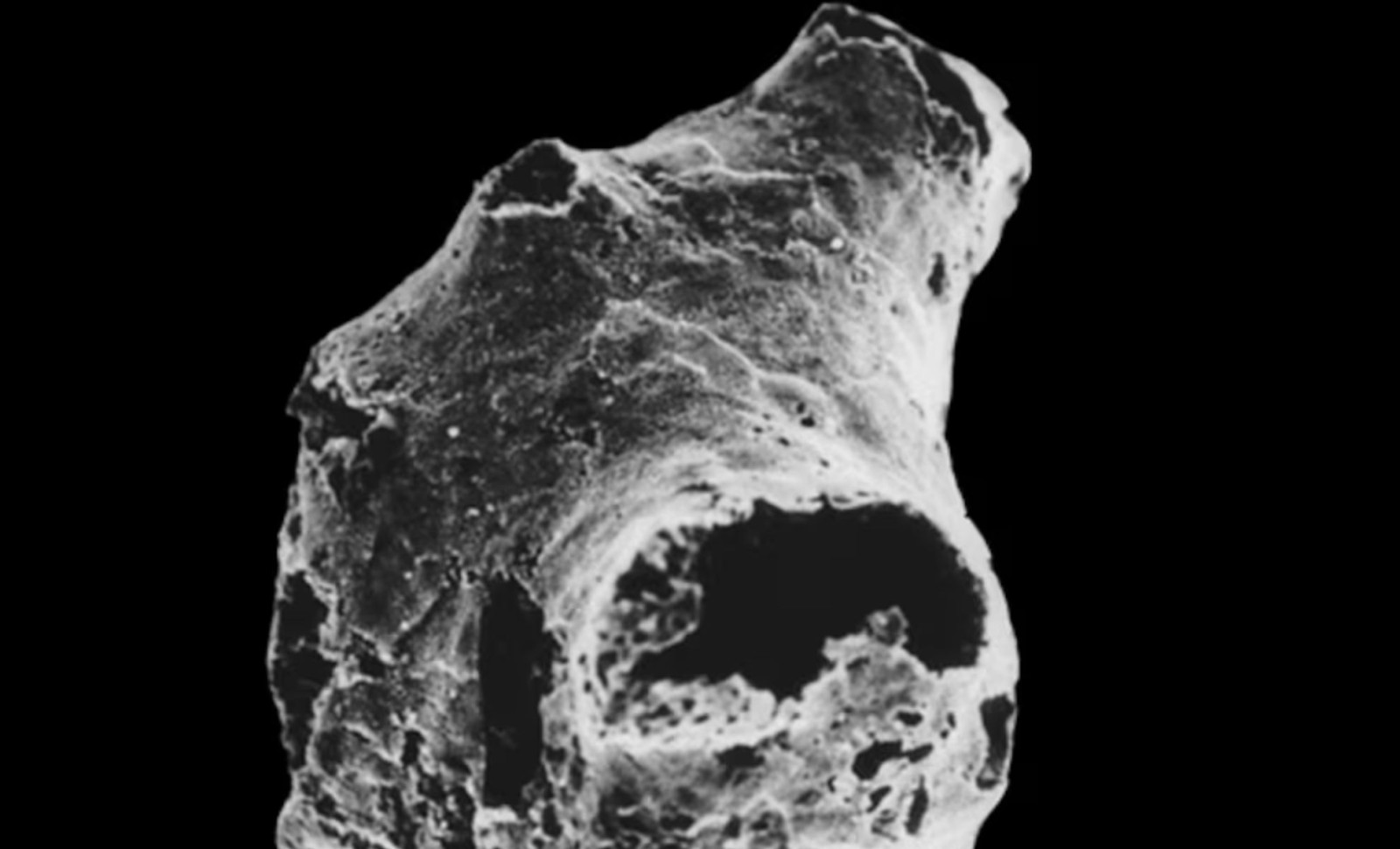
Scientists have made an astonishing discovery with the identification of Otavia antiqua, a primitive animal fossil that dates back approximately 760 million years. Unearthed in rock formations in Namibia, this tiny organism is transforming our understanding of early animal life on the planet.
Published in the South African Journal of Science, the research sheds new light on animal evolution, surpassing the previous record-holder, a sponge fossil estimated to be 650 million years old.
Tracing Life’s Ancient Roots
The question of how life began on Earth has long puzzled scientists, with hypotheses ranging from the primordial soup theory to the possibility of extraterrestrial microbes arriving via asteroids. The discovery of Otavia antiqua brings new evidence to this ongoing scientific investigation.

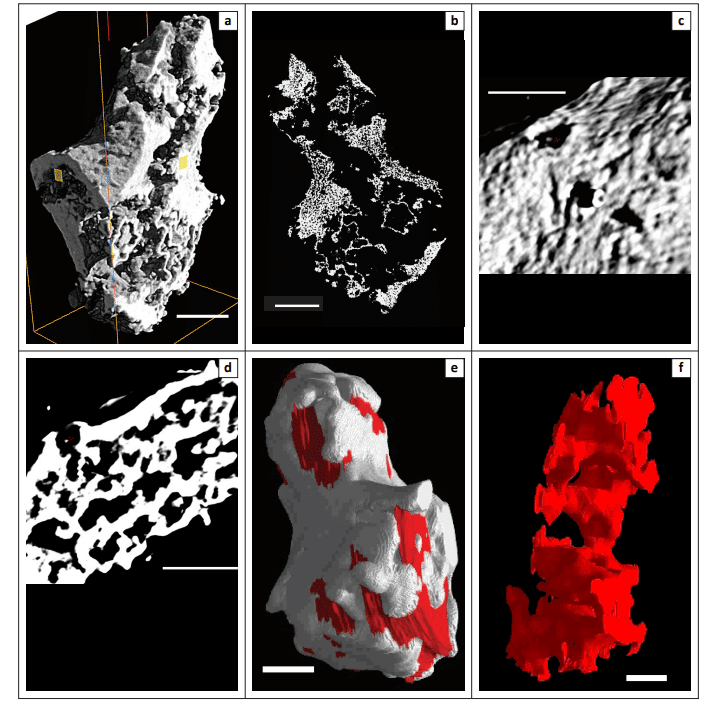
This minute creature, resembling a simple sponge, is believed to have inhabited tranquil lagoon environments where it fed on microorganisms like algae and bacteria. Its structure, featuring wide pores that drew in food particles to a central cavity, offers clues about the survival mechanisms of the earliest animals prior to the evolution of complex organs.

The Resilient Life of Otavia antiqua
According to the study, this organism qualifies as an animal due to its specialized cells forming distinct tissues and organs. Remarkably, its simple tubular design remained relatively stable for over 200 million years, a persistence that scientists currently find puzzling.
“The fossils are tiny, roughly the size of a grain of sand, and we’ve discovered several hundred of them,” noted Anthony Prave, the lead researcher and a geologist at the University of St. Andrews in the U.K.
Extensive fossil examination indicates that Otavia endured some of Earth’s harshest environments. Its minimal evolutionary changes imply that it was highly adapted to its surroundings, thriving successfully for millions of years without significant alteration.
Endurance Through Ice Ages
A striking aspect of Otavia’s history is its survival through numerous "Snowball Earth" events, when global ice sheets nearly encased the planet. Fossil evidence shows this diminutive species lived through these extensive glaciations, marking it as one of Earth’s longest enduring life forms.
Lead investigator Anthony Prave suggests that Otavia likely thrived in small, ice-free aquatic refuges, allowing it to persist when many other species vanished under frigid conditions.
“In fact, when we look at thin sections of the rocks, certain samples would likely yield thousands of specimens. Thus, it is possible that the organisms were very abundant.”
- Categories:
- Science








0 comments
Sign in to Comment