
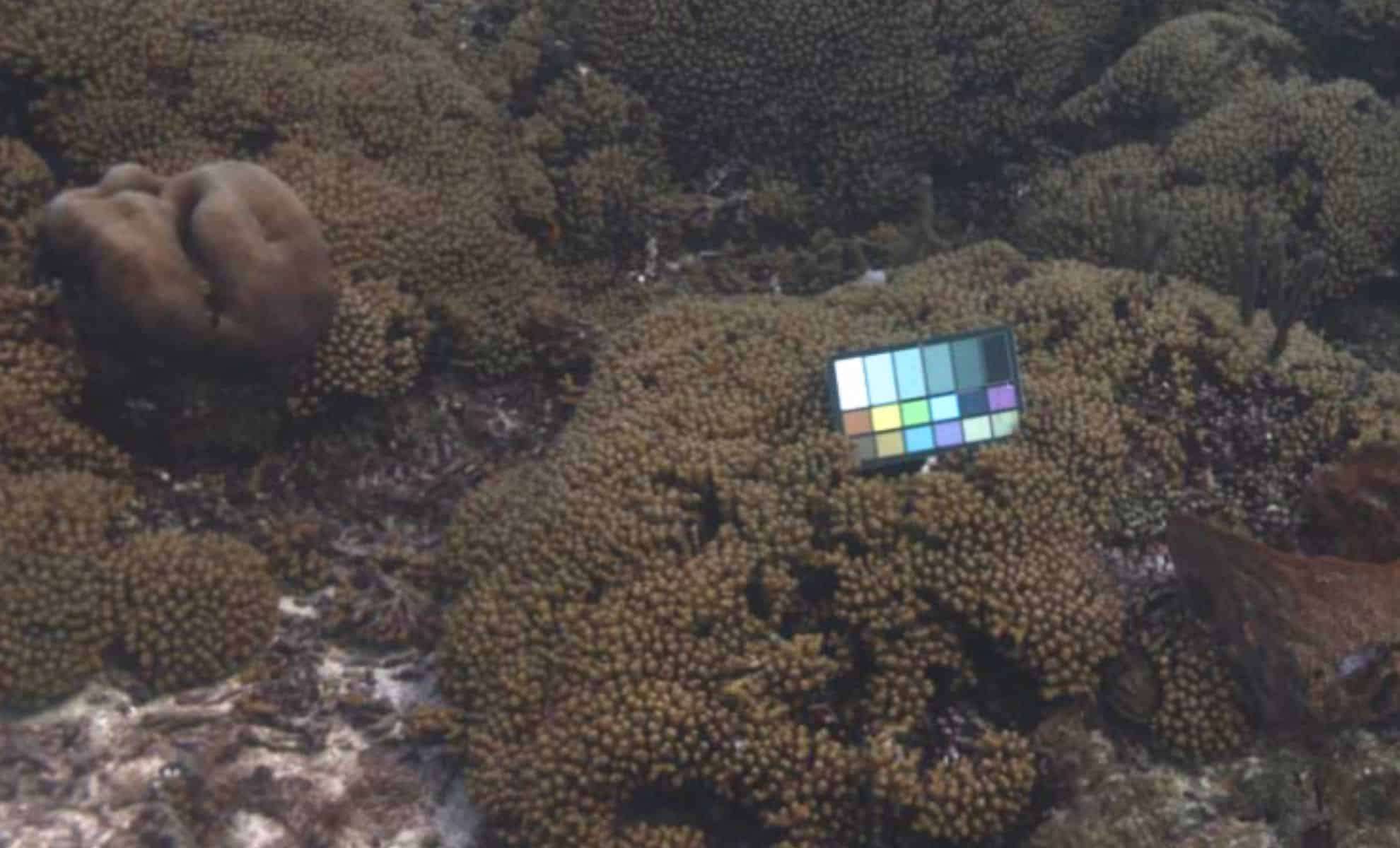
Scientists from MIT and Woods Hole Oceanographic Institution (WHOI) have introduced an innovative tool named SeaSplat that revolutionizes underwater visualization. This breakthrough addresses color distortion caused by water, enabling remarkably clear and accurate views of submerged environments.
Detailed in a latest publication, SeaSplat merges sophisticated color correction techniques with 3D imaging to produce lifelike virtual representations of underwater scenes that can be examined with exceptional clarity.
Conquering Optical Distortions Beneath the Surface
Underwater ecosystems teem with life, yet much remains concealed due to water’s impact on light. As light penetrates water, it scatters and bends, altering colors and dimming visibility. Suspended particles further complicate authentic color capture. Current color restoration methods often demand heavy computational resources, limiting their practicality for immediate use.

SeaSplat overcomes these hurdles through a novel computational approach that considers optical effects such as backscatter (light reflecting off waterborne particles) and attenuation (loss of light intensity over distance). This technique effectively "removes" the water’s interference, delivering vibrant, true-to-life images of underwater landscapes.
Transforming Marine Research
What distinguishes SeaSplat is its capacity to generate dynamic, vivid 3D underwater models from a collection of images captured by divers or autonomous underwater vehicles. It integrates these visuals seamlessly, enabling immersive virtual exploration from multiple angles and detailed analysis of specific sites.
This advancement holds great promise for marine biologists studying delicate ecosystems like coral reefs. In particular, SeaSplat can help identify early indicators of coral bleaching by highlighting subtle, otherwise unseen color variations, improving monitoring efforts worldwide.
Immersive Virtual Underwater Exploration
MIT’s trials with SeaSplat included diverse underwater settings such as the U.S. Virgin Islands, the Red Sea, and Caribbean waters near Curaçao.
The platform consistently generated high-fidelity, true-color 3D environments that maintain image integrity even when viewed from varying distances and angles—an improvement over previous solutions, which often faded or distorted under such conditions.
Looking Ahead: Real-Time Ocean Monitoring
While powerful, SeaSplat currently demands considerable computational resources, restricting its deployment on mobile underwater drones. Nonetheless, researchers envision adapting the technology for tethered systems where processing occurs aboard nearby vessels, enabling real-time rendering of oceanic scenes.
Graduate student Daniel Yang at MIT highlights that SeaSplat is engineered to “explicitly model how water affects light,” allowing creation of more precise 3D representations. This pioneering capability promises enhanced observation of marine ecosystems, potentially transforming environmental monitoring and preservation strategies.
- Categories:
- News







0 comments
Sign in to Comment