

Scientists are exploring innovative methods to advance the hunt for signs of extraterrestrial intelligence. A recent publication in the Monthly Notices of the Royal Astronomical Society proposes utilizing Earth’s shadow as a vantage point to detect alien probes near our planet. Complementarily, another investigation in The Astrophysical Journal Letters examines our outgoing radio transmissions to pinpoint optimal times and locations where extraterrestrial messages might be most discernible.
A Satellite-Free Observation Zone Within Earth’s Shadow
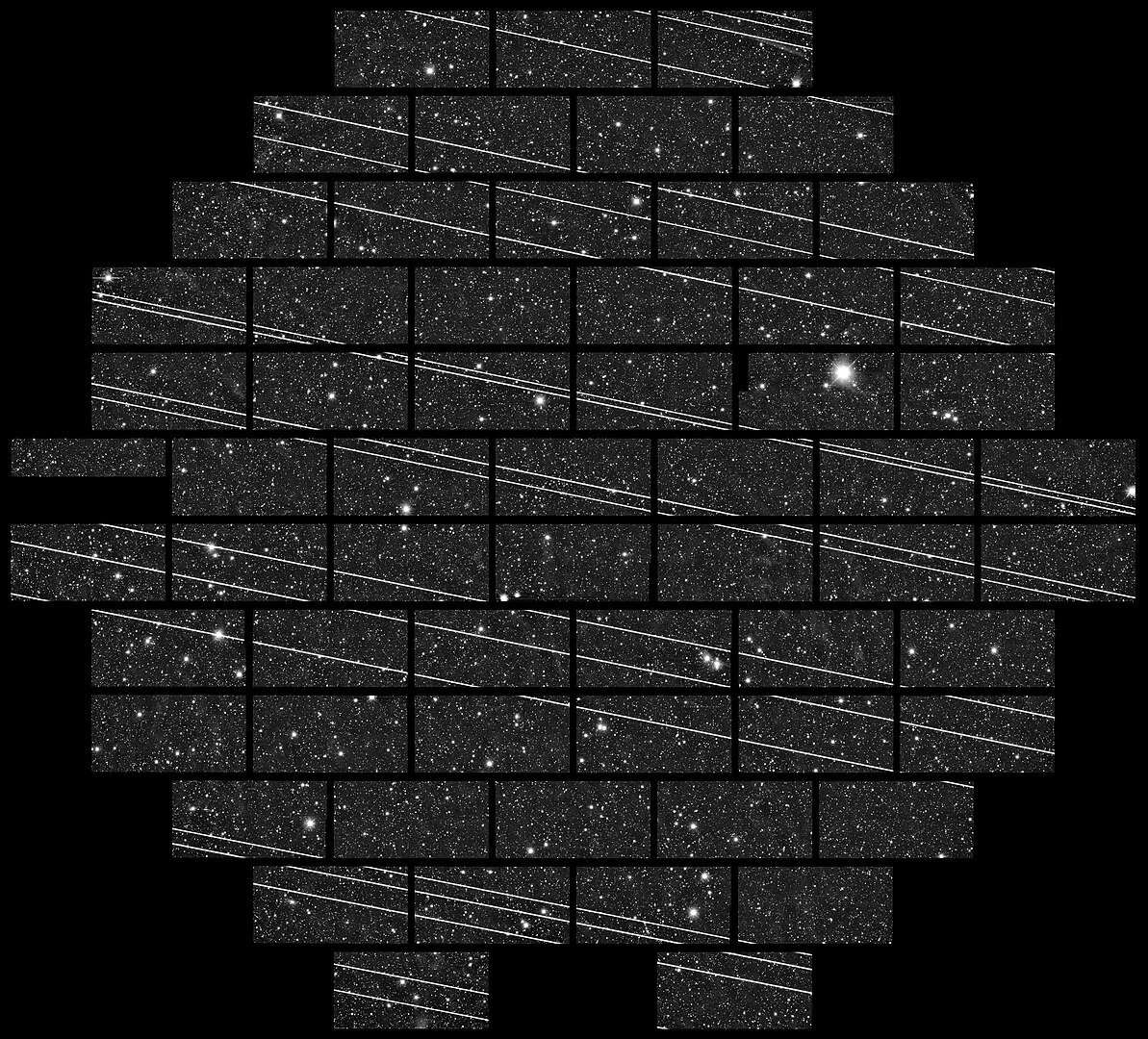
The complexity of near-Earth orbit, congested with countless satellites and vast amounts of debris, poses a significant challenge to astronomers seeking unfamiliar objects, especially any that might be of alien origin. To overcome this obstacle, Beatriz Villarroel and her team at Stockholm University conceived a novel approach: concentrating their observations inside the Earth’s shadow.
Each night, Earth projects a conical shadow out into space, creating an area free from direct sunlight. This eliminates the dazzling reflections from satellites and space debris, forming a clean observation corridor. By targeting this shadow zone, Villarroel’s group analyzed more than 200,000 images from the Zwicky Transient Facility (ZTF) in California, an observatory designed to monitor transient phenomena in the sky.

Employing their AI-powered system named NEOrion, the team sifted through thousands of candidates, most of which were identified as meteoroids, aircraft, or known minor planets. However, a single intriguing object stood out: it was an unregistered object traveling at a speed inconsistent with typical asteroids and did not appear in any existing space object catalogs. Despite follow-up attempts, its nature remains undetermined.
Investigating Alien Artifacts Using Archival Photos
The research, featured in Monthly Notices of the Royal Astronomical Society, also suggests reviewing astronomical images taken before 1957—prior to humanity launching satellites—to spot unexplained entities that might indicate non-human technology. These historical observations could reveal artifacts overlooked in modern surveys.
The team is additionally analyzing the light spectra of these unusual detections to detect surface characteristics shaped by long-term exposure to space conditions, potentially a hallmark of artificial, extraterrestrial origins.
While no confirmed alien devices have emerged yet, this strategy provides a fresh perspective on investigating our cosmic neighborhood. The researchers are preparing the ExoProbe initiative, which aims to establish a worldwide telescope network capable of tracking unknown objects live and accurately mapping their locations through coordinated observations.
Optimizing the Search for Extraterrestrial Signals
Another investigation led by Pinchen Fan at Pennsylvania State University and reported in The Astrophysical Journal Letters analyzed two decades of transmission data from NASA’s Deep Space Network (DSN), which supports missions ranging from surface landers on Mars to space probes near Sun-Earth Lagrange points and far-reaching explorers such as Voyager and New Horizons.
The study revealed that certain planetary alignments, particularly between Earth and Mars, form direct corridors that channel our most powerful and continuous radio emissions. According to Joseph Lazio from NASA’s Jet Propulsion Laboratory, these alignments create focused pathways through the cosmos, making our signals as much as 77 percent more likely to be detected by extraterrestrial civilizations located in the right region.
Using Alignment Patterns to Detect Alien Transmissions
The researchers propose applying this concept in reverse. If human transmissions are most detectable during specific alignments, then alien civilizations might also time their broadcasts to similar junctions within their planetary systems.
This reasoning greatly narrows the search parameters. Instead of indiscriminately scanning the cosmos, astronomers can concentrate on exoplanetary systems during their alignments when the chance of receiving strong technosignals is highest.
The upcoming launch of the Nancy Grace Roman Space Telescope could accelerate progress by discovering more than 100,000 new exoplanets, thus enlarging the catalog of potential targets for such targeted listening.
Meanwhile, alignments involving distant worlds like Jupiter offer a lower chance of detection, about 12 percent, primarily because fewer missions travel to the outer Solar System. This insight encourages focusing on systems viewed edge-on, where alignments can be observed and exploited.
Both studies illustrate how scientists are refining their approaches in the pursuit of extraterrestrial intelligence. As Fan notes, understanding “the direction and frequency of our most common signals” not only clarifies how detectable humanity is but also helps identify promising moments and places to tune in for alien communications.
- Categories:
- News












0 comments
Sign in to Comment