
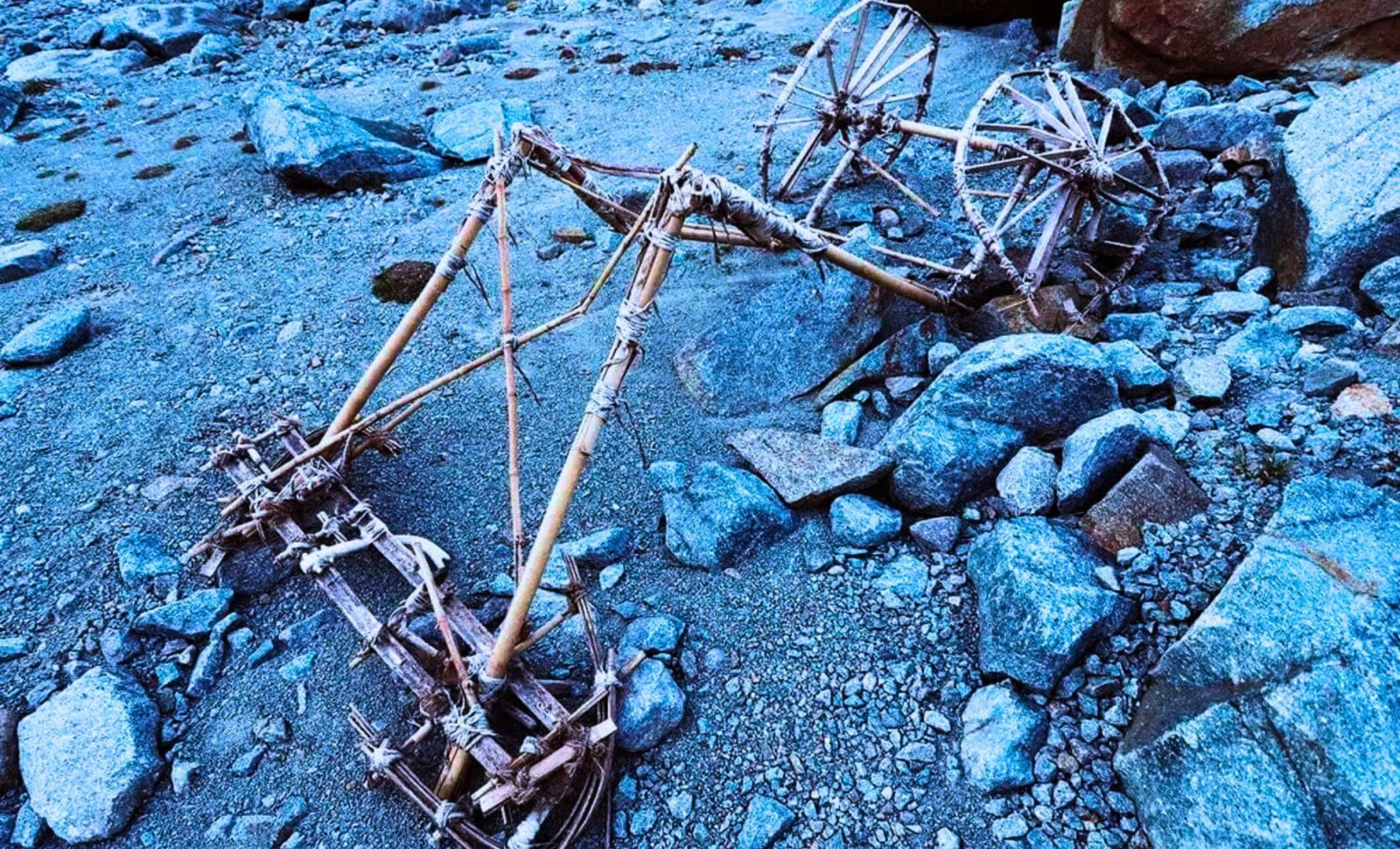
While trekking across the Splügen Pass in the Swiss Alps on November 2, a hiker encountered a surprising sight at 2,100 meters altitude: a partially uncovered two-wheeled bamboo cart emerging from the melting glacier ice. Crafted entirely from bamboo sticks bound with cord, the device looked surprisingly contemporary yet unexpected for its alpine location.
Local trekker Sergio Veri promptly alerted officials in Graubünden, Switzerland’s largest and most mountainous canton. Specialists from the Archaeological Service of Graubünden have authentic confirmed the artifact’s authenticity and estimated its age to the 20th century, although many questions remain about its origin and purpose.
The cart’s presence inside a glacier is highly unusual. Even more puzzling is its bamboo construction—a material alien to the Alps and rarely used in European transportation technology—which has sparked scientific curiosity and widespread speculation.

An Intriguing Alpine Anomaly
The Splügen Pass historically connects Switzerland’s Hinterrhein Valley with Italy’s Valle San Giacomo, serving as a vital trade and military corridor. This region has been well mapped since the Roman era and played a strategic role in more modern times.
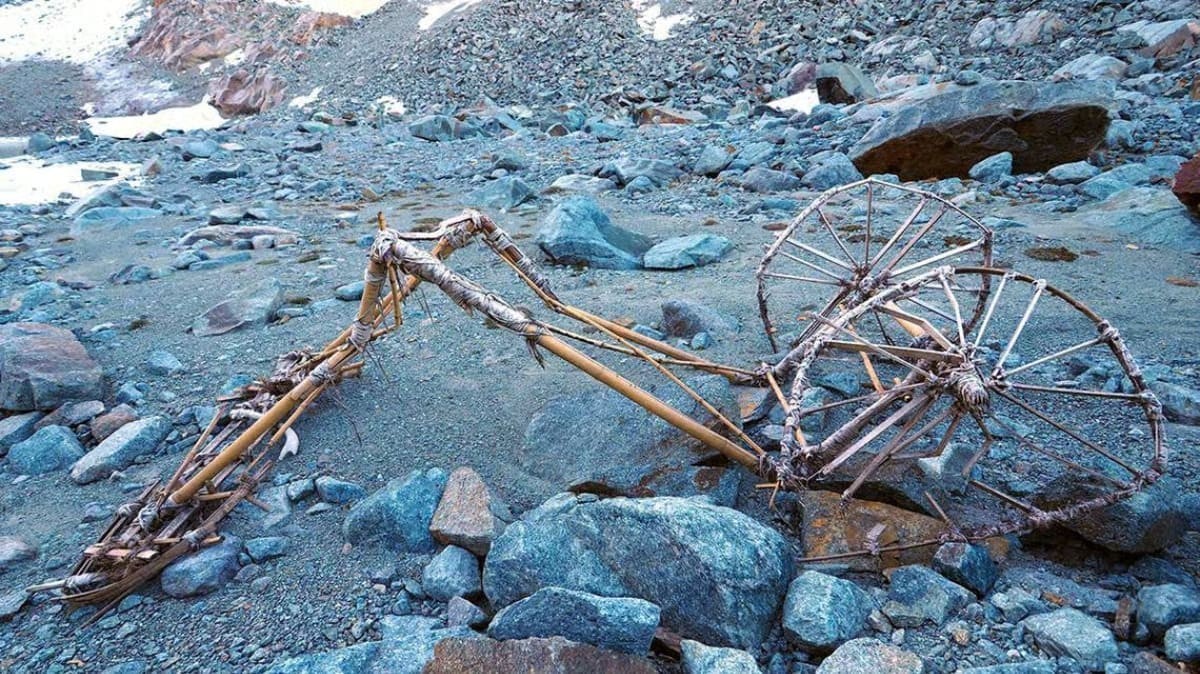
However, no documentation records a vehicle like this one in the region. ArchaeologyMag notes the cart consists of robust bamboo poles fastened by cords, equipped with two sizable wheels and lacking mechanical elements or identifiable markings.
Early investigations imply the cart isn’t ancient but was most likely made within the past century. This timing matches the good condition of the materials and overall construction. Curiously, no associated belongings or packaging material were found, nor any indication of its use in commerce or military operations.
Significantly, bamboo is native to Asia and not indigenous to Swiss ecosystems. Despite its introduction to Europe in the 18th and 19th centuries, it has never been commonly applied in Alpine transportation or military gear.
Glacier Melt Unearths Modern Mysteries
This bamboo cart is the latest curious find resulting from the rapid melting of Alpine glaciers. A 2023 European Space Agency (ESA) report reveals that worldwide glaciers have lost over 2% of their volume in the last decade, primarily driven by rising temperatures.
Switzerland has seen especially dramatic glacier retreat. Earlier this year, the Secrets of the Ice project uncovered a 20th-century sled on the Cavagnöö Glacier, similarly revealed by thawing ice. Such artifacts offer rare glimpses of historical human activity in key alpine transit zones.
Still, the bamboo cart stands apart due to its uncommon materials and design. Unlike the familiar wooden sleds or metal implements, its bamboo framework suggests a lightweight, flexible engineering approach rarely documented in this region.
The Archaeological Service of Graubünden is conducting further examination, though full disassembly and precise dating via radiocarbon or material analysis have yet to occur.
Rising Speculation and Requests for Public Input
With limited official information available, many theories have surfaced online. Following the Canton of Graubünden publishing images on its official Facebook page, internet users proposed several explanations—some more credible, others quite speculative.
Popular ideas include:
- A contraband sled used for smuggling lightweight items across borders mid-20th century.
- A component of an experimental glider or ultralight vehicle designed for mountainous test flights.
- A specialized mountain transport tool created to carry equipment through challenging alpine terrain.
While these theories are intriguing, none have been confirmed by documented evidence. The lack of comparable artifacts in museum collections or military archives, along with the absence of identifiable maker’s marks or hardware, deepens the mystery surrounding this cart.
Authorities have issued a public appeal seeking historical photographs, archival documentation, or family accounts that could shed light on the cart’s original function and history.
The Bamboo Cart as a Symbol of Climate and Cultural Change
As alpine glaciers continue to shrink, they reveal neglected fragments of recent history. These are not prehistoric artifacts but objects from the late 19th and 20th centuries—eras often assumed to be well recorded.
This bamboo cart exemplifies the crossroads of environmental change, forgotten technology, and historical mystery. Whether it was an isolated innovation, a prototype, or a covert transport device, its emergence raises questions about human adaptation in extreme environments during the modern period.
Moreover, the find highlights how accelerated ice loss threatens not only natural habitats but also fragments of cultural memory, unearthing relics without their usual stories or context intact.
- Categories:
- News












0 comments
Sign in to Comment