
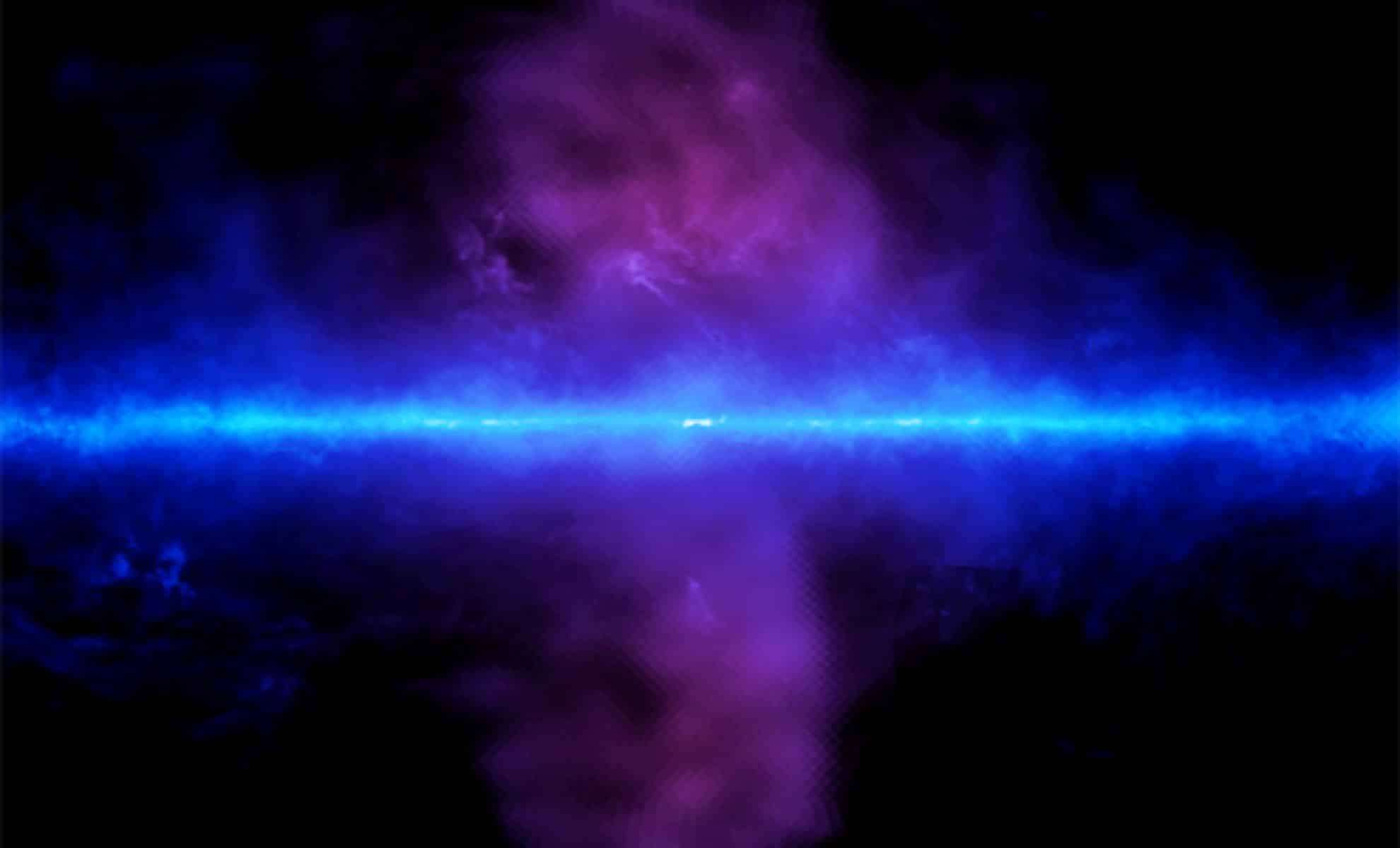
Scientists probing the heart of our galaxy have uncovered an extraordinary phenomenon: unexpectedly cold hydrogen gas clouds hidden within the Fermi bubbles, enormous regions of intensely hot plasma extending from the Milky Way’s center. These clouds, astonishingly larger than our entire solar system, challenge existing theories since such frigid matter shouldn’t endure the extreme conditions inside these energetic bubbles.
The Fermi Bubbles: Vast Structures of High-Energy Plasma
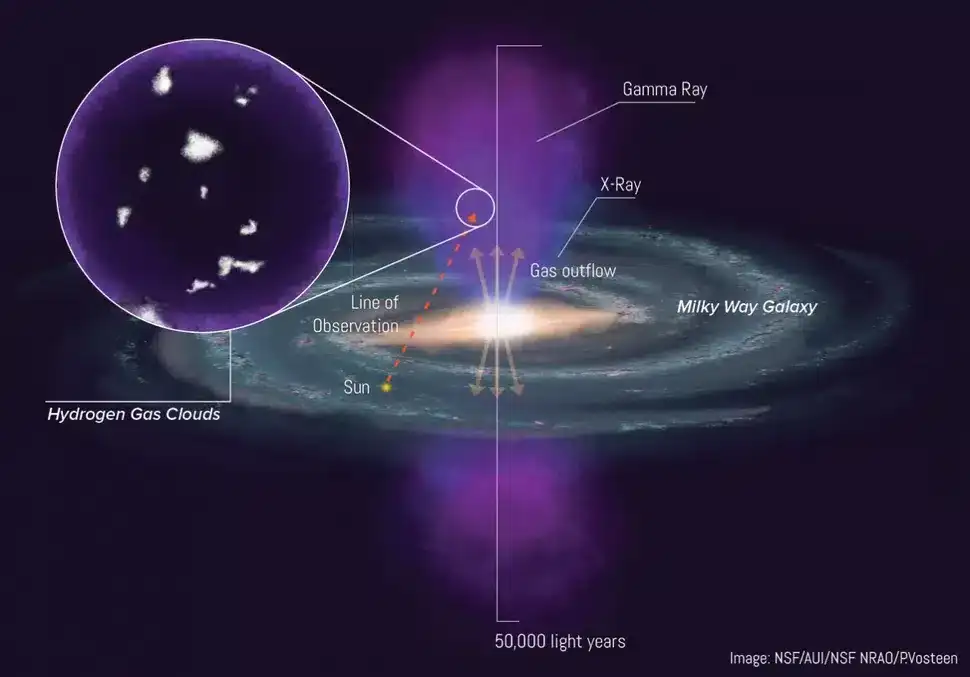
First identified in 2010 by NASA’s Fermi Gamma-ray Space Telescope, the Fermi bubbles stretch roughly 25,000 light-years above and below the galactic nucleus. Though invisible in visible light, their presence is striking in gamma-ray observations. Spanning a colossal 50,000 light-years, these bubbles encompass half the height of the Milky Way galaxy. The plasma inside reaches temperatures exceeding one million kelvins, nearly 2 million degrees Fahrenheit, pointing to a cataclysmic explosion linked to the central black hole’s past activity.
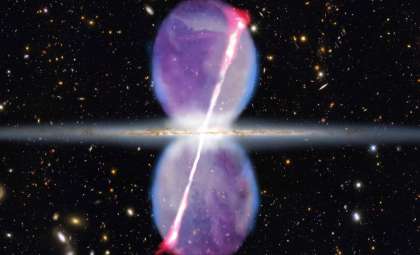
Researchers theorize that powerful jets emitted from the Milky Way’s central black hole propelled matter tens of thousands of light-years outward. Over millions of years, this ejected material ballooned into the immense Fermi bubbles currently enveloping the galaxy’s center.

Unexpected ‘Ice Cube’ Clouds Endure in Scorching Plasma
The breakthrough lies in detecting gigantic cold hydrogen clouds inside this fiercely heated environment. Spanning from 13 to 91 light-years across, these clouds far surpass the dimensions of our solar system. Their existence here contradicts what scientists expected, since cold hydrogen gas should have been vaporized long ago within these simmering bubbles.
Lead researcher Rongmon Bordoloi, an associate professor at North Carolina State University, suggests these clouds might be the surviving fragments of much larger gaseous bodies expelled during the black hole’s tumultuous phases.
Bordoloi compares these enduring clouds to an ice cube dropped into boiling water—small cubes melt rapidly, but larger chunks can withstand the heat significantly longer. This analogy implies that these cold clouds have shrunk over time but remain, protected by their initial immense size despite continuing erosion by galactic winds.
A Revised Timeline for Black Hole Outbursts
The presence of these ice-like clouds within the Fermi bubbles provides valuable clues about when the central black hole last erupted. Bordoloi’s team argues that, because these cold clouds cannot survive for extended cosmic timescales in such conditions, their persistence indicates a more recent black hole explosion—occurring just a few million years ago, a near instant in cosmic chronology.
These findings refine our understanding of the Fermi bubbles’ age and offer insights into the frequency and intensity of the Milky Way’s supermassive black hole’s explosive episodes. It hints that these violent outbursts may happen more intermittently and recently than has long been assumed.
- Categories:
- News



0 comments
Sign in to Comment