
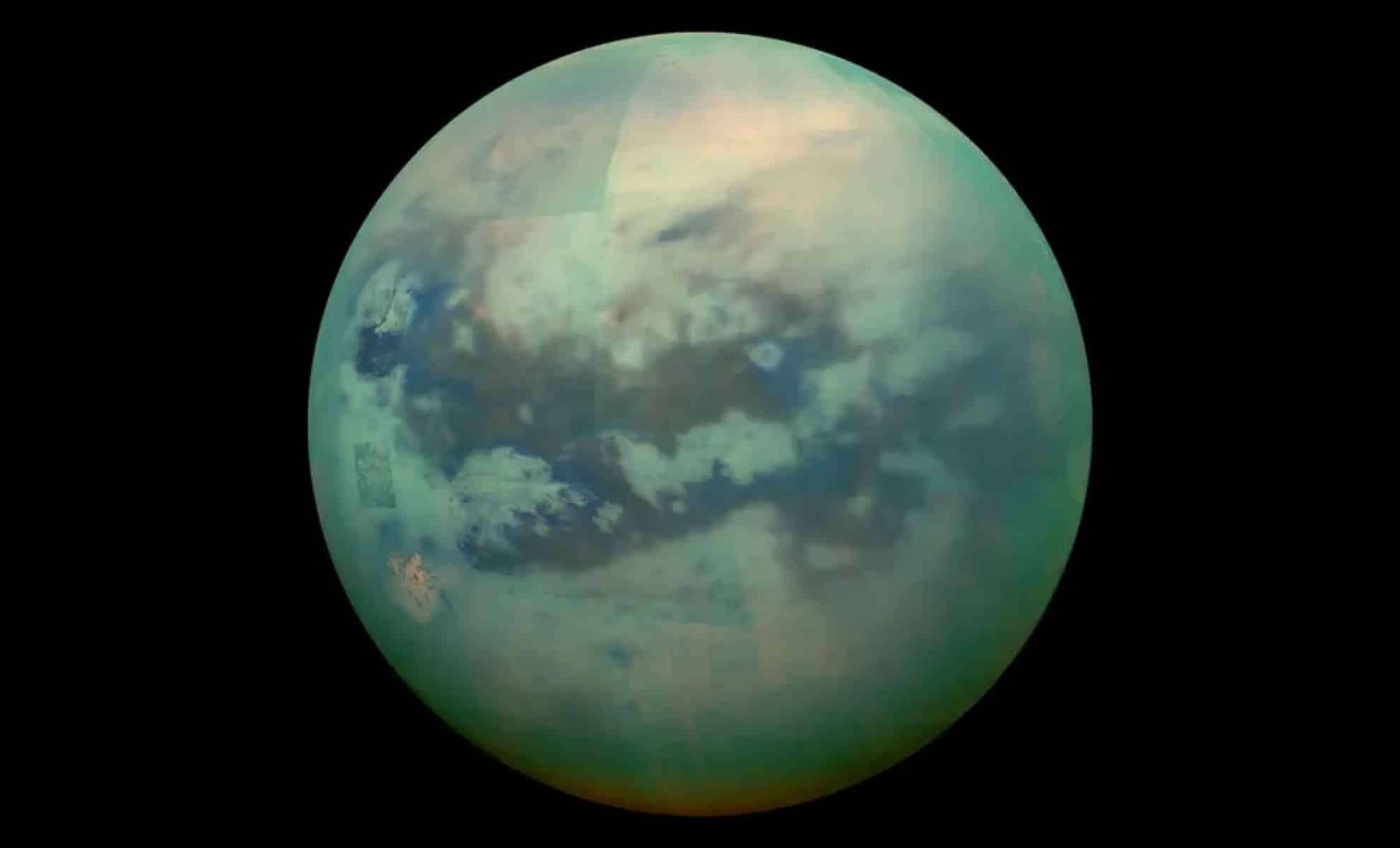
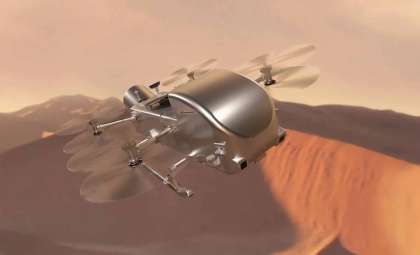
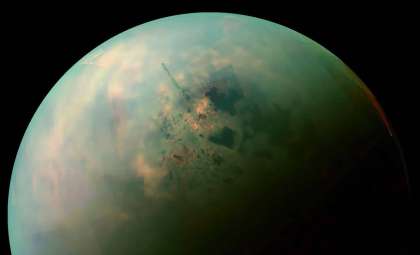
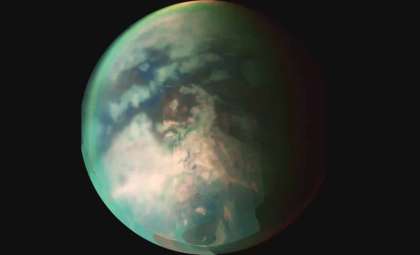
Scientists are grappling with a perplexing new discovery about Titan, Saturn’s largest moon. A recent study published in The Planetary Science Journal highlights a baffling aspect of Titan’s atmospheric dynamics, revealing complexities that continue to surprise researchers. Unlike other atmospheres in our Solar System, Titan’s behaves in an unusual and enigmatic manner, which could impact future exploratory missions such as NASA’s Dragonfly.
Unraveling Titan’s Strange Atmospheric Motion
Titan’s atmosphere has been known for its unique characteristics for some time. Unlike Earth, Titan’s gaseous envelope does not rotate rigidly with its solid surface. Instead, it exhibits a wobbling motion, similar to a spinning top that shifts its axis with the passing seasons. This unusual trait became evident during NASA’s Cassini mission, which orbited Titan and collected extensive data. The latest research, released on May 20, 2025, in The Planetary Science Journal, reveals even more perplexing aspects of this atmospheric wobble.
Deepening the Enigma: Recent Discoveries Defy Expectations
Earlier theories suggested that Saturn’s gravitational pull or solar heating might control the tilt of Titan’s atmosphere, as these are common influences on planetary atmospheres. However, new data challenges these ideas. Observations indicate that this tilt remains constant regardless of Titan’s position in its orbit around Saturn or its exposure to solar radiation. This constancy implies an unknown mechanism at play. Lucy Wright, the study’s lead author, noted, “Titan’s atmospheric tilt is extremely unusual. It’s possible that some past event disrupted the atmosphere’s alignment with the spin axis, causing this persistent wobble.”

Decoding the Cause: Emerging Theories and Consequences
Despite numerous proposed explanations, the origin of Titan’s wobble is still a mystery, introducing new challenges to understanding its atmospheric phenomena. Initial guesses pointed to Saturn’s gravity or solar influences, but the latest findings offer no clarity. Nick Teanby, a planetary scientist from the University of Bristol and co-author of the study, commented, “We hoped to identify the forces behind the tilt, but instead we’ve uncovered a puzzle that deepens the mystery.” These surprising results have raised fresh questions about Titan’s atmospheric behavior.
Titan’s Atmosphere: Unlocking Broader Planetary Secrets
Titan is unique as the only moon in the Solar System possessing a thick atmosphere rich in nitrogen and complex organic compounds. This makes it a vital case study for researchers exploring atmospheric science, prebiotic chemistry, and the possibility of extraterrestrial life. Understanding the quirky wobble of Titan’s atmosphere may provide insights into atmospheric mechanisms beyond just this moon, potentially informing Earth science as well. According to Conor Nixon, a planetary researcher at NASA’s Goddard Space Flight Center, “Titan’s atmosphere moves like a spinning top detached from the surface, prompting intriguing questions about atmospheric physics that extend beyond Titan to our own planet.”
- Categories:
- News






0 comments
Sign in to Comment