
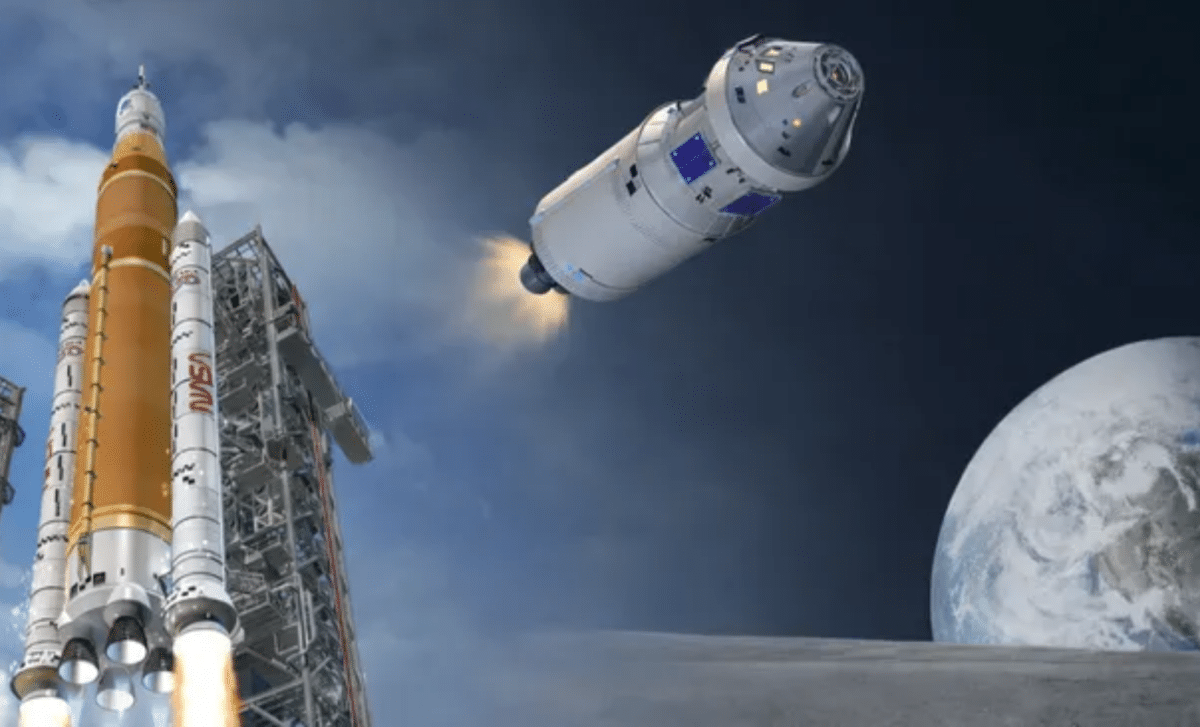
In a strategic move to enhance its Artemis lunar exploration efforts, NASA has announced the adoption of the Centaur V upper stage for its Space Launch System (SLS) rocket. Previously a key component of United Launch Alliance’s Vulcan rocket, Centaur V has been selected amid a reorganization of the Artemis program aimed at achieving human moon landings within the next few years. Space.com highlighted this development, emphasizing how the new stage will support NASA’s ambitious mission timelines.
Adopting Centaur V to Accelerate Artemis Missions
NASA's decision to transition from the Exploration Upper Stage (EUS) to the Centaur V marks a significant transformation in the Artemis mission design. Renowned for its proven track record, Centaur V will be responsible for powering the Orion spacecraft on its lunar missions and return voyages. This change follows a thorough review of current propulsion solutions and a pressing need to speed up crewed lunar flights. Since Centaur V has already been successfully flown on ULA’s Vulcan rocket, it offers a reliable foundation for these critical Artemis endeavors.
Choosing Centaur V was driven by its dependability and cutting-edge technology. As NASA stated in their announcement,

“No Other Supplies or Services Will Satisfy Agency Requirements due to the highly specialized nature of this requirement,” making it clear that no other options could meet NASA’s exacting standards for lunar missions.
This upgrade not only strengthens NASA’s mission readiness but also optimizes the SLS rocket's performance, especially for Artemis 4 and Artemis 5 flights.
Centaur V: The Irreplaceable Upper Stage for the SLS
Facing pressing deadlines, NASA confirmed that Centaur V stands as the sole upper stage candidate that meets the SLS’s technical and schedule demands. As pointed out in NASA’s documentation,
“ULA’s Centaur (with minor modifications) is the only existing in-space propulsion stage capable of meeting the SLS upper stage design parameters and performance characteristics, while also meeting NASA’s schedule.”
This confirmation underscores Centaur V’s pivotal function in delivering the thrust necessary for Artemis missions’ success, including the delivery of the Orion spacecraft as part of the program’s goals detailed in the Artemis program.
Featuring dual RL10 engines and substantial propellant capacity, Centaur V is specially engineered to meet the demanding requirements of lunar flights. NASA’s sole-source contract award to ULA reflects the urgency of employing a well-established propulsion system to avoid delays, as the SLS development has faced numerous setbacks already.
Broader Implications for Artemis Progress
The selection of Centaur V for Artemis 4 represents part of NASA’s larger plan to establish a durable human foothold on the moon. The Artemis mission schedule has been adjusted accordingly: Artemis 2, the program’s inaugural crewed flight, aims for a launch as soon as April 1, 2024. Meanwhile, Artemis 3’s lunar landing mission, originally set for 2028, has been moved up to 2027 to serve as a critical test flight focused on Orion and lunar lander interactions.
With Artemis 4 now targeted for 2028 to actually land astronauts on the lunar surface, Centaur V’s inclusion ensures the vehicle possesses the required launch power. This upgrade smooths the path forward, minimizing risks of future timetable disruptions.
Challenges and Future Prospects for SLS
Despite this advancement, the SLS program continues to wrestle with delays, budget issues, and critiques about its long-term viability. Detractors suggest funds may be better directed toward more economical options like SpaceX’s Starship. Yet, by integrating Centaur V, NASA solidifies SLS’s status as Artemis’s principal launch vehicle through at least the fifth mission.
Looking past Artemis 5, NASA is evaluating other possibilities. SpaceX’s Starship, with its vast cargo capacity and reusable design, is under consideration for later Artemis missions. Whether SLS will retain dominance or yield to emergent technologies remains to be seen as future flights take shape.
- Categories:
- Nasa






0 comments
Sign in to Comment