

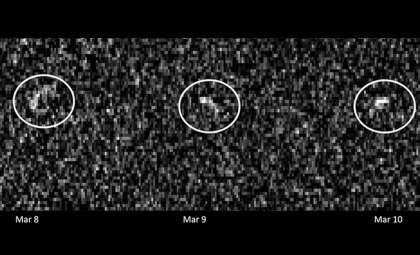
On July 28, a substantial asteroid roughly the size of a commercial airplane, designated 2025 OW, will make a close approach to Earth, passing at around 393,000 miles away. Despite the media buzz, NASA experts stress that such encounters are quite common and present no danger to our planet. Ian J. O’Neill, a spokesperson for NASA’s Jet Propulsion Laboratory (JPL), told ABC News, “This is very routine. If there was a threat, you would hear from us. We would always put out alerts on our planetary defense blog.”
Close asteroid flybys, while occasionally headline-grabbing, are carefully tracked by NASA and allied space agencies. The orbital path of 2025 OW is well-mapped, giving scientists confidence in their precise predictions of where it will be for decades to come, easing any worries about potential impacts.
Commonplace Asteroid Passes Within Our Solar System
Near-Earth objects (NEOs), including asteroids, frequently come near Earth. “Close approaches happen all the time — it’s just part of the fabric of the solar system,” explained Davide Farnocchia, specialist at NASA’s Center for Near-Earth Object Studies (CNEOS). NASA’s ground and space-based observation programs keep a close watch on such objects, with Farnocchia’s team currently tracking five more asteroids due to approach Earth over the next week.

Size and velocity are key considerations when assessing risk. Measuring about 210 feet long and traveling at nearly 47,000 mph, 2025 OW is sizable but poses no imminent threat thanks to its well-understood trajectory. NASA’s ongoing surveillance ensures that any risk would prompt immediate alerts to the public.
How NASA Accurately Follows Asteroid Trajectories
What distinguishes asteroids like 2025 OW is the ability to forecast their movement with remarkable accuracy. Ian O’Neill said, “We know exactly where it’s going to be. We’ll probably know where it’s going to be for the next 100 years.” This detailed knowledge allows agencies to evaluate any potential threat continuously. Presently, 2025 OW’s stable orbit means it’s not a danger in the foreseeable future.
Advanced tracking systems and constant monitoring are essential tools in modern astrophysics, enabling scientists to safeguard Earth and keep the public informed about space hazards.
Looking Ahead: Apophis’ Spectacular 2029 Flyby
While the upcoming approach of 2025 OW is routine, NASA is preparing for a more extraordinary event in 2029. The asteroid Apophis will make an exceptionally close pass, coming within 38,000 kilometers—closer than geostationary satellites orbit Earth. Farnocchia noted, “Apophis will come within 38,000 kilometers of Earth in April 2029 — closer than our geostationary satellites.” At about 1,115 feet long, Apophis will be visible to the naked eye, presenting an exceptional chance for observers worldwide to witness a near-Earth asteroid firsthand.
Despite the closeness of its encounter, scientists are confident Apophis will not collide with Earth. Instead, its close passage will be a significant occasion for research and public engagement, offering a unique opportunity to study an asteroid up close.
- Categories:
- News








0 comments
Sign in to Comment