
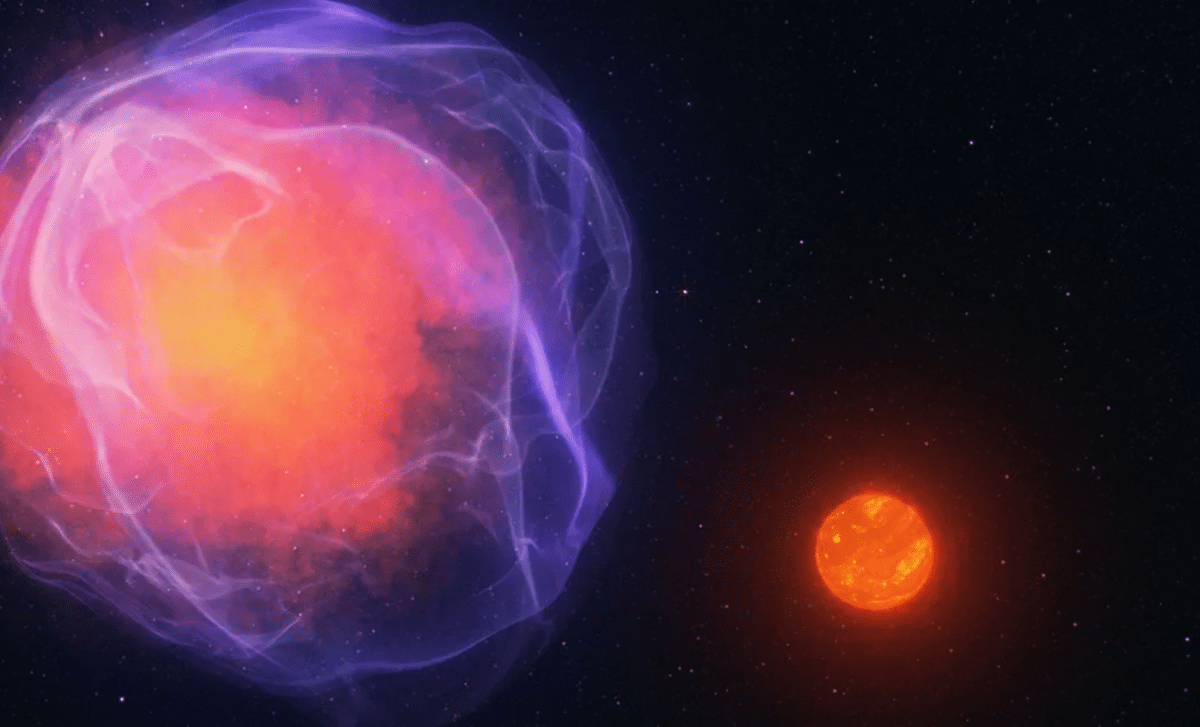
Enthusiastic volunteers involved in NASA’s Backyard Worlds: Planet 9 initiative have uncovered an extraordinary object hurtling through space at a velocity of nearly 1 million miles per hour, fast enough to break free from the Milky Way's gravitational grip. This remarkable finding, reported in the Astrophysical Journal Letters, offers new understanding of exotic celestial phenomena defying conventional galactic behavior.
A Groundbreaking Find in Space Science
The object, known as CWISE J124909.08+362116.0, sets a new precedent in the study of hypervelocity objects. With its blistering speed, this body is escaping our galaxy’s hold and journeying into intergalactic space. Typically, stars orbit much slower around the center of the Milky Way, making this discovery crucial for understanding the escape routes of such fast-moving objects and the galaxy’s gravitational forces.
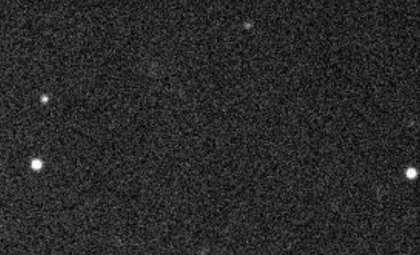
Citizen scientists Martin Kabatnik, Thomas P. Bickle, and Dan Caselden played an instrumental role by detecting this fast-moving object using data collected by NASA’s Wide-field Infrared Survey Explorer (WISE) mission. Their diligent analysis of infrared images led to identifying CWISE J124909.08+362116.0, a discovery later confirmed through observations at ground-based observatories. Kabatnik shared his excitement,

“I can’t describe the level of excitement. When I first saw how fast it was moving, I was convinced it must have been reported already.”
Blurring the Lines: Between Brown Dwarfs and Stars
Not only is CWISE J124909.08+362116.0 notable for its speed, but its exact nature remains ambiguous. Its properties suggest it may be a low-mass star or perhaps a brown dwarf — a substellar object that lacks enough mass to sustain core fusion, bridging the gap between giant planets and stars. Yet this object defies straightforward classification due to its unusual mass and chemical makeup.
Further study is essential to accurately categorize this enigmatic traveler. Its elemental composition differs from known stars and brown dwarfs, featuring significantly less iron, which hints at an ancient origin possibly linked to earlier stellar generations. Insights gleaned here could enhance understanding of star and planetary formation processes within the Milky Way.
Power of the Public in Cosmic Discoveries
A standout aspect of this finding is the crucial role citizen scientists continue to play. NASA’s Backyard Worlds: Planet 9 program empowers non-professionals to make meaningful contributions to astronomical research. Volunteers like Kabatnik and his team have helped pinpoint over 4,000 brown dwarfs, illustrating how crowd-sourced science is reshaping modern exploration.
This discovery highlights the importance of public engagement in space research. With tools such as data from NASA’s WISE telescope, everyday individuals are becoming essential in revealing cosmic secrets. Kabatnik credits the strength of this collaborative effort to community support, including resources like Melina Thévenot’s informative blog that aids volunteers in navigating complex data.
Exploring the Origins of Its Breakneck Speed
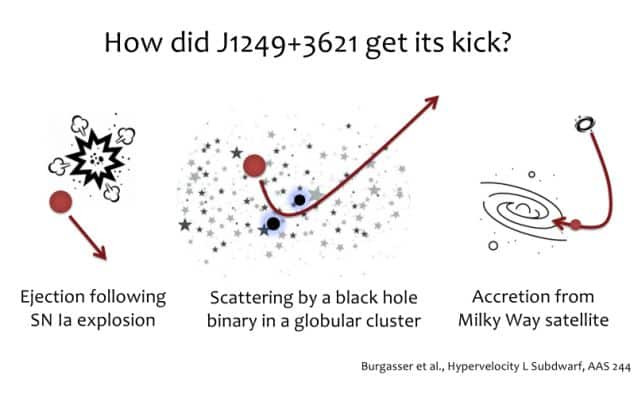
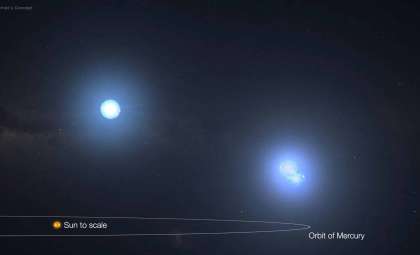
Scientists have put forward several possible explanations for the incredible velocity of CWISE J124909.08+362116.0. One theory suggests it was once part of a binary system containing a white dwarf; when the white dwarf exploded as a supernova, the companion was propelled away at extreme speed. Another hypothesis involves the object emerging from a dense globular cluster, where gravitational interactions with a black hole binary could have catapulted it on its high-speed escape path.
As Kyle Kremer, Assistant Professor at UC San Diego’s Department of Astronomy and Astrophysics, states,
“When a star encounters a black hole binary, the complex dynamics of this three-body interaction can toss that star right out of the globular cluster.”
These scenarios may account for the object’s rapid journey and its potential to leave the Milky Way. Ongoing observations and analyses will aim to better understand its origin and composition.
- Categories:
- News





0 comments
Sign in to Comment