

Imagine a battery that can operate continuously for more than 400 years. That’s the ambitious project NASA and the University of Leicester are collaborating on—a revolutionary nuclear battery fueled by americium-241, a radioactive element promising sustained power for spacecraft over an unprecedented 433-year span. This innovative breakthrough, highlighted recently in Popular Mechanics, could transform the future of interstellar exploration.
An Evolution in Space Power Technology
For many years, radioisotope power systems (RPS) have been NASA’s go-to energy source, converting heat from radioactive decay into electricity. These batteries have enabled long-lasting missions like Voyager, New Horizons, Curiosity, and Perseverance. Traditionally, these rely on plutonium-238, which steadily diminishes in power over decades, limiting mission lifespans.
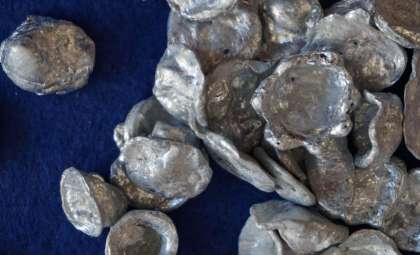
Americium-241 offers a game-changing alternative. With an exceptionally long half-life of 433 years, this isotope can sustain heat production for centuries, enabling missions designed to operate far beyond typical durations—surpassing the active service span of their creators and scientific teams.

Safety remains paramount for any radioactive material NASA uses. Americium-241 meets stringent criteria, being "minimally toxic" and stable in ceramic form, which prevents it from becoming airborne. In accident scenarios, it breaks into larger, less inhalable chunks, reducing health risks.
Advanced Energy Conversion Systems
The fuel is just part of the puzzle. NASA’s new approach involves a free-piston Stirling generator, a cutting-edge device that converts heat into electricity. Unlike older units with mechanical crankshafts, this convertor floating pistons within a sealed chamber, offering increased efficiency and adaptability in microgravity environments.
These generators have already demonstrated impressive reliability. One model at NASA’s Glenn Research Center has operated continuously for 14 years without servicing, matching or exceeding the minimum lifespan needed for extended space expeditions.
Wayne Wong, head of Glenn’s Thermal Energy Conversion Branch, praised this milestone in an official NASA statement, emphasizing its potential for missions requiring uninterrupted energy over long durations.
Streamlined Production and Scalability
Producing plutonium-238 is costly and complex. Following a three-decade production halt, U.S. manufacturing only restarted in 2011 with Department of Energy assistance, limited to a handful of facilities such as Oak Ridge and Idaho National Laboratories.
Americium-241 is comparatively more accessible, as it is a byproduct of nuclear reactors with an existing supply chain. Researchers at Los Alamos National Laboratory are optimizing production methods to enhance safety and consistency for space use.
There are challenges, including americium’s higher gamma radiation emission compared to plutonium, necessitating improved shielding. However, engineers are optimistic about resolving these obstacles, given americium’s remarkable longevity.
Revolutionizing Space Missions with Enduring Power
This technological advance promises more than longer mission timelines; it represents a shift in how space exploration is conceived. A probe launched mid-21st century could feasibly remain operational until the late 25th century. This is no longer speculative—it’s an emerging reality.
Current projects such as Dragonfly, a nuclear-powered drone destined for Titan, are already benefiting from extended battery lifetimes. Should americium-241 prove effective, future explorers sent far into space could function autonomously for centuries without maintenance.
Meanwhile, as Voyager crafts continue their interstellar journey powered by aging plutonium systems, NASA’s new nuclear battery technology stands ready to light the way for the next era of space exploration.
- Categories:
- News



0 comments
Sign in to Comment