
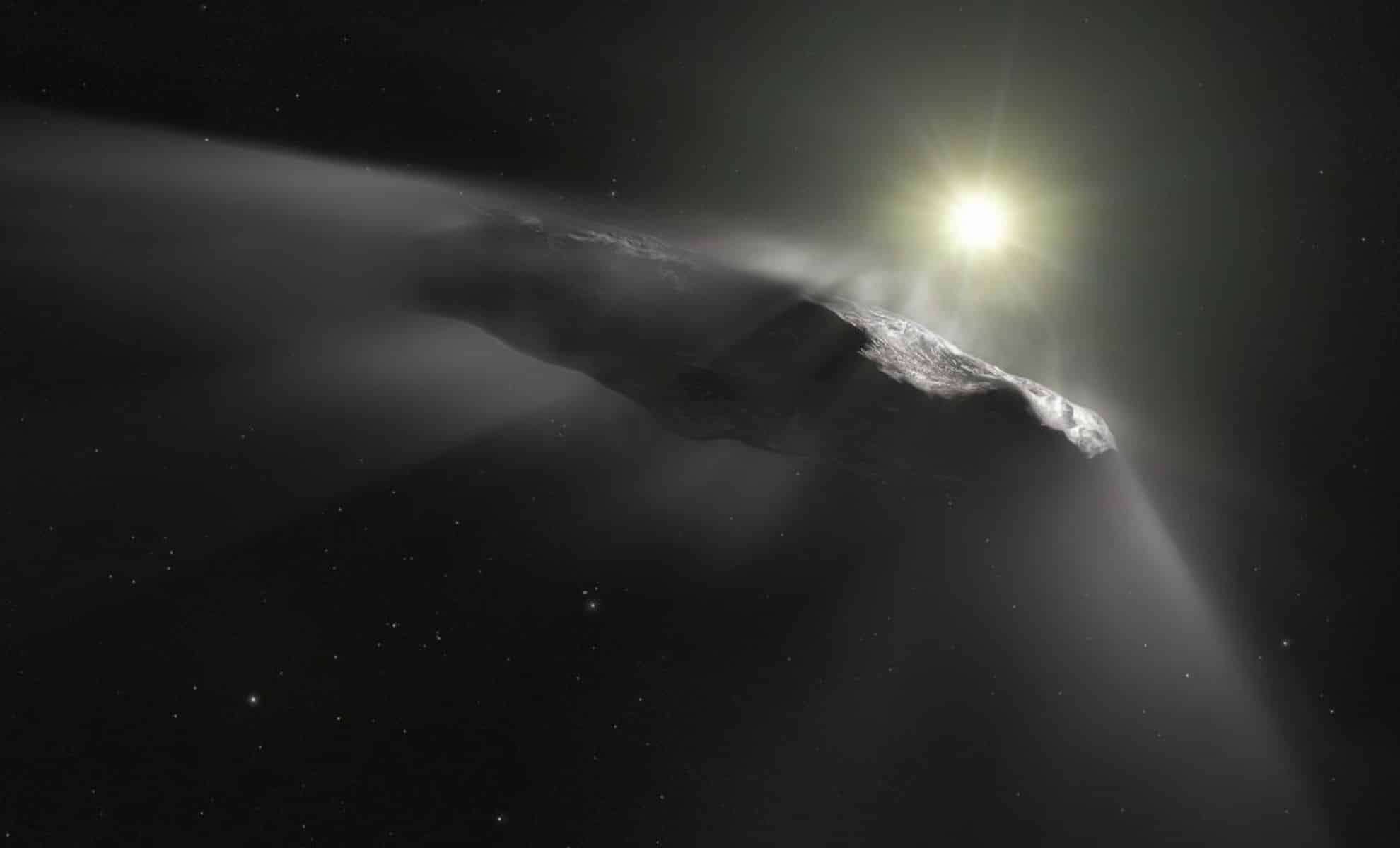
Researchers have verified that interstellar visitors—celestial objects originating outside our solar system—are traversing through it, and efforts are underway to intercept them. As detailed in a Phys.org article, phenomena such as ‘Oumuamua and Comet Borisov might represent the initial wave of numerous extraterrestrial objects, prompting the design of new strategies and technologies to capture these enigmatic travelers before they disappear back into interstellar space.
Significance of Interstellar Objects
These interstellar objects (ISOs) present an extraordinary opportunity to examine material from beyond our planetary neighborhood without leaving Earth’s vicinity. Originating from colossal impacts and ejections around other stars, these cosmic wanderers provide valuable insights into the composition, geology, and developmental history of planets and star systems beyond our own.
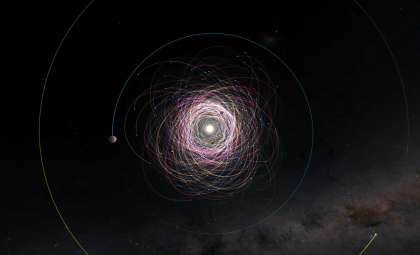
Although astrophysicists estimate there are more than 10 septillion ISOs scattered throughout the Milky Way, only two have been observed passing through our solar system so far. This scarcity is due to their extreme velocities, erratic trajectories, and the difficulty in detecting them early enough to conduct close observation missions.

Overcoming the Pursuit Obstacles
A major challenge in studying ISOs lies in their rapid speeds. These objects can hurtle past the Earth at around 32 km/s, leaving a timeframe of under one year from identification to possible intercept. Current spacecraft lack the ability to launch swiftly enough to rendezvous once an ISO is detected.
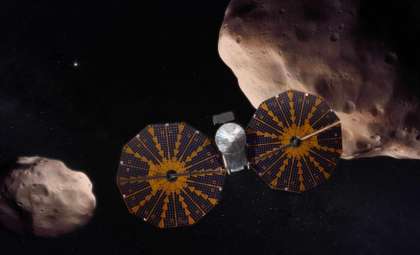
To address this, organizations including NASA and the European Space Agency (ESA) are working on missions such as Bridge and Comet Interceptor. These spacecraft will be stationed in space, on standby to launch immediately upon ISO discovery. ESA’s Comet Interceptor, planned for a 2029 launch, will orbit about a million miles from Earth, ready to rapidly approach a suitable target.
Advancing with AI and Solar Sail Technologies
Upcoming explorations will potentially leverage artificial intelligence to promptly respond and organize swarms of small spacecraft that can observe ISOs from multiple perspectives in real time. These autonomous units will be capable of adapting their flight paths during missions for enhanced monitoring.
Beyond AI, researchers are investigating propulsion methods that don’t depend on traditional fuel reservoirs. Solar sails employ sunlight for thrust and could be augmented with laser systems to accelerate spacecraft toward interstellar objects at remarkable speeds. These innovations reduce launch weight and provide cost-effective alternatives to nuclear engines.
Materials science is also progressing rapidly. Engineers are developing protective shielding using carbon-fiber composites, ceramic materials, and even 3D-printed barriers that safeguard spacecraft from debris and intense heat encountered during high-velocity flybys.
The Dawn of a New Cosmic Quest
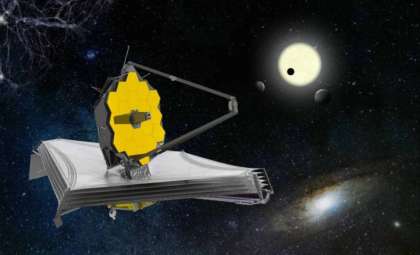
If projects like Project Lyra, Bridge, and Comet Interceptor achieve their goals, future interstellar visitors will no longer slip past unnoticed. Alongside these missions, observatories like the Vera C. Rubin Observatory will conduct extensive sky surveys, greatly increasing the chances of identifying ISOs.
However, continuous funding remains critical. Potential cutbacks in space research could postpone or halt development of these ambitious missions. Without timely investment, we risk missing out on exploring these extraordinary objects that journey through our cosmic neighborhood.
- Categories:
- News



0 comments
Sign in to Comment