
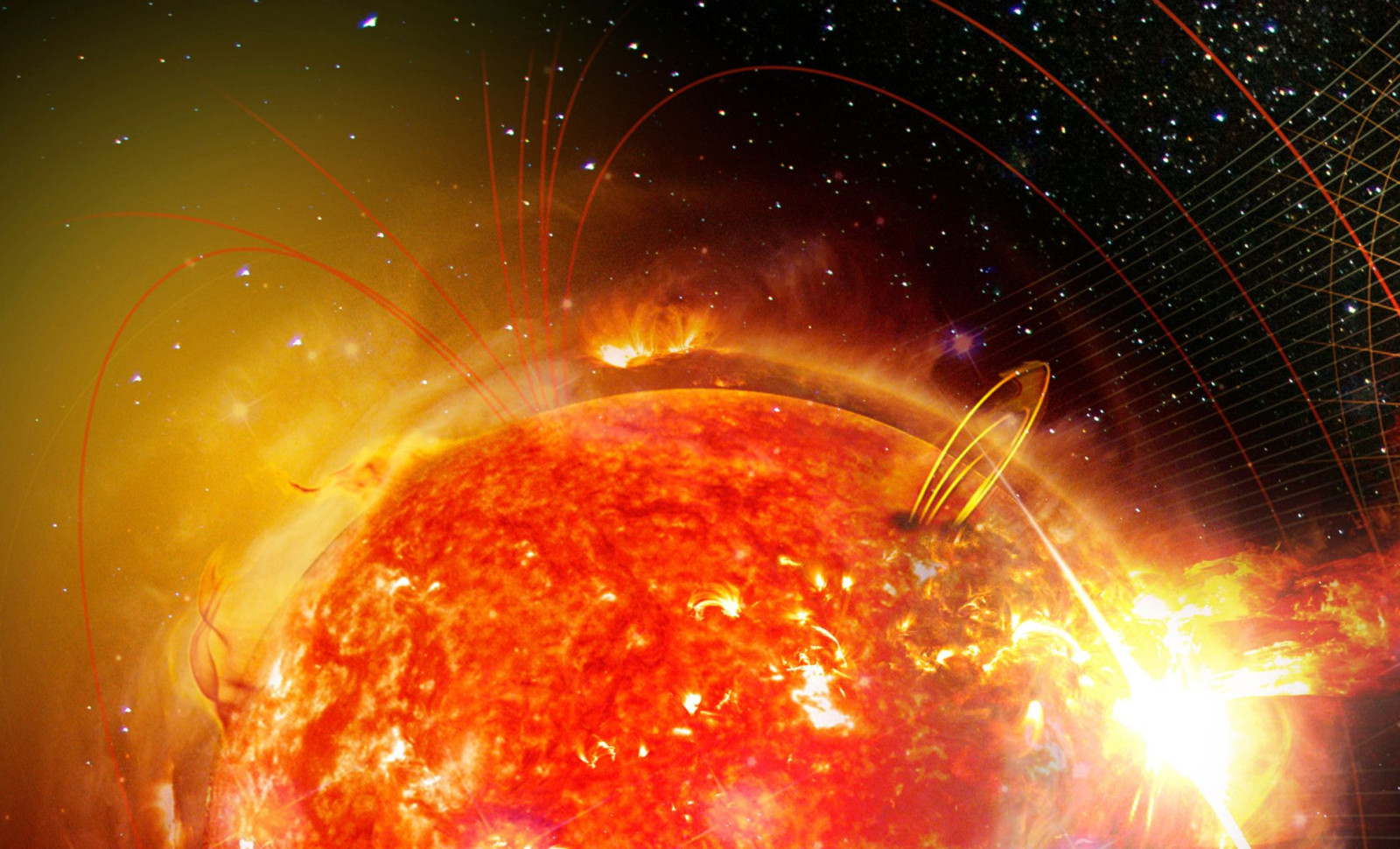
Moments leading up to the fusion of two neutron stars reveal a chaotic interplay of their magnetic fields, which twist and snap, emitting bursts of high-energy radiation. Leveraging a NASA supercomputer, researchers have recreated this intense pre-collision phase with exceptional precision, identifying possible light emissions that space-based telescopes might soon observe.
This investigation zooms in on the fleeting milliseconds preceding the merger, a period previously overshadowed by the dramatic effects following these cosmic collisions. By charting the neutron stars’ magnetic interactions, scientists have pinpointed gamma-ray and X-ray emissions that could act as early cosmic warning signals.
Magnetic Fields Entwined Before Collision
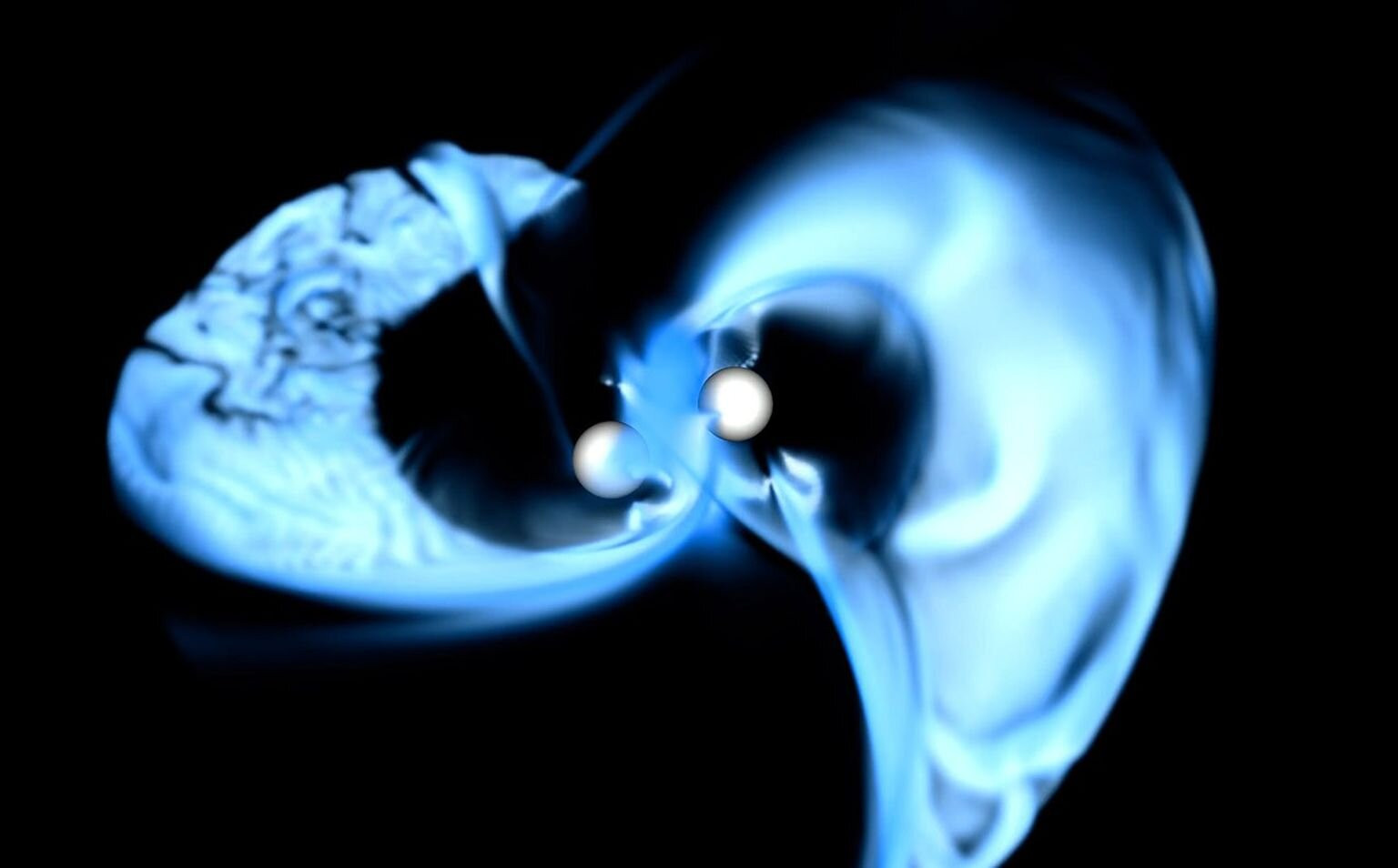
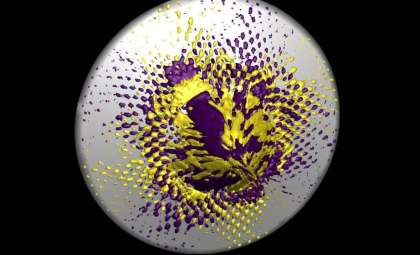
The research group conducted over 100 simulations using NASA’s Pleiades supercomputer to explore how varying magnetic field alignments influence the electromagnetic energy discharged in the last 7.7 milliseconds before the stars merge. During these final orbits, their magnetospheres operate as a “magnetic circuit” that constantly restructures itself. Magnetic lines stretch, break apart, and reconnect, releasing energy, propelling plasma near light speed, and sparking short bursts of radiation.

As these orbits progress, the magnetospheres grow increasingly active. NASA describes them as “a magnetic circuit that continually rewires itself.” Magnetic field lines drawn between the two stars break and fuse anew, unleashing energy and accelerating plasma to velocities approaching the speed of light. These mechanisms generate brief radiation bursts that could be visible from Earth, depending on viewing angle.
Scientists noticed that these emissions vary significantly depending on perspective. Bright flares appear from some viewpoints, while others detect little to no activity. According to Zorawar Wadiasingh of the University of Maryland, the magnetic field alignment dramatically influences observable phenomena.
“The signals also get much stronger as the stars get closer and closer in a way that depends on the relative magnetic orientations of the neutron stars.”
Trapping and Emission of High-Energy Radiation
These models exposed a flurry of gamma-ray activity, including photons at energies trillions of times that of visible light. Yet, as reported in The Astrophysical Journal, such ultra-energetic photons are quickly absorbed and transformed into electron-positron pairs by the intense magnetic environment, preventing most energy from escaping.
Nevertheless, gamma rays at lower energy scales, still millions of times more intense than visible light, have the potential to break through. These emissions might be captured by medium-energy gamma-ray and X-ray observatories if they receive timely alerts. The simulations pinpoint areas where such light is likely produced, guided by magnetic field dynamics and plasma behavior seconds before the merger.
Detectors that sense curvature radiation—gamma rays emitted by electrons spiraling along curved magnetic field lines at relativistic speeds—could be particularly suited to observe these phenomena.
Advancing Early Detection for Future Observatories
While current gravitational-wave detectors like LIGO and Virgo capture neutron star mergers in their final stages, this new research points toward the possibility of observing these cosmic events ahead of their peak. NASA researcher Demosthenes Kazanas explains:
“Such behavior could be imprinted on gravitational wave signals that would be detectable in next-generation facilities. One value of studies like this is to help us figure out what future observatories might be able to see and should be looking for in both gravitational waves and light,”
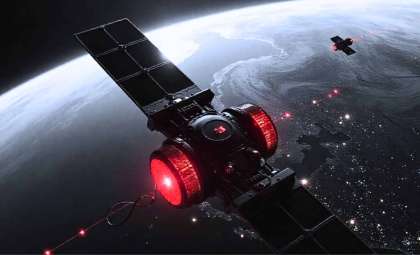
Space-based detectors such as LISA, the Laser Interferometer Space Antenna developed by NASA and ESA, scheduled for launch in the 2030s, will have the capability to identify merging neutron stars significantly before collision. Early gravitational-wave warnings could enable orbiting telescopes with wide fields of view to capture the predicted electromagnetic displays in advance.
- Categories:
- News





0 comments
Sign in to Comment