

The renewed momentum for lunar exploration brings pressing questions about astronaut accommodations on the Moon’s surface. One innovative architect offers a futuristic solution: enormous glass spheres that seem straight from a science fiction film. Backed by NASA’s Institute for Advanced Concepts (NIAC), this idea could transform how space homes are imagined and constructed.
A Fusion of Innovation and Design
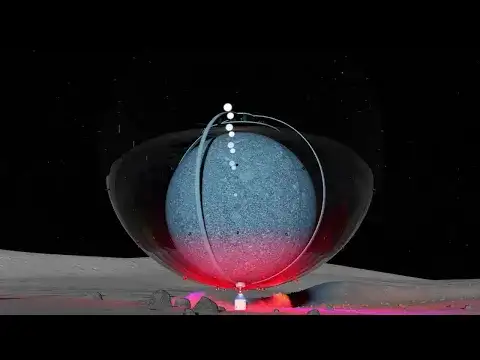
Dr. Martin Bermudez, founder and CEO of Skyeports, has introduced a concept combining cutting-edge engineering with artistic vision: colossal glass orbs forged through blown glass technology capable of sustaining humans on the lunar surface. These would differ greatly from traditional metallic lunar shelters, featuring a transparent dome structure made predominantly from lunar materials sourced directly on-site.
Rather than transporting these habitats from Earth, they would be produced right on the Moon, utilizing the local regolith, which naturally contains glassy components formed by continual micrometeorite bombardment.

“The spherical shape happens automatically,” Dr. Bermudez explains, “because at that temperature it becomes an amorphous liquid, and when it is extruded out of a furnace in low gravity it will form the shape of a sphere.”
This naturally forming sphere takes advantage of lunar gravity and innovative manufacturing methods, offering structural efficiency and aesthetic appeal. The spherical design evenly disperses internal pressure, reducing vulnerability—an essential feature for surviving the Moon’s harsh environment.
Leveraging Lunar Dust and Imported Argon
Although lunar soil is abundant, the Moon lacks a crucial ingredient for glassblowing: an atmosphere. This is where argon gas plays a vital role. As a chemically inert noble gas, argon provides a stable medium to shape the molten lunar glass into spheres. Initially sourced from Earth, future Moon mining efforts could potentially provide this resource locally.
The proposed habitats would feature multiple glass layers separated by argon-filled gaps, functioning like double-pane windows on Earth. This design improves insulation and cushions the habitat against incessant micrometeoroid strikes.
“You will never replicate Earth,” Dr. Bermudez admits, “but this is something that gets pretty close, and we could even put them into orbit one day.”
Inside these luminous glass spheres, astronauts would experience comfortable living and working spaces safeguarded against radiation and extreme temperature fluctuations. The controlled internal pressure would stabilize the structure, ensuring that life-support systems, research labs, and communal quarters operate effectively.
Accelerating Habitat Development With Artemis
NASA’s Artemis Program is progressing rapidly, aiming for crewed lunar landings soon. This urgency demands finalizing robust living space designs. As Dr. Bermudez notes, “We’re in a race against time because Artemis is moving so fast.”
His team at Skyeports has secured a Phase I NIAC award to advance and mitigate risks associated with this architectural concept. Their objective is to demonstrate that large-scale, monolithic lunar structures can support sustainable human presence. According to the Lunar Glass Structure (LUNGS) NIAC project, the initiative exploits low gravity, in-situ materials, and novel material science to build durable, scalable habitats efficiently.
Beyond just design, the team faces the logistical challenge of deploying furnaces, handling materials, and maintaining structural integrity amid the Moon’s tough conditions. Success could usher in a modular habitat system, linking multiple glass spheres via transparent corridors to expand lunar settlements.
Designing Space Cities From Glass
Though focused on the Moon now, this technology’s potential extends much further. Dr. Bermudez envisions interconnected networks of glass spheres not only on the Moon, but across Mars, asteroids, and orbital stations.
“Skyeports” embraces the philosophy that space infrastructure can merge aesthetic appeal with practicality, aspiring to establish linked habitat clusters that thrive in varying gravity environments, bathed in natural light, and protected by layered, impact-resistant glass walls.
“Skyeports chief executive Dr. Martin Bermudez hoped to one day see entire cities of the spheres, connected by glass bridges, on the moon – and elsewhere in space,” the team shared during recent interviews.
The transparency, structural form, and utilization of local resources culminate in a compelling vision for extraterrestrial habitation that is both expandable and sustainable. Dr. Bermudez also highlights that these illuminated glass homes won’t just serve astronauts temporarily—they could become permanent colonial outposts anchoring humanity’s first genuine space settlements.
Turning Vision Into Reality
Currently, this concept remains in early developmental phases, but momentum is growing. Support from NASA and NIAC lends credibility and a roadmap ahead. Upcoming stages involve simulation work, materials testing, and eventually installation of prototype glassblowing equipment directly on the Moon.
As efforts by both governmental agencies and commercial enterprises pivot toward lasting lunar presence, innovations like these mark a critical shift—from brief exploration to enduring habitation—a leap from merely visiting the Moon to truly calling it home.
The dream of a sparkling city of transparent spheres casting light over the lunar surface may have once seemed far-fetched—now it’s on the verge of becoming a reality.
- Categories:
- News










0 comments
Sign in to Comment