
After nearly five years exploring Mars, NASA’s Perseverance rover is close to reaching a major distance milestone, having traversed almost 42 kilometers since its touchdown in February 2021. This progress coincides with investigations of some of the oldest rock formations the mission hopes to study.
Recently released NASA images show Perseverance positioned just past the western boundary of Jezero Crater, an area rich with fractured ancient rocks and geological features that could shed light on Mars’ primordial past. Scientists point out this region’s increasing importance for the rover’s scientific discoveries.
Currently, Perseverance is examining a zone named Lac de Charmes, situated to the west of Jezero Crater. This name reflects the rover team’s informal pattern of naming sites after lakes and water bodies, underscoring the mission’s focus on the remnants of a former Martian lake environment.

The rover recently completed analysis on a rocky formation called Arathusa. To reveal the fresher materials beneath, Perseverance utilized its abrasion instrument to grind away an altered outer layer of the rock. This technique is commonly used by geologists on Earth for detailed compositional studies.
Perseverance Captures a Stunning Self-Portrait on Mars
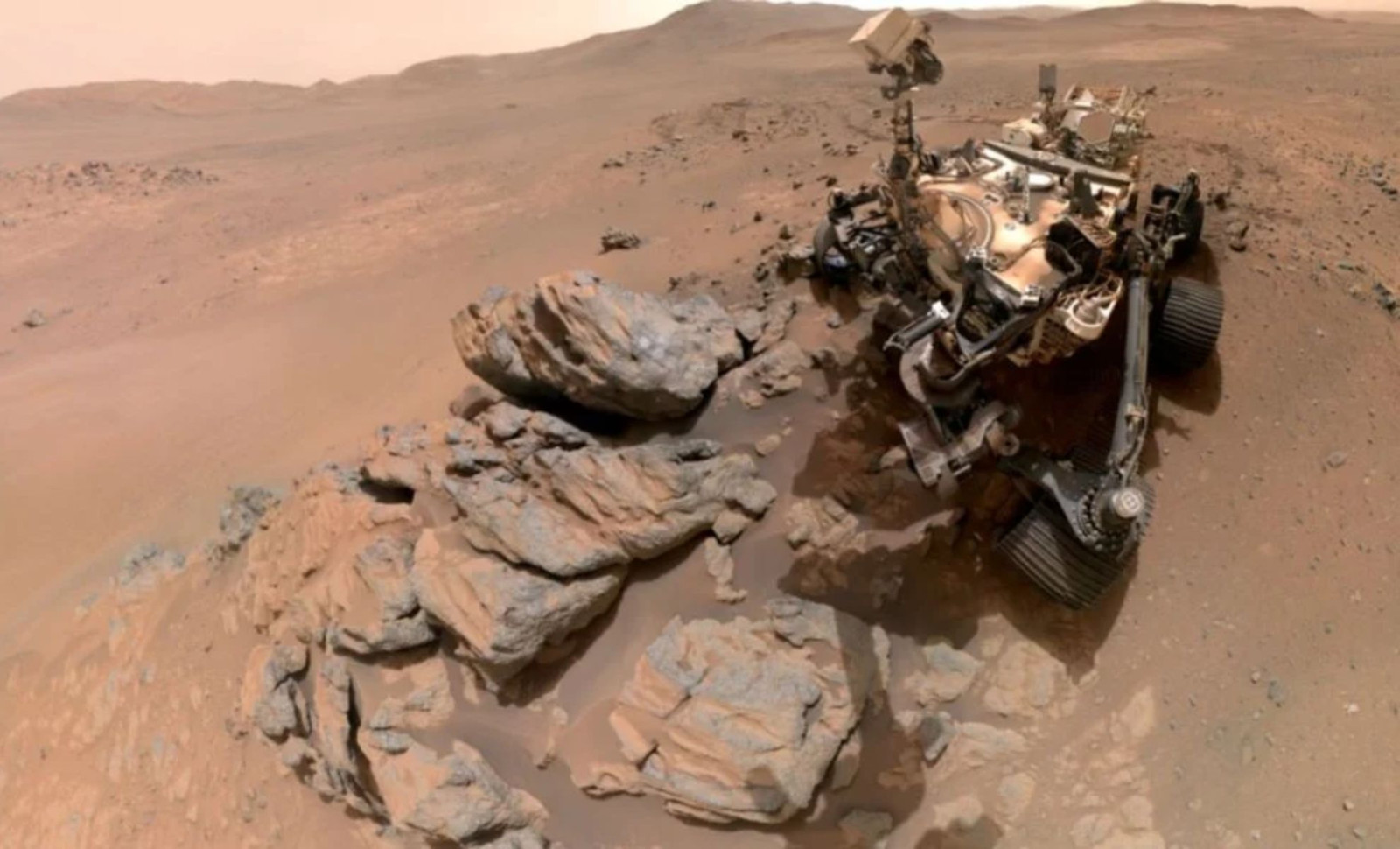
NASA recently shared a new selfie made from 61 photos taken on March 11. The assembled mosaic features Perseverance alongside the Arathusa outcrop, marking the conclusion of its scientific investigation at that site.
Katie Stack Morgan, the mission’s project scientist at NASA’s Jet Propulsion Laboratory, described the spot as the rover’s furthest western point reached since landing.
“We took this image when the rover was in the ‘Wild West’ beyond the Jezero Crater rim — the farthest west we have been since we landed at Jezero a little over five years ago,” Stack Morgan said.
Scientists propose that the rocks in this locale may be older than the formation of Jezero Crater itself. NASA’s analysis of the Arathusa outcrop uncovered igneous minerals, indicating volcanic activity linked to Mars’ ancient history.
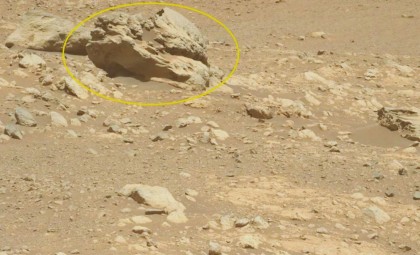
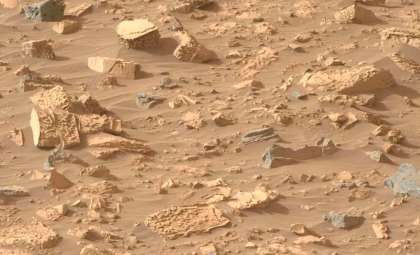
Though the landscape initially appears stark, researchers emphasize its unexpected geological variety. An enhanced-color panorama from NASA displays Perseverance’s tire tracks across the rocky Arbot region, where smooth boulders lie beneath jagged ridges.
Evidence of Mars’ Hidden Ancient Crust
A particularly interesting feature in the area is the presence of megabreccia—large fractured rocks thought to have been created by a massive impact around 3.9 billion years ago in Isidis Planitia.
Researchers believe these rocks were ejected during the impact and scattered across the terrain, with some fragments possibly originating from deep beneath the Martian surface. In a NASA statement, Ken Farley, Caltech’s deputy project scientist, commented:
“What I see in this image is excellent exposure of likely the oldest rocks we are going to investigate during this mission,” he also added, “There is a sharp ridgeline visible in the mosaic whose jagged, angular texture contrasts starkly with the rounded boulders in the foreground.”
Additionally, researchers spotted a potential volcanic dike—a vertical intrusion of magma that solidified underground before being slowly exposed by erosion over eons.
These primordial rocks pique scientists’ interest because they may contain clues about Mars’ earliest geological state. Stack Morgan highlighted that samples from deep within the planet’s crust could provide insights into whether Mars once hosted a magma ocean and how it transitioned toward conditions potentially suitable for life.
Looking Ahead: Perseverance’s Next Moves
Having covered almost a full marathon distance of 42.195 kilometers, the rover is approaching a new benchmark: an ultramarathon starting at 50 kilometers. Steve Lee, JPL’s acting project manager, emphasized that long-range driving has been integral to the rover’s mission plan.
“Having the benefit of four previous rover missions, the Perseverance team has always known our mission was a marathon and not a sprint.”
NASA plans for Perseverance to continue geological studies in the Arbot region before potentially moving toward an area called Gardevarri, noted for exposed olivine deposits. This mineral forms under intense planetary heat and is often linked to carbonate minerals that indicate previous water activity.
“We’ve almost reached marathon distance. Our selfie may show that the rover is a bit dusty, but its beauty is more than skin deep. Perseverance is in great shape as we continue our explorations and extend into ultramarathon drive distances,” he added.
In addition, mission planners are assessing potential routes toward Singing Canyon, a site with ancient rocks slated for further examination.
- Categories:
- Space








0 comments
Sign in to Comment