
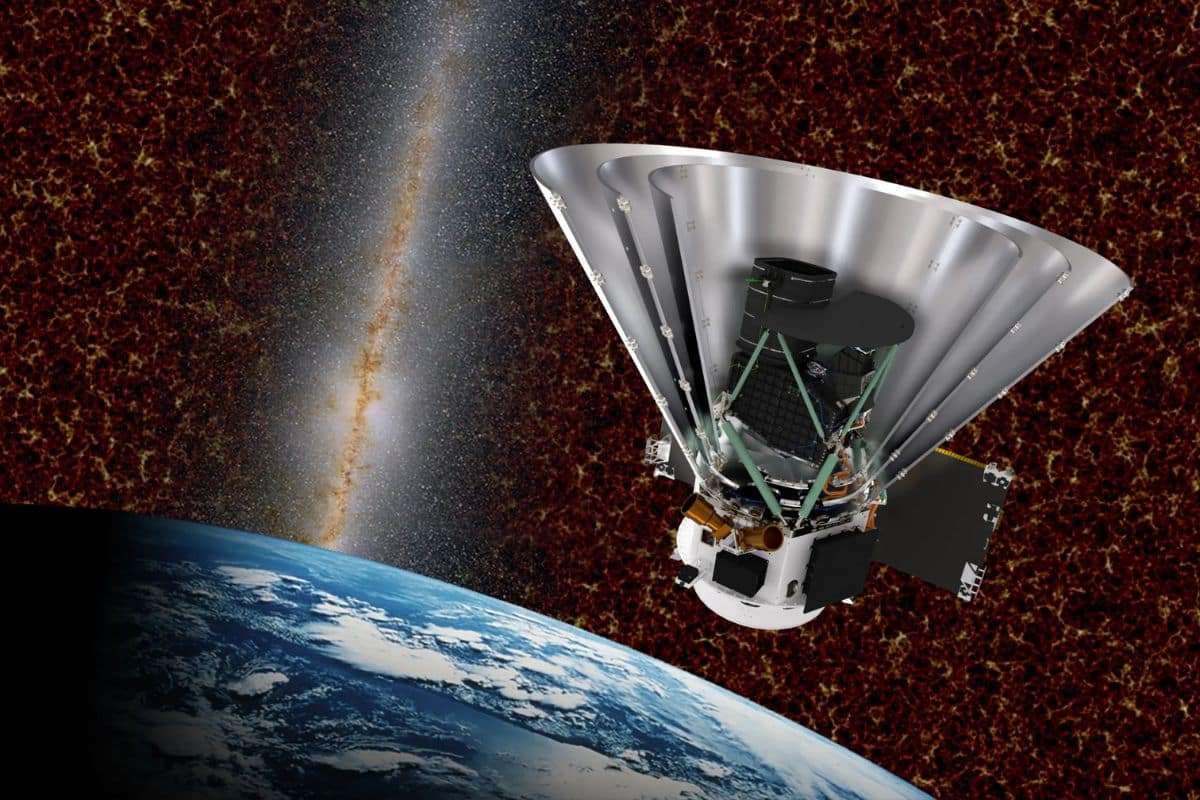
NASA’s newest space observatory has embarked on its scientific journey and is already demonstrating its exceptional capability for exploring the cosmos. The SPHEREx telescope, which was launched on March 11, has captured its inaugural images in space, highlighting its proficiency in detecting infrared radiation across vast interstellar expanses. These vivid, false-color images represent just the initial phase: SPHEREx is set to chart hundreds of millions of galaxies spanning the entire celestial sphere. This progress and the first observations were described in a recent NASA update.
Named Spectro-Photometer for the History of the Universe, Epoch of Reionization and Ices Explorer, the mission aims to investigate crucial questions about the emergence of water, the growth of galaxies, and the physical conditions defining the early universe.
Infrared Imagery Painted in Color
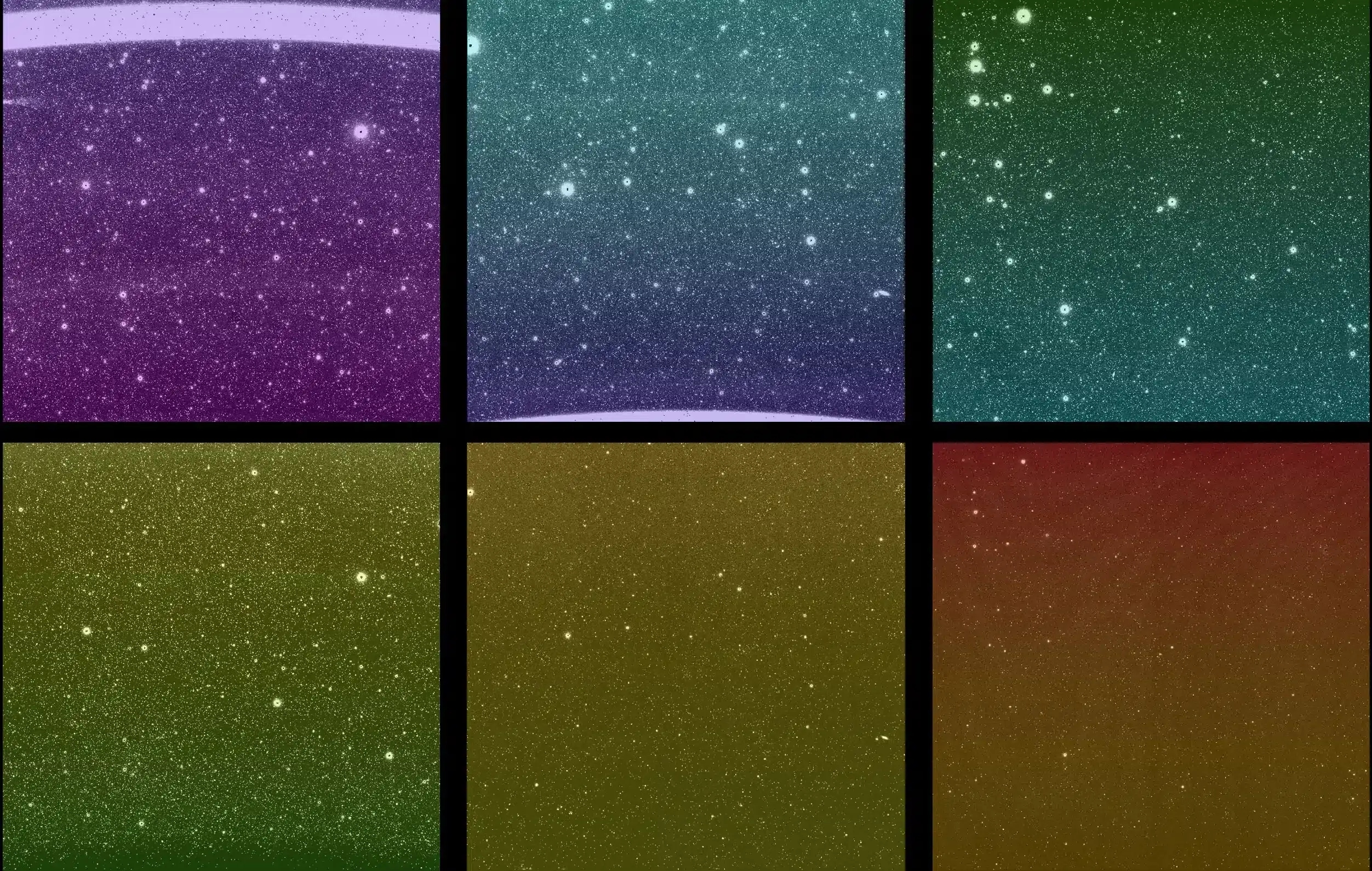
SPHEREx captures light beyond the visible spectrum, operating in the infrared range undetectable to human eyesight. To make these data visible, scientists overlay color schemes to correspond with specific wavelength bands, creating mesmerizing, rainbow-like visualizations of the universe.

Each image comprises six detector frames, covering an area roughly 20 times broader than the Moon’s apparent size. Within a single exposure, SPHEREx records information from more than 100,000 cosmic sources, such as stars, galaxies, and nebulas.
Remarkably, these initial images come from detectors yet to be fully calibrated, underscoring the telescope’s impressive performance in its early operational stage.
Wide-Angle Scanning with Precision
Designed for expansive coverage, SPHEREx differs from observatories like Hubble or the James Webb Space Telescope by surveying the whole sky four times over its primary two-year mission period.
Its six detectors analyze 17 wavelength bands each, amounting to 102 distinct spectral slices per image. This spectral depth enables astronomers to determine not only the nature but also the composition and distances of observed celestial objects, vital for studying the universe’s infancy.
These engineering validations show that SPHEREx’s pre-set focus is precisely tuned to capture faint, far-infrared sources throughout the mission.
The Scientific Horizons Ahead
Starting in late April, SPHEREx will begin continuous scientific observations, acquiring roughly 600 images daily as it scans the cosmos. The data gathered will help uncover:
- Locations of water ice in our Milky Way galaxy
- The overarching cosmic structure at the largest scales
- The evolutionary history of galaxies over billions of years
- The physical state of the universe fractions of a second post-Big Bang
Utilizing spectroscopy to dissect light into component wavelengths, SPHEREx discerns an object’s chemical properties and distance, crucial for unveiling the universe’s hidden frameworks.
Global Teamwork and Unfolding Mysteries
Managed by NASA’s Jet Propulsion Laboratory alongside Caltech, SPHEREx benefits from collaborations with scientific institutions across the United States, South Korea, and Taiwan. The hardware was developed by BAE Systems, while scientific data handling is managed by IPAC at Caltech.
Functioning in harmony with focused observatories such as JWST, SPHEREx complements detailed imagery by offering panoramic sky surveys, together constructing a comprehensive cosmic map.
Throughout its mission, SPHEREx will generate an unprecedented, expansive galactic census, yielding fresh insights into cosmic expansion, galaxy formation, and the origins of life’s fundamental ingredients.
- Categories:
- News








0 comments
Sign in to Comment