
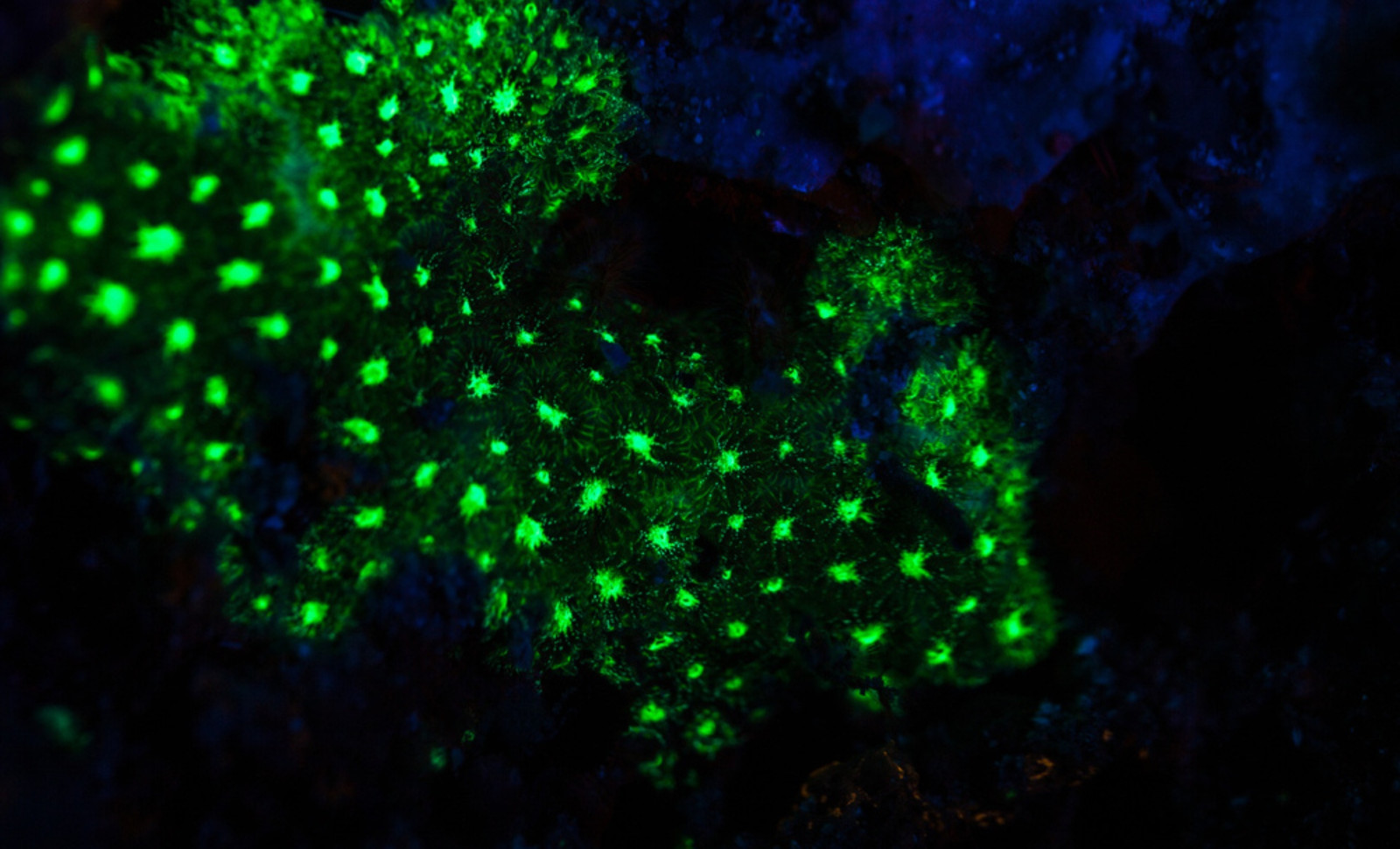
During a deep-sea exploration inside a dim limestone cavern 385 meters below the ocean near a secluded Japanese isle, a remotely operated vehicle captured an unexpected burst of vivid green light after its robotic arm touched a previously unknown coral formation. This momentary glow led scientists to identify a novel bioluminescent coral species, Corallizoanthus aureus, which emits light exclusively upon physical stimulation and likely uses this ability as an alarm mechanism.
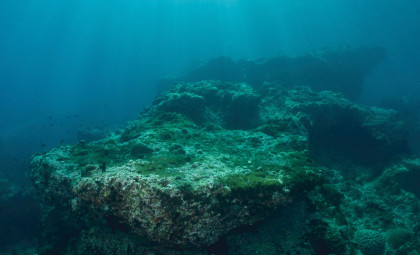
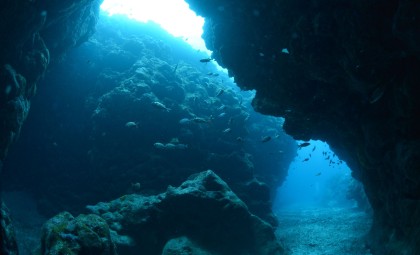
The discovery was made in May 2024 on a dive led by the Japan Agency for Marine-Earth Science and Technology (JAMSTEC). Their investigation focused on the submerged karst cave ecosystems encircling Minamidaito Island, located roughly 360 kilometers east of Okinawa in the Pacific. These submerged limestone cliffs create complex underwater networks of pockets and tunnels that have remained largely inaccessible due to challenging sampling conditions.
Using a specialized remotely operated vehicle, researchers maneuvered through the difficult vertical cavity landscape. At 385 meters, they encountered precious coral colonies from the genus Pleurocorallium. Nearby, clusters of a small, bright yellow organism unknown to science were detected. When contacted by the vehicle's manipulator, the polyps flashed a blinking green bioluminescence rather than a steady glow. Notably, the glow was limited to the living tentacles, with the connective tissue between polyps remaining dark.

Classification and Features of Corallizoanthus aureus
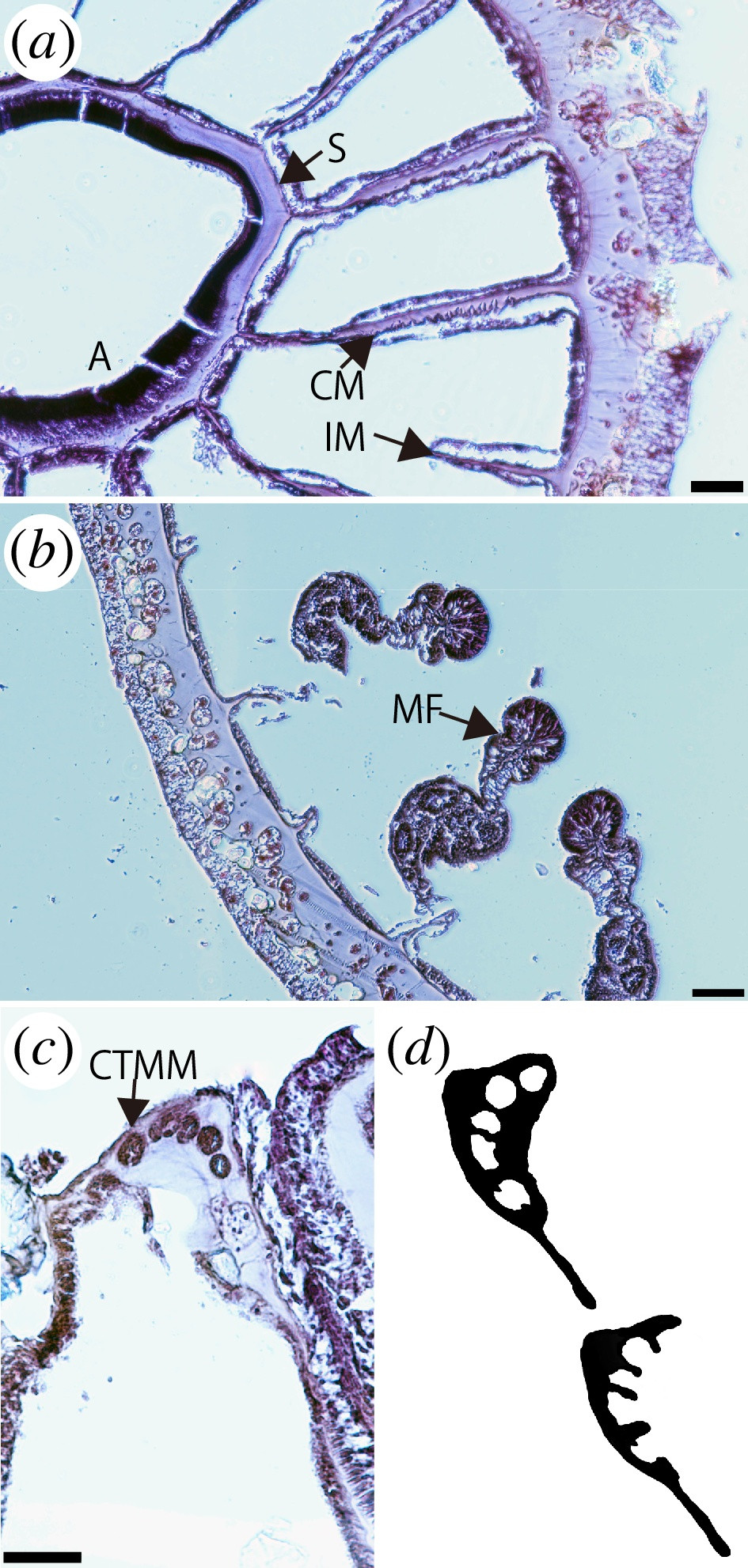
This newly recorded species falls within the Zoantharia order, a group closely related to sea anemones and stony corals. Corallizoanthus aureus is characterized by having 24 to 26 tentacles, a key morphological trait distinguishing it from its nearest relative, Corallizoanthus tsukaharai. The species name aureus reflects its bright yellow coloration.
Corallizoanthus aureus leads an epibiotic existence, exclusively residing on other organisms. In particular, it was identified solely on Pleurocorallium coral hosts. Differences in its marginal musculature — the muscle arrangement around its oral disc — provide anatomical evidence supporting its status as a distinct species.
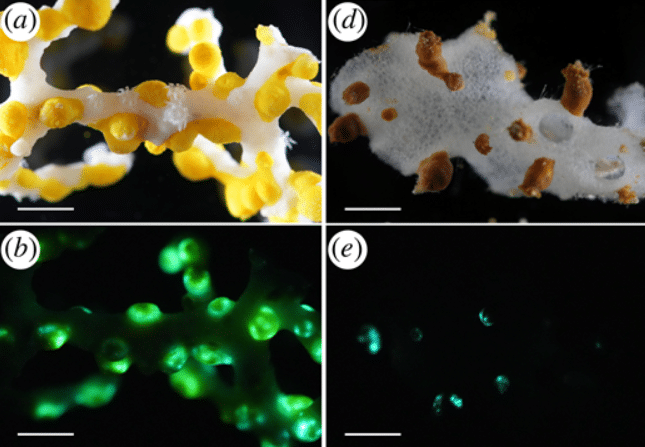
Published in Royal Society Open Science, the research revealed the peak bioluminescent emission at about 515 nanometers within the green spectrum. Laboratory evaluations aboard the JAMSTEC vessel and direct in-situ recordings with light-sensitive cameras confirmed that the glow is not spontaneous but activated through mechanical or chemical triggers.
Origin of Bioluminescence and Lack of Symbiotic Bacteria
Further investigation ruled out common sources of marine bioluminescence. The coral exhibited no fluorescence under ultraviolet light, discounting fluorescence as the origin. Tissue analysis also found no trace of bioluminescent bacterial symbionts residing inside the coral.
These results suggest the coral's light originates from its own biochemistry, likely using coelenterazine, a luciferin molecule found in many marine bioluminescent species such as jellyfish and some deep-sea fish. Typically, coelenterazine reacts with oxygen using luciferase enzymes to produce light. The exact mechanism linking physical contact to this biochemical reaction in Corallizoanthus aureus remains undetermined.
The restricted light to polyp tentacles implies the presence of light-producing cells or organelles concentrated specifically in those areas, possibly reflecting an evolutionary adaptation tailored for defense.
Ecological Role: The Burglar Alarm Hypothesis
The fact that Corallizoanthus aureus glows only when touched echoes the burglar alarm hypothesis, a theory proposed by Burkenroad in the 1940s. It suggests that prey organisms use bioluminescence to call predators that can deter or consume their attackers.
In this scenario, the green light signals larger predators such as fish or crustaceans when a smaller predator disturbs the coral, prompting these secondary predators to intervene. Although compelling, direct observations of this attacker-response dynamic occurring in the deep-sea cave remain lacking.
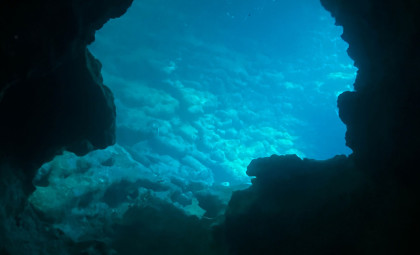
This discovery marks the first confirmed case of bioluminescence documented within a deep-sea cave ecosystem. Previous glowing marine life observations generally originate from open ocean, pelagic, or shallow reef zones. The cave environment, characterized by stable darkness, limited water flow, and scarce food resources, may have influenced the coral’s unique bioluminescent defense strategy.
Exploration of Deep-Sea Caves Reveals Hidden Marine Life
The karst caves around Minamidaito Island represent a largely uncharted marine habitat with considerable potential for uncovering unrecorded biodiversity. These underwater limestone formations create complex networks of chambers and passages that traditional submersibles or divers find hard to access.
The use of a highly maneuverable remotely operated vehicle enabled scientists to investigate cliff faces and narrow cave entrances unreachable by other means. Finding Corallizoanthus aureus highlights the importance of advanced technology in studying geologically challenging underwater environments.
The research team advocates incorporating bioluminescence characteristics more routinely into the formal taxonomic description of newly identified species. Identifying light-emitting traits can serve as valuable ecological and diagnostic markers. As exploration of cryptic habitats such as deep-sea caves continues, it is expected that additional bioluminescent organisms will come to light.
- Categories:
- Science


0 comments
Sign in to Comment