
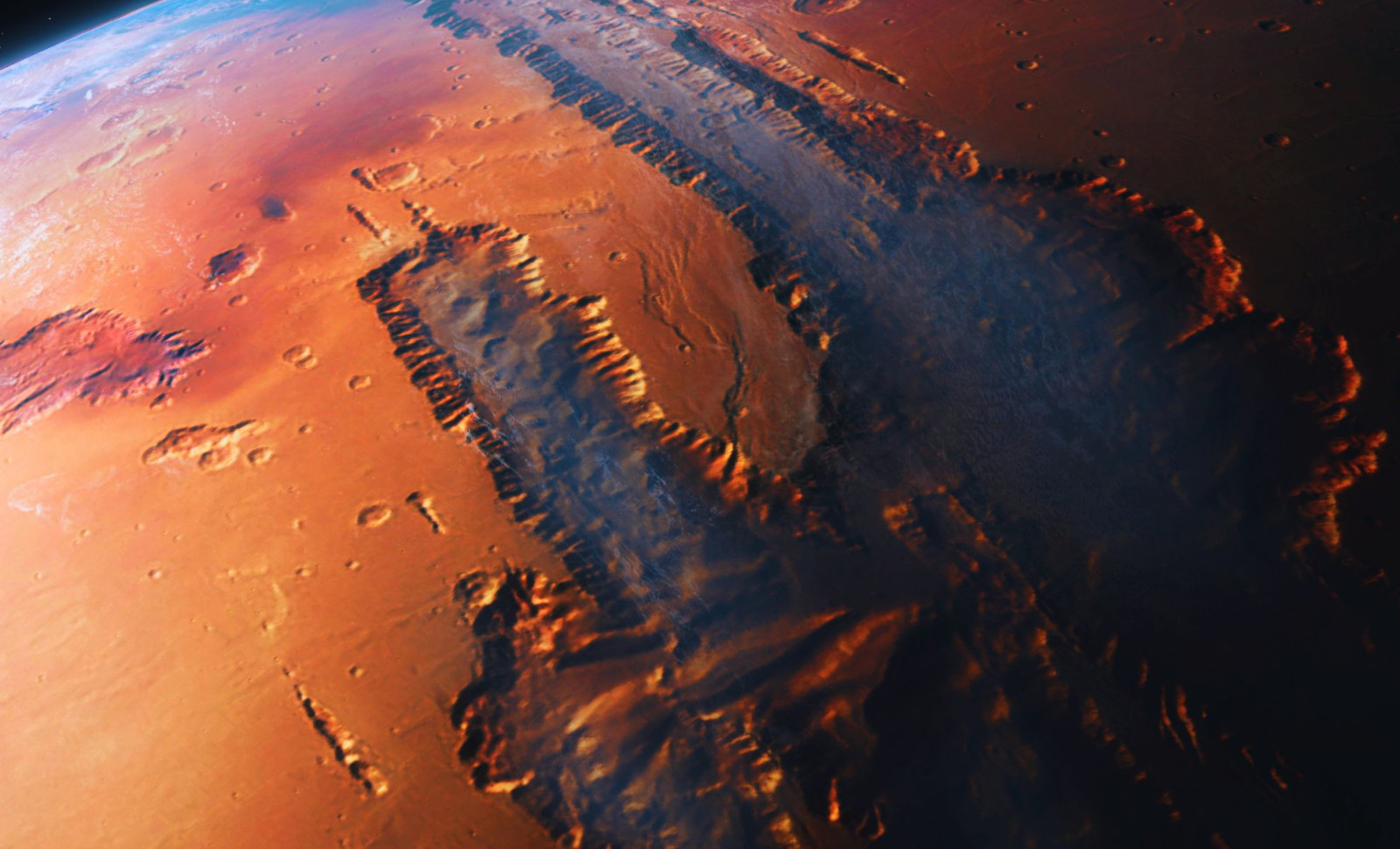
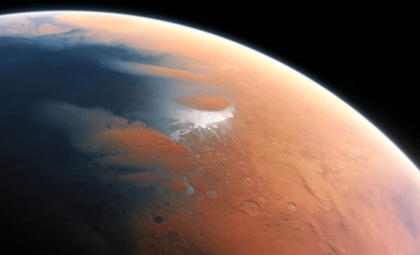
A recent localized dust storm on Mars has uncovered a key process researchers had largely missed. Rather than rare global-scale disturbances, smaller, regional storms may be pushing water molecules into space more regularly than once believed. Mars carries evidence of a wetter ancient environment, with dried riverbeds and mineral traces highlighting a past when liquid water flowed on its surface. This legacy fuels ongoing investigations into the planet’s lost water.
Until now, explanations mostly emphasized large, seasonal atmospheric phenomena, especially over Mars’ southern hemisphere. However, emerging data points to the importance of shorter-lived, more focused weather events that had been underestimated.
Storm’s Impact Extends Well Beyond Its Local Origin
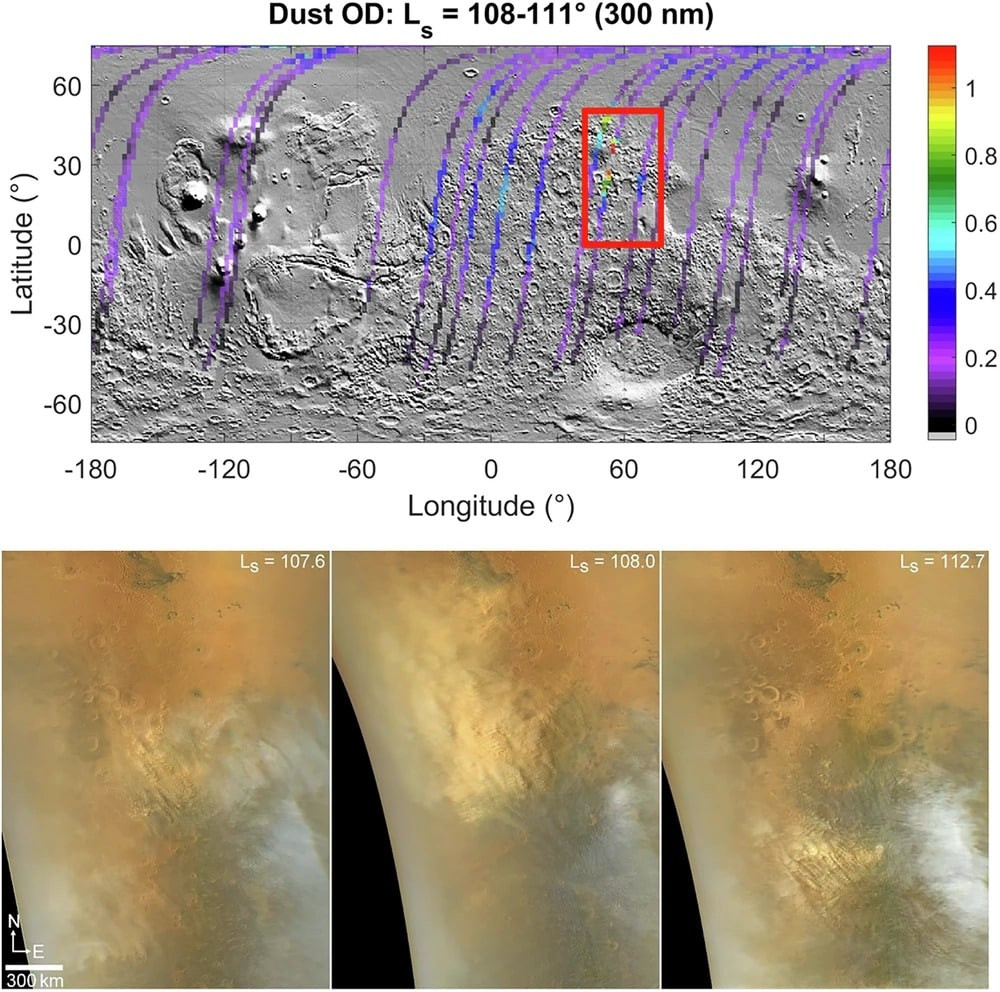
The research, detailed in Communications: Earth & Environment, analyzes a dust storm from Martian Year 37 (2022–2023). Led by Adrián Brines and Shohei Aoki, the team reports that although the event wasn’t planet-wide, it significantly influenced Mars’ atmosphere.

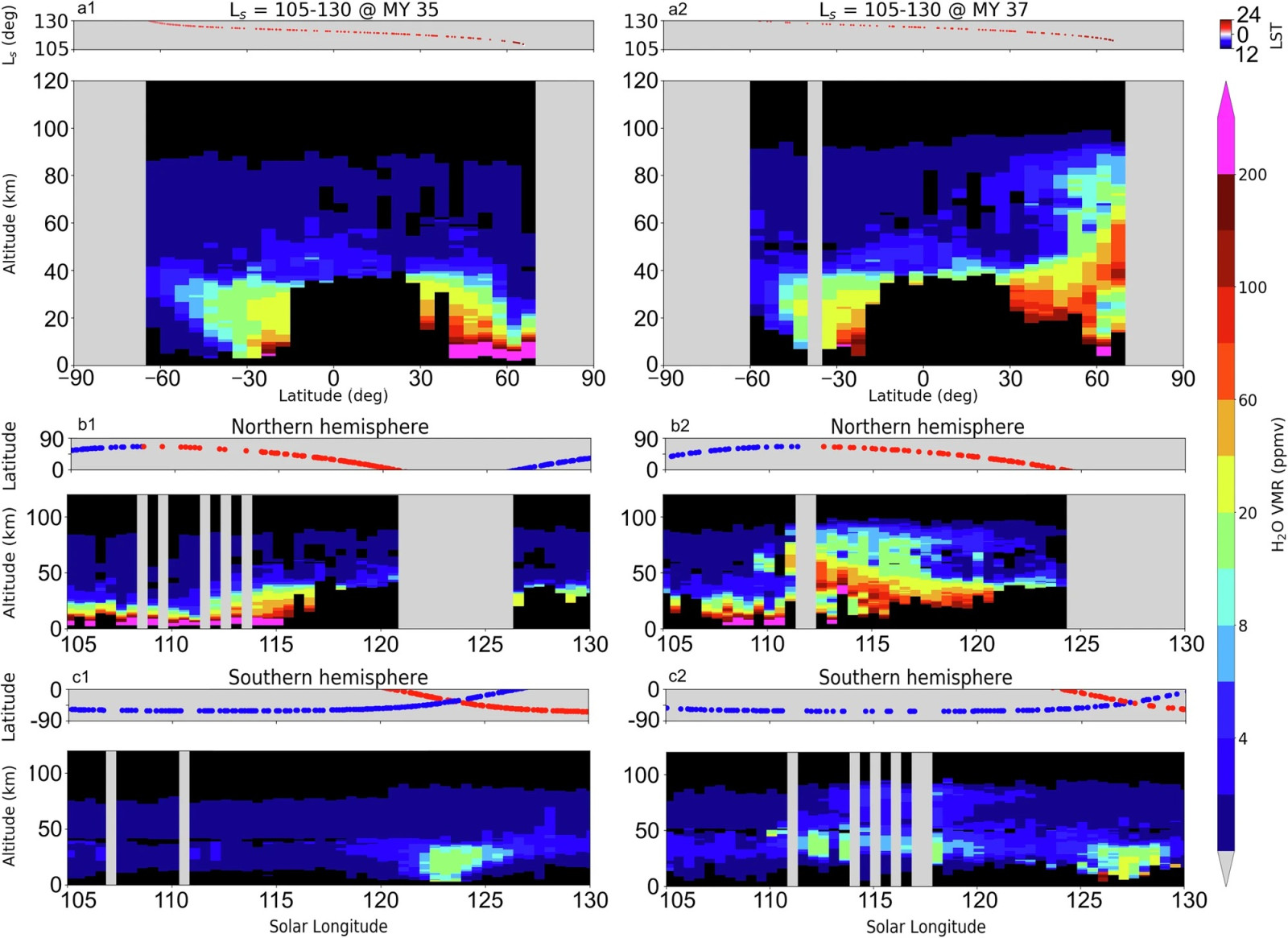
Water vapor levels soared up to tenfold above normal in the middle atmosphere. Such elevated concentrations had neither been recorded previously nor anticipated by existing climate simulations.
“The findings reveal the impact of this type of storm on the planet’s climate evolution and opens a new path for understanding how Mars lost much of its water over time.”
While earlier studies concentrated on global dust storms as the primary agents for vertical atmospheric transport, this incident reveals that even smaller storms can propel substantial quantities of water vapor to higher altitudes.
A Surprising Seasonal Occurrence
Another intriguing aspect of this event is its timing. Historically, water loss on Mars has been linked mainly to the intense solar heating during the southern summer.
However, this storm took place during the northern summer, a period not usually associated with vigorous atmospheric water escape. The researchers suggest these observations challenge long-held seasonal assumptions.
The spike in atmospheric water vapor during this unexpected window hints that water loss mechanisms may operate across a broader seasonal range than previously recognized.
Hydrogen Measurements Highlight Escape Rates
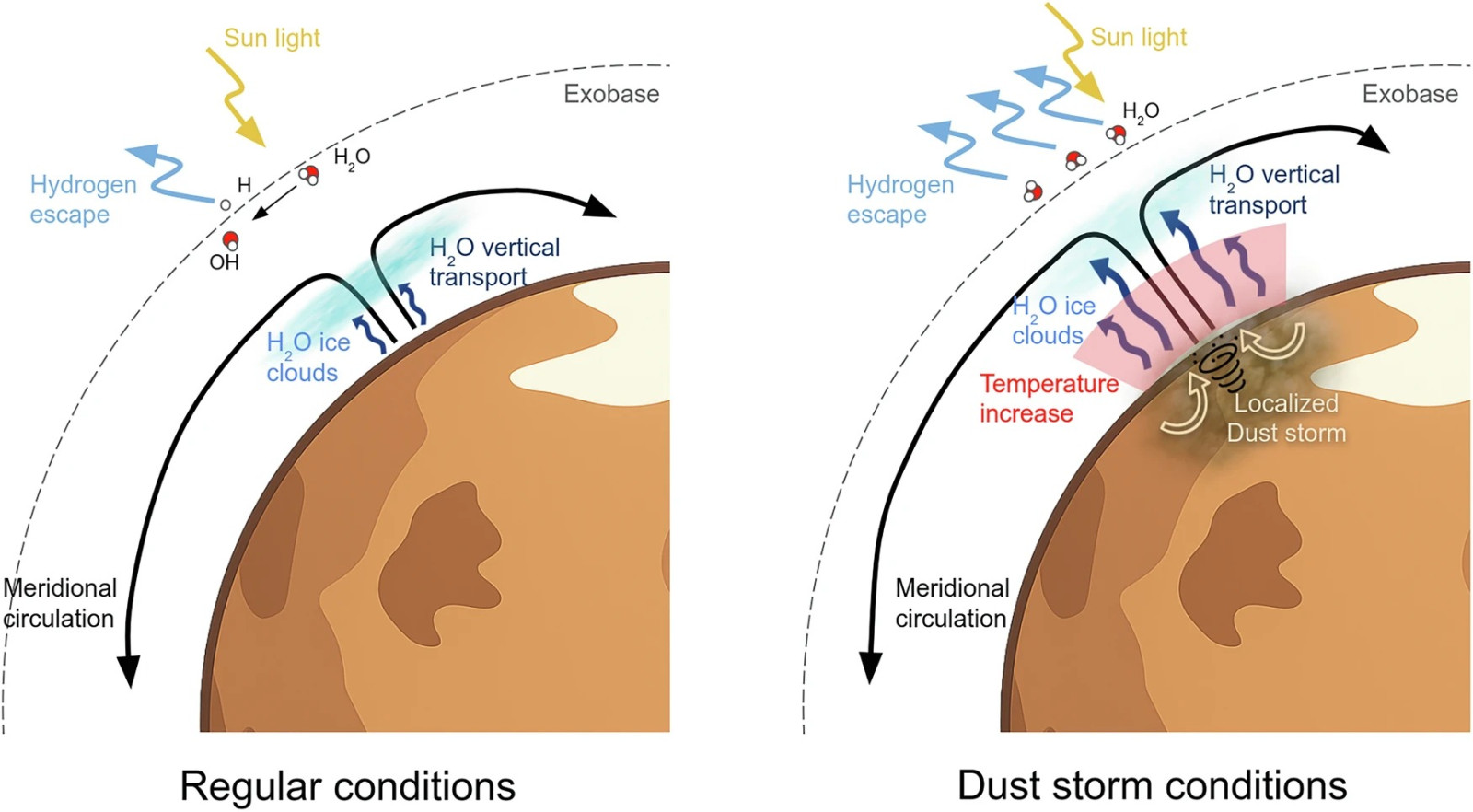
Following the rise in water vapor, instruments registered a significant boost in hydrogen concentration at the exobase, the atmospheric boundary with space. Hydrogen abundances were roughly 2.5 times greater than those observed during the same season in past years. This increase is crucial, since hydrogen readily escapes once water molecules break apart.
The analysis uses data from various missions, including the ExoMars Trace Gas Orbiter, NASA’s Mars Reconnaissance Orbiter, and the Emirates Mars Mission. Combining these observations revealed a sequence linking increased water vapor with subsequent elevated hydrogen loss into space.
“These results add a vital new piece to the incomplete puzzle of how Mars has been losing its water over billions of years, and shows that short but intense episodes can play a relevant role in the climate evolution of the Red Planet,” explained Aoki.
- Categories:
- News






0 comments
Sign in to Comment