
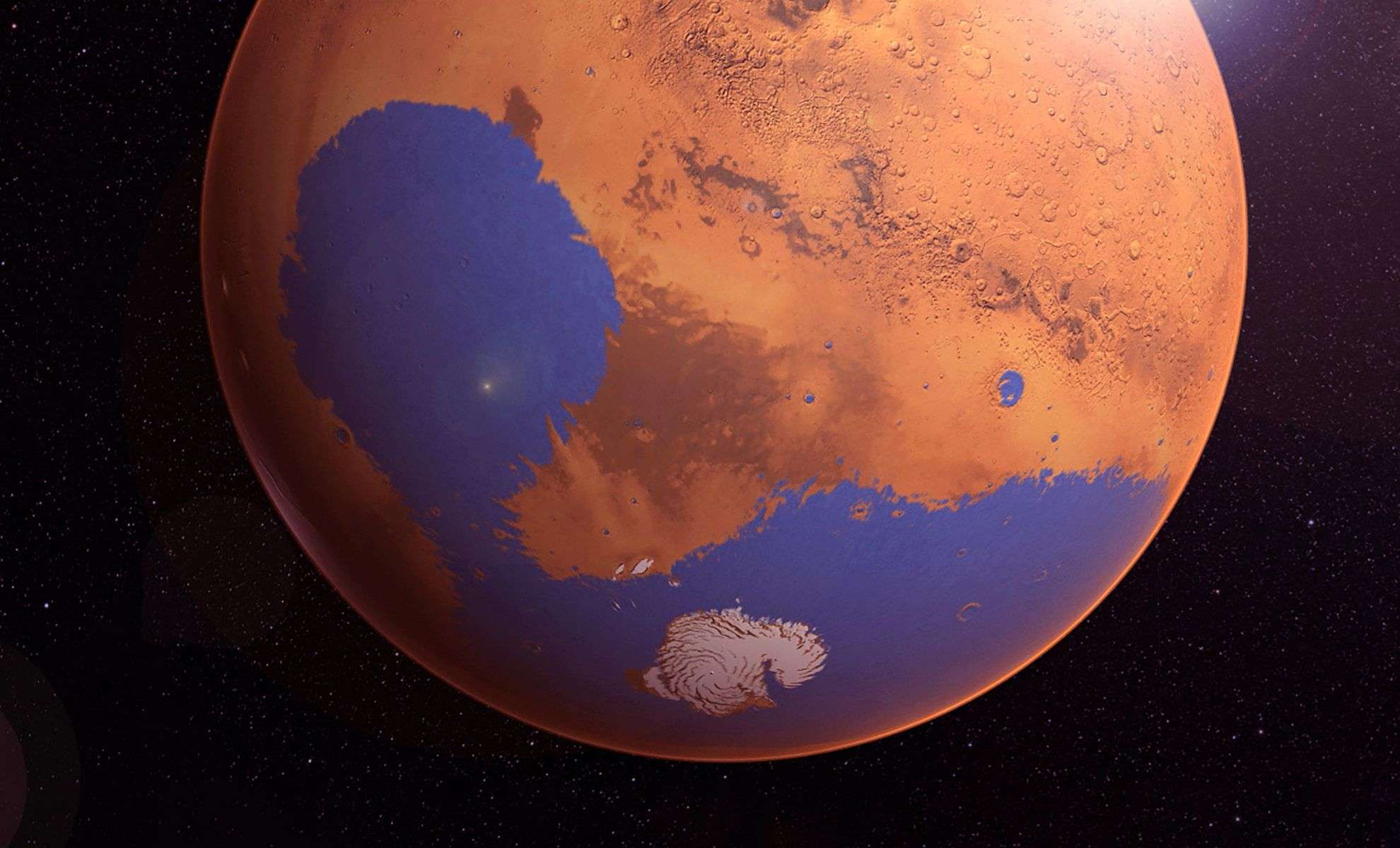
New geological discoveries are shedding light on Mars’ early climate, suggesting the presence of a vast ocean that likely spanned most of the planet’s northern region in the distant past. Featured in a recent publication within Geophysical Research Letters, the research identifies features on Mars strikingly similar to terrestrial river networks and deltas, hinting that enormous ancient rivers may have drained into an immense sea billions of years ago.
Identifying Ancient River Systems from Orbit
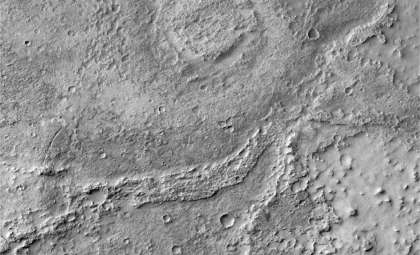
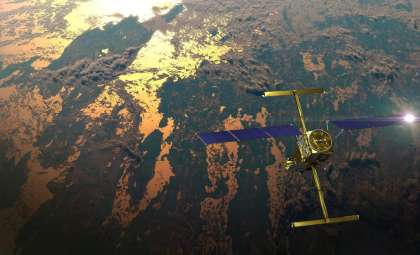
While scientists have long accepted that rivers once existed on Mars, it remained uncertain whether these waterways emptied into an ocean. This concept gains traction with new findings from Cory Hughes, a doctoral candidate in geosciences at the University of Arkansas. Utilizing detailed satellite imagery, Hughes identified extensive landforms resembling backwater zones, areas where rivers decelerate as they enter a vast, tranquil body of water such as an ocean.
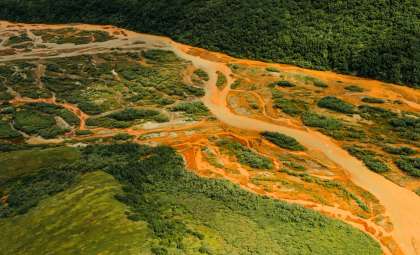
“These deltas are extremely well-developed,” Hughes explained. “This strongly supports the presence of an ancient ocean or, at minimum, a substantial sea.” The expansive, tapering deposits noted on Mars closely mirror Earth’s delta formations, including the Mississippi River Delta, where the backwater region extends nearly 230 miles inland from the Gulf of Mexico.

Earth’s Sandstone Shapes Understanding of Mars
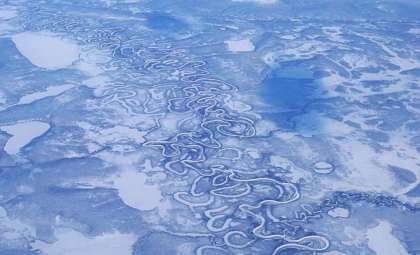
To interpret his Martian observations, Hughes turned to ancient geological formations on Earth. He and his team compared Martian features with sandstone river deposits found in Northwest Arkansas. One such formation, the Wedington Sandstone, preserves evidence of a river from roughly 300 million years ago that flowed from present-day Indiana into a shallow sea that once covered part of Arkansas. The characteristic branching stone ridges visible today result from a phenomenon called topographic inversion.
This process occurs when coarser sediments from riverbeds become buried and lithified into sandstone. Subsequent erosion of the surrounding softer materials leaves these ancient riverbeds elevated as ridges. Because Mars lacks plate tectonics that would disturb its surface, many of these prehistoric river channels remain remarkably well-preserved after billions of years.
Hughes and his mentor, river delta expert John Shaw, uncovered a surprising find: the only known instance of an inverted river delta on Earth. This rare example bolsters their theories about Martian landscapes and provides fresh insights into river evolution across both planets.
Applying Earth’s River Systems to Mars Mapping
This research demonstrates how Earth’s ancient landscapes can inform our understanding of Mars’ geological history. On both worlds, free-flowing rivers exhibit comparable behaviors—transporting sediment, eroding rock, and gradually sculpting their environments.
On Mars, the remnants of these processes appear as wide, fan-shaped formations visible from orbit, closely resembling terrestrial deltas. The sheer size and arrangement of these structures suggest the existence of a stable, enormous water body that once received these rivers.
As Hughes emphasized, “No known organisms on Earth or elsewhere survive without liquid water.” Therefore, if Mars held an ocean even temporarily, it could indicate the planet once harbored the essential conditions to sustain microbial life for some period.
- Categories:
- News







0 comments
Sign in to Comment