
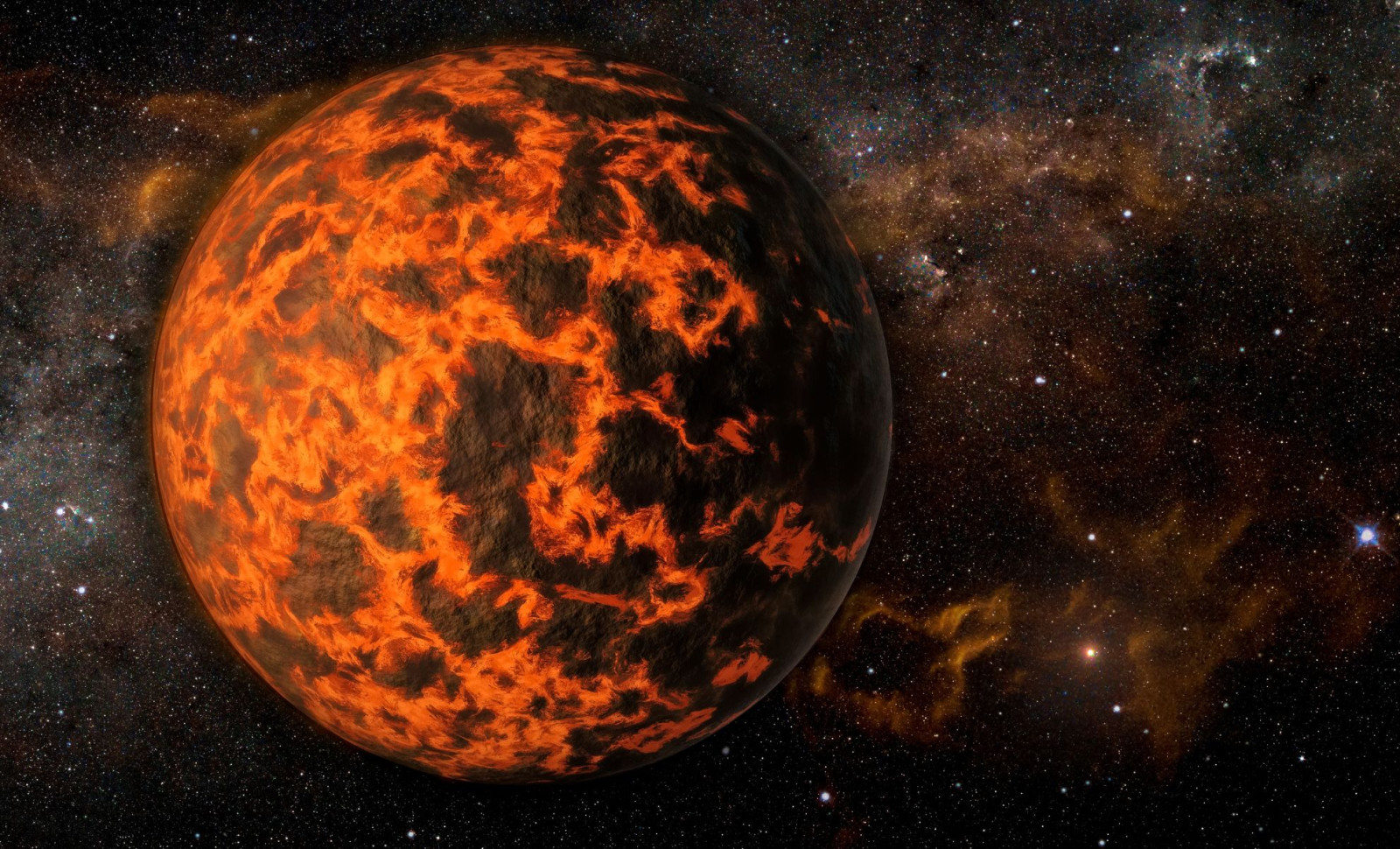
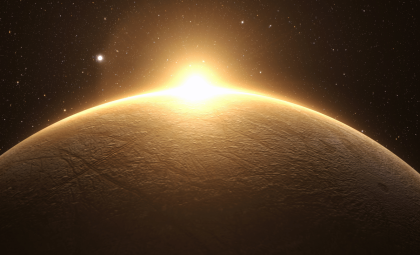
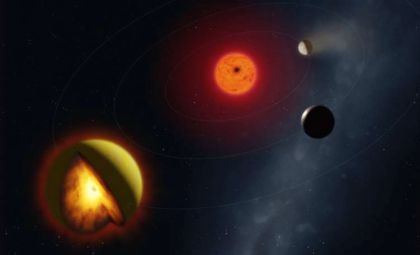
LHS 3844b, an exoplanet distinguished by its constant day and night sides, initially appears inhospitable to life. Situated approximately 48.5 light-years from Earth, this planet orbits a dim red dwarf star named LHS 3884. Unlike Earth’s shifting day-night cycle, LHS 3844b is tidally locked, resulting in one hemisphere perpetually illuminated and the opposite hemisphere cast in eternal darkness.
Yet, emerging studies indicate this seemingly hostile world might surprisingly harbor life underground. This paradigm shift is prompting scientists to reconsider the habitability of even the most extreme exoplanets.
Rethinking the Criteria for Habitability
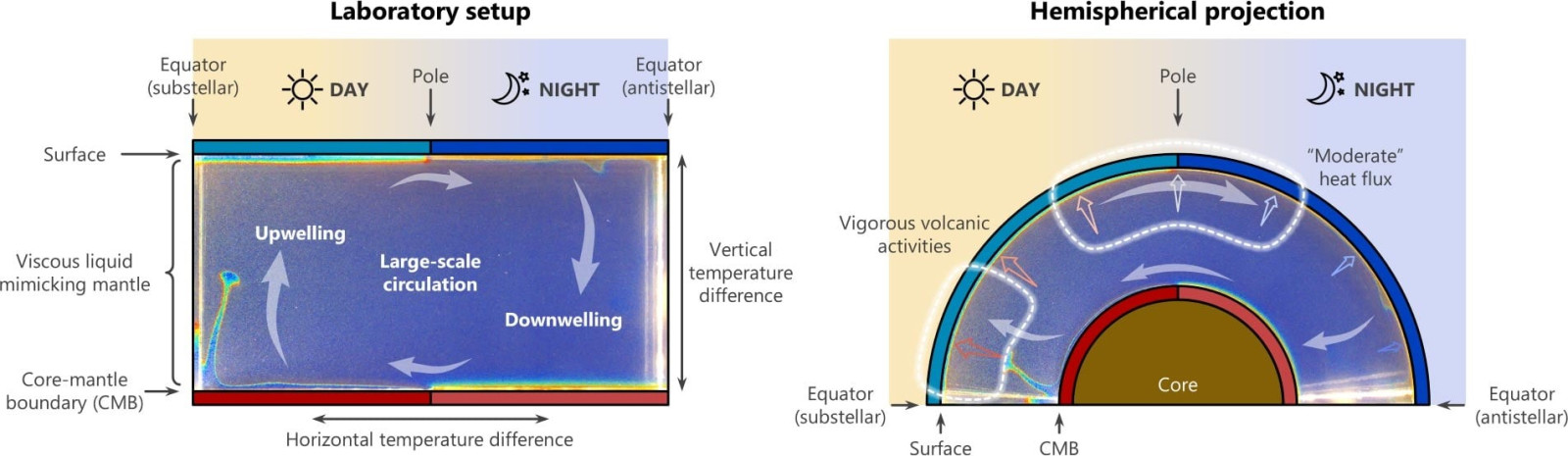
Traditionally, astronomers searched for Earth-like planets exhibiting mild climates and regular day-night transitions. But Daisuke Noto and his research group from the University of Pennsylvania are challenging this conventional focus. Their investigations suggest that tidally locked planets like LHS 3844b might sustain habitable environments beneath their harsh surfaces. Specifically, their findings imply that the stark temperature differences could drive subsurface heat circulation, moderating conditions below ground.

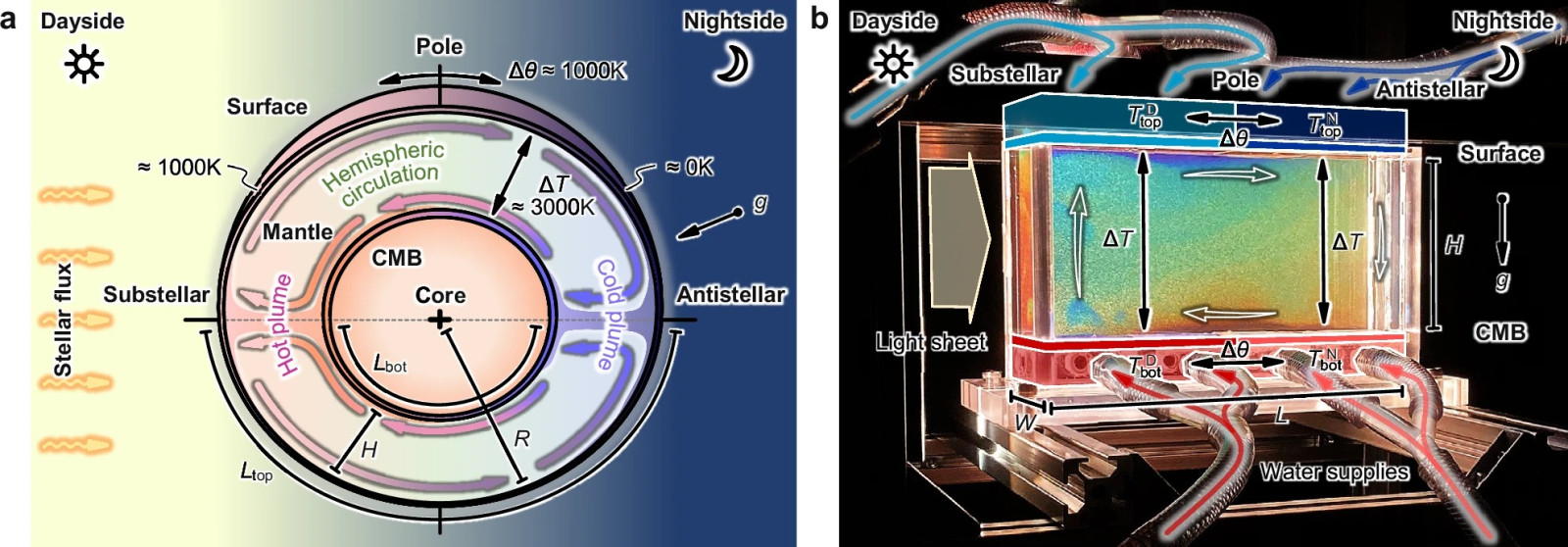
Their work, detailed in a recent publication in Nature Communications, proposes that tidal locking facilitates mantle convection that transfers heat internally, particularly in the intermediate zones between the planet’s extremes. As Noto explains:
“Many celestial bodies like moons and planets that are very close to their parent stars are what we call tidally locked,” he explained. “Meaning, as they spin around on their axes and orbit around their parents, those rates or frequencies match, leading to the phenomena like us only seeing one side of our moon.”
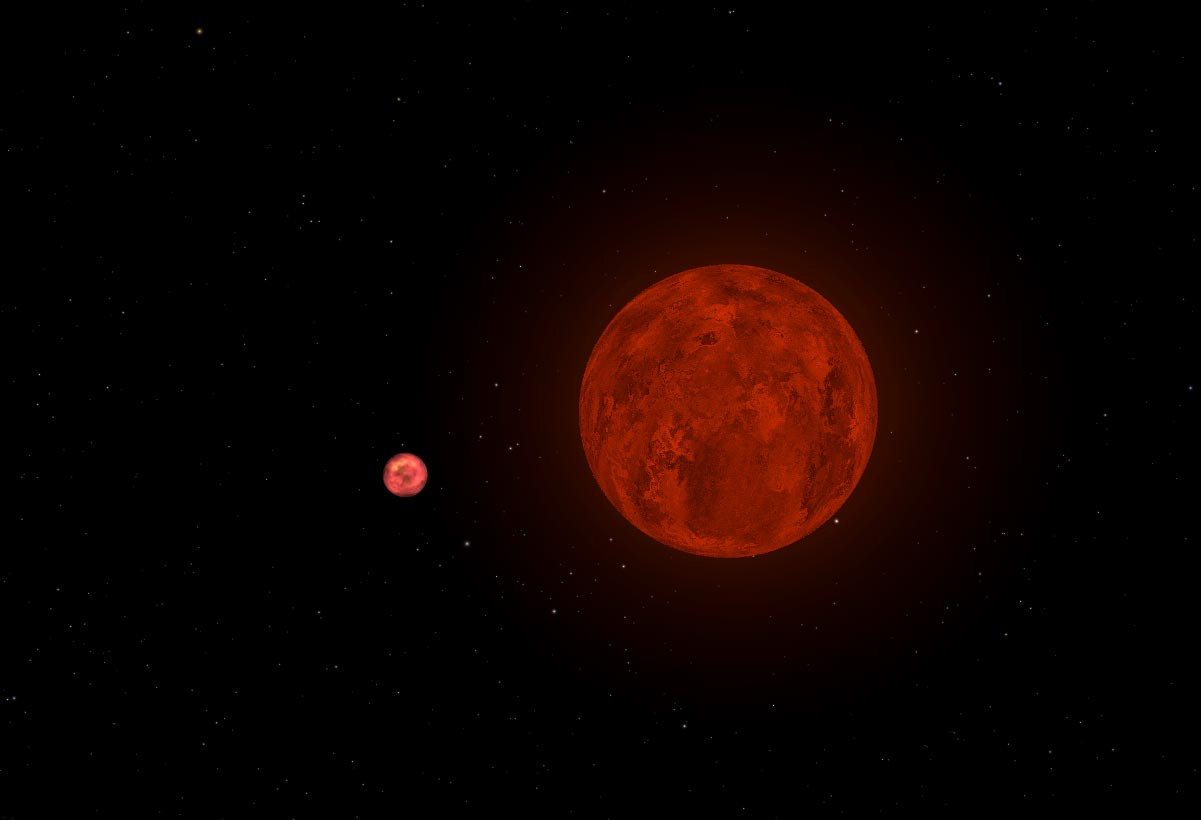
The Dynamics Within LHS 3844b’s Mantle
To investigate this concept, Noto and colleagues performed a controlled laboratory simulation reflecting the extreme temperature disparity between the illuminated and dark hemispheres of a tidally locked planet. Using a vessel filled with glycerol and temperature-sensitive liquid crystals that change color, the team tracked fluid movements under varying thermal gradients. Their experiment revealed a stable mantel convection pattern where heated material rises on the day side, flows across the surface, cools over the night side, and then sinks—circulating heat efficiently.
Though conducted on a reduced scale, these results shed light on possible mantle behaviors on a planet like LHS 3844b. Noto noted:
“It’s not chaotic like Earth’s mantle.” He added, “It’s slow and steady. Predictable. Kind of boring but in a good way.”
The team’s findings also identified stationary thermal plumes akin to Earth’s geological hotspots but fixed in place on LHS 3844b. Such geothermal zones could create habitable "twilight zones" between the planet’s relentless day and night hemispheres.
Could Magnetic Fields Arise from Geothermal Processes?
The implications extend further. Noto proposes that internal mantle convection might influence the movement in the planet’s molten core, potentially generating a magnetic field. While not yet confirmed, such a field could shield LHS 3844b from harmful cosmic radiation, similar to Earth’s protective magnetosphere. This magnetic barrier might increase the planet’s capacity to support life.
The study highlights geothermal activity as a possible driver of sustainable environments in localized areas, much like Earth’s volcanic hotspots. These regions, particularly in mid-latitude zones, could provide stable, moderate temperature habitats where microbial life could thrive.
- Categories:
- Astronomy






0 comments
Sign in to Comment