
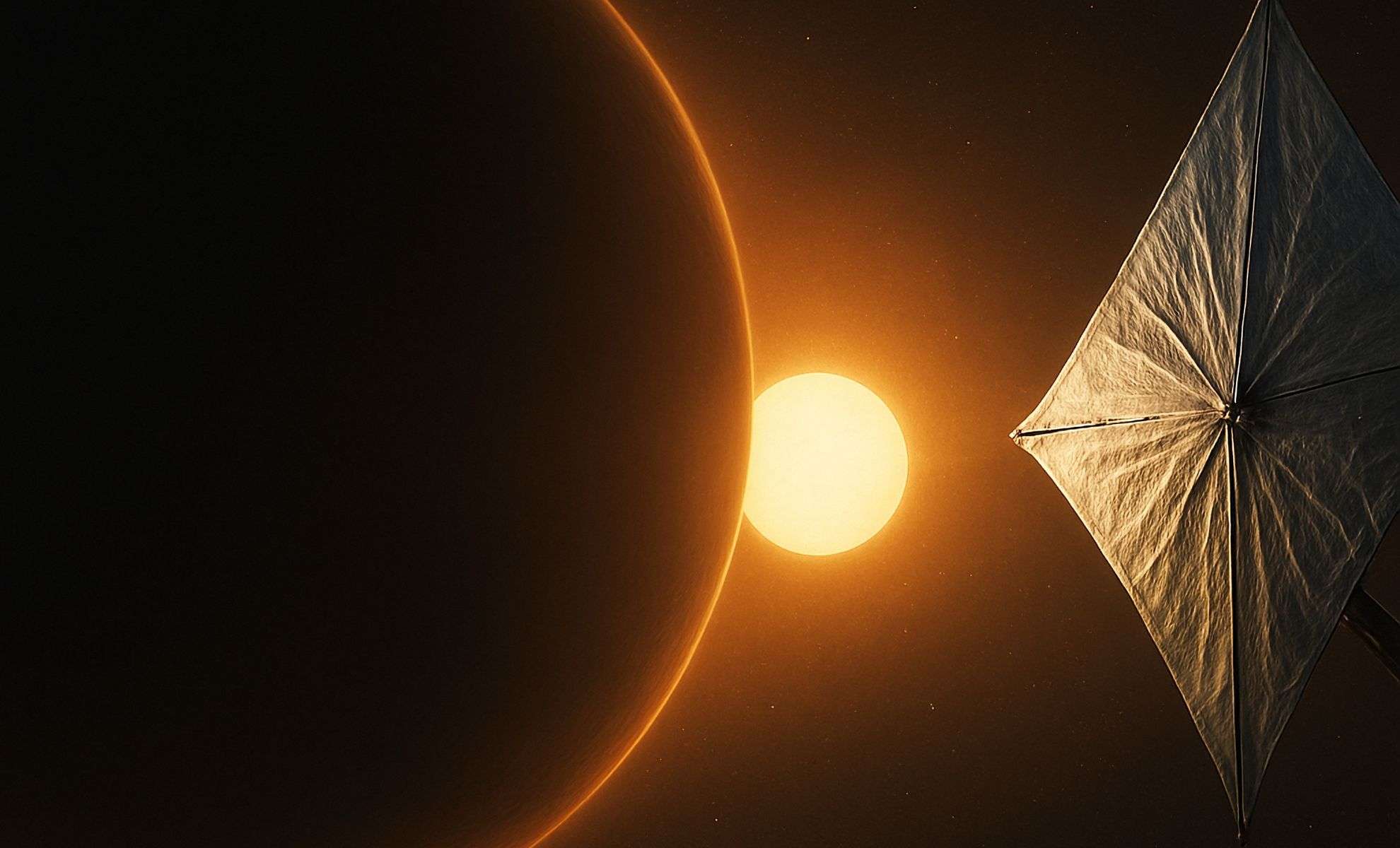
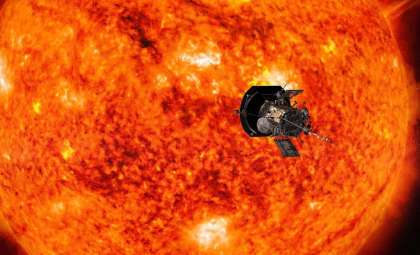
Recently published research in The Astrophysical Journal highlights the hidden dangers of swirling plasma formations in the solar wind that current detection methods often miss. Scientists reveal that tornado-like plasma spirals, which evade traditional monitoring systems, might trigger severe geomagnetic storms. The solution may involve a novel solar sail-powered spacecraft providing earlier, more comprehensive warnings of hazardous solar events.
Hidden Plasma Vortices in the Solar Wind
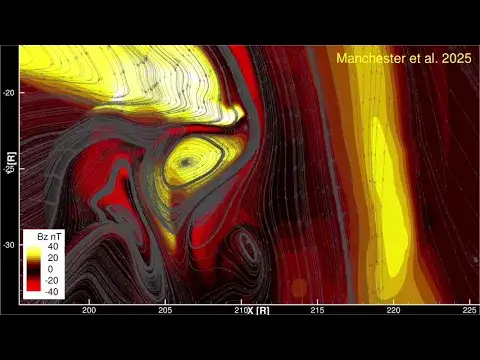
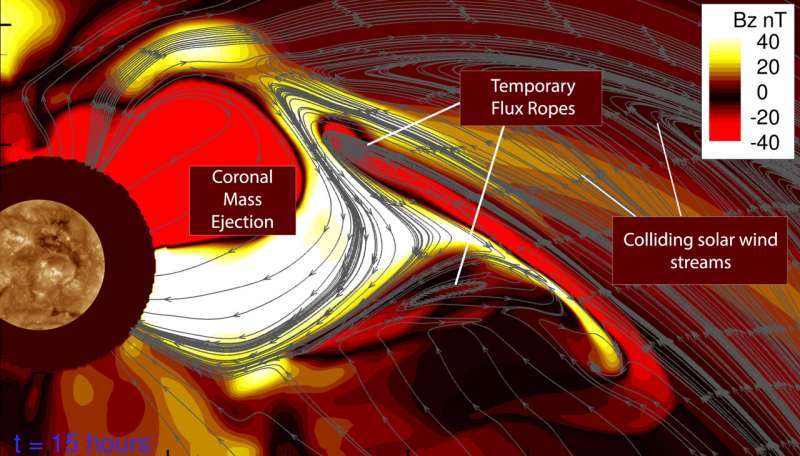
The Sun constantly emits charged particles, forming the solar wind. Occasionally, this particle stream is violently disrupted by coronal mass ejections (CMEs), massive bursts releasing plasma clouds into space. However, a team from the University of Michigan, employing high-resolution simulations, has discovered subtler but still impactful phenomena: magnetic spirals called flux ropes. These structures can detach from CMEs and travel independently through the solar system.
Ranging in size from 3,000 to 6 million miles across, these flux ropes act like plasma tornadoes. Despite being smaller than CMEs, their magnetic fields can engender intense geomagnetic storms that disrupt GPS, navigation, and precision farming technologies.

Lessons from the May 2024 Geomagnetic Event
During May 2024, a geomagnetic storm induced by such plasma structures forced flight rerouting, satellite trajectory disturbances, and caused malfunctions in GPS-controlled agricultural machinery. NASA estimates losses of roughly $17,000 per affected farm. This event underscored the shortcomings of existing space weather detection, which mostly depends on telescopes fixed on the Sun.
Flux ropes form after initial eruptions as CMEs interact with slower solar wind, much like a snowplow creating spirals when moving through snow. Some of these spirals dissipate quickly, but others persist and intensify when colliding with differing solar wind streams.
The main challenge is that current warnings come from a single vantage point at the L1 Lagrange Point, where spacecraft like NOAA’s DSCOVR and NASA’s ACE monitor solar wind. This limited perspective means flux ropes drifting outside this narrow corridor may go unnoticed.
A New Solar Sail-based Observatory Concept
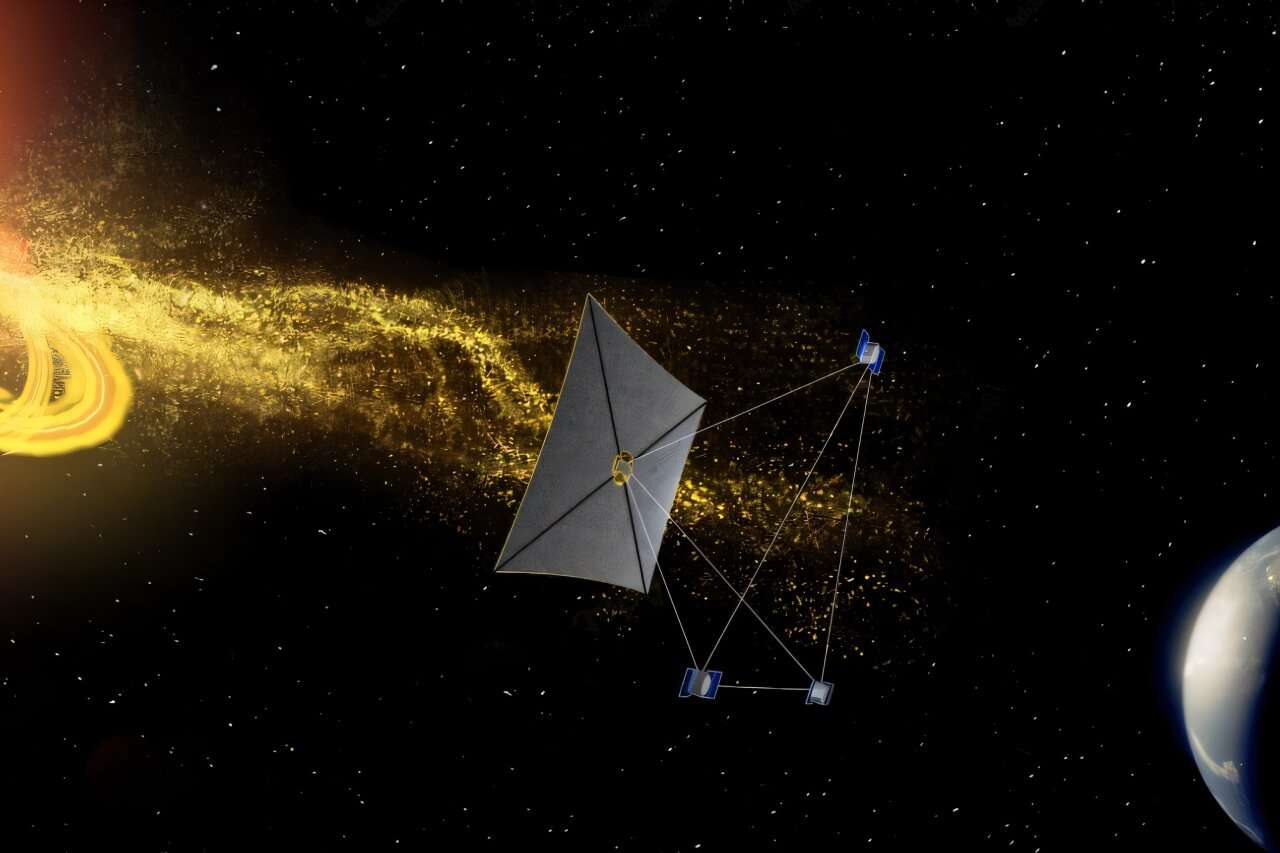
To address detection gaps, scientists propose the SWIFT constellation (Space Weather Investigation Frontier),
comprising four spacecraft arranged in a triangular pyramid formation between Earth and the Sun, with a key probe stationed beyond the L1 point—a region previously inaccessible due to propulsion fuel limits.
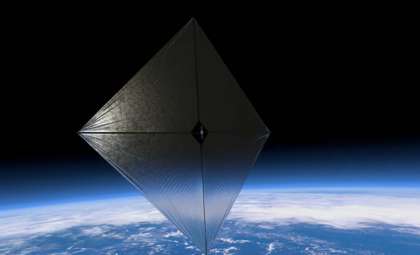
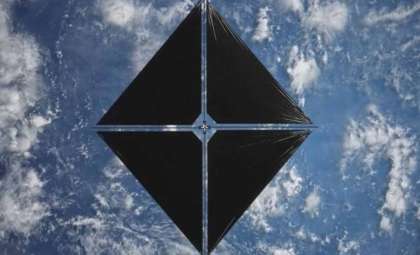
This is made possible by the solar sail technology inspired by NASA’s Solar Cruiser initiative. The craft would deploy a light, reflective aluminum sail about a third as large as a football field, capturing sunlight for continuous thrust without fuel use.
By maintaining this advanced position, the probe could identify magnetic plasma formations up to 40% earlier than existing monitoring points. Along with three other spacecraft spaced roughly 200,000 miles apart, SWIFT would provide a 3D perspective on how plasma structures evolve en route to Earth.
Enhancing Space Weather Defense
The SWIFT mission could revolutionize space weather preparedness. Flux ropes, especially those with southward magnetic orientation, interact strongly with Earth’s magnetic field, often causing the most severe storms. As co-author Mojtaba Akhavan-Tafti explains :
“We can’t just look at the Sun. If there are hazards forming out in space between the Sun and Earth, we need to proactively find structures like these Earth-bound flux ropes.” Lead author Chip Manchester adds,
“You’d see a change in the measurements, but you wouldn’t see the storm’s entire structure. That’s the current situation with single-spacecraft systems.”
By offering multiple observational viewpoints, SWIFT aims to empower scientists to monitor and predict the formation and path of space weather threats before they impact Earth.
- Categories:
- Space

0 comments
Sign in to Comment